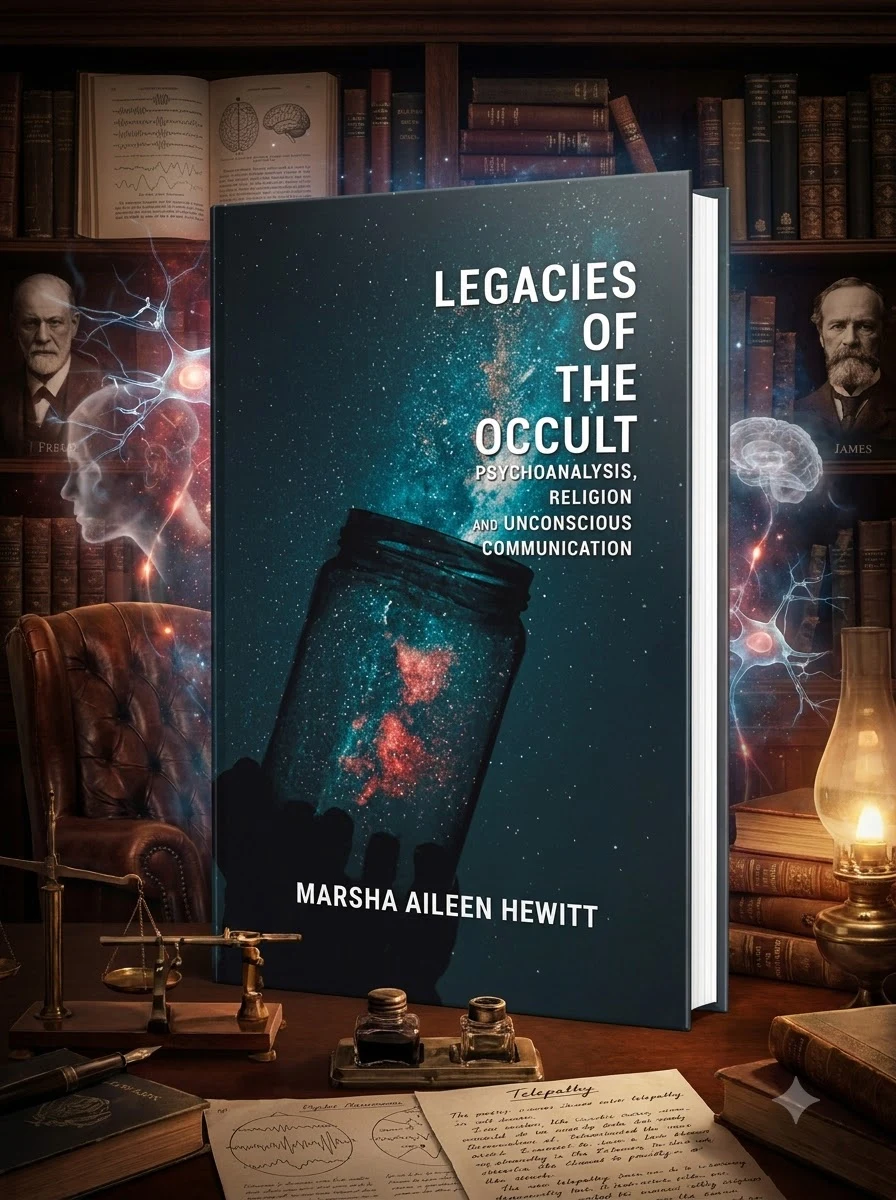
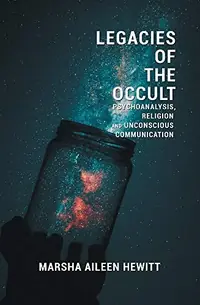
Legacies of the Occult: Psychoanalysis, Religion, and Unconscious Communication
Hewitt, Marsha AileenStock reported in the catalog; fulfillment is confirmed with your request.
Uncover the forgotten history where psychoanalysis and the occult converged on the enigma of telepathy.
Marsha Aileen Hewitt delves into the curious historical threads connecting psychoanalysis, religious thought, and the profound concept of unconscious communication. This work meticulously examines how pioneering minds such as William James, F.W.H. Myers, and Sigmund Freud approached the phenomenon of telepathy, each from distinct theoretical frameworks. While James and Myers explored it within psychical research, Freud posited it as an aspect of the unconscious, separate from the paranormal. Hewitt's analysis reveals how this idea of hidden communication, though often marginalized, has quietly endured within psychoanalytic discourse, influencing contemporary theories of subjective experience.
This work sits at the intersection of intellectual history and esoteric studies, tracing the historical convergence of early psychoanalysis and psychical research during the formative years of modern psychology. It explores how foundational figures navigated the boundary between scientific inquiry and occult phenomena.


📝 Description: Legacies of the Occult: Psychoanalysis, Religion, and Unconscious Communication
💎 Expert review
📖 Why choose it
Why this book is worth reading
Readers fascinated by the hidden intellectual lineages connecting spiritualism and clinical psychology will find this text indispensable. Marsha Aileen Hewitt offers a meticulous examination of how telepathy was not merely dismissed but actively debated by pioneers like William James and F.W.H. Myers. For those curious about how the concept of unconscious communication persisted within psychoanalytic discourse despite marginalization, this book provides crucial context. It is ideal for scholars and enthusiasts who wish to understand the complex, often overlooked dialogue between religious thought, paranormal investigation, and the emerging science of the mind in the late nineteenth and early twentieth centuries.
⭐ Reader reviews
Reader rating
Hewitt’s analysis is a rigorous academic endeavor that successfully maps the theoretical frameworks used by James, Myers, and Freud regarding telepathy. The work shines in its detailed reconstruction of how these distinct approaches influenced contemporary subjective experience theories. However, this book may not suit readers seeking practical occult techniques or casual entertainment. It requires patience for dense historical analysis rather than narrative flair. Those expecting a straightforward guide to psychic phenomena will likely find the focus on theoretical divergence and historical nuance too abstract. It is a scholarly contribution that rewards careful reading but demands a specific intellectual interest in the intersection of psychology and esotericism.
❓ Frequently asked questions
📖 Who should read this
If you're fascinated by the hidden connections between early psychoanalysis, psychic phenomena, and the profound nature of unconscious thought, this book offers a compelling journey. Delve into the intellectual battles and surprising convergences that shaped our understanding of the mind's unseen capabilities.
🎯 Key themes and symbolism
Freud's Occult Entanglement
This book meticulously unpacks how early psychoanalytic thought, particularly Freud's, initially intersected with and then diverged from psychical research and occult phenomena. It highlights Freud's unique interpretation of "thought transference" as an unconscious process, distinct from paranormal claims, yet acknowledging its undeniable presence within his developing theories.
The Unseen Dialogue
Hewitt explores the evolution of "unconscious communication" from its early guise as telepathy or thought transference. The text traces how this concept, despite being largely overlooked by subsequent psychoanalytic generations, has maintained a subtle, almost spiritual influence within the discipline, now re-emerging as a vital area of contemporary psychological inquiry.
Pioneering Minds & Psychic Research
The work contrasts the approaches of foundational figures like William James and F.W.H. Myers, who embraced experimental psychical research for understanding telepathy, with Sigmund Freud's more internal, unconscious-driven explanation. It illuminates the varied intellectual landscapes from which these early theories of mind and communication emerged.
💬 Quotes from the book
“Freud's grappling with 'thought transference' reveals less about objective psychic phenomena and more about the nascent psychoanalytic understanding of a mind deeply interconnected yet paradoxically isolated in its unconscious depths.”
“Despite periods of neglect, the fundamental notion of minds interacting beyond conscious awareness has persisted within psychoanalysis, a quiet undercurrent shaping its understanding of human connection and subjective experience.”
📜 Historical context
📚 Glossary
- Telepathy
- Psychical Research
- Unconscious Communication
📔 Questions to reflect on
- How does understanding the historical debate around telepathy and psychoanalysis alter your perception of early psychological science?
- Consider a time you felt a strong, inexplicable connection with another person. How might the concepts of "unconscious communication" or "thought transference" offer a framework for understanding such an experience?
- In what ways do you think contemporary psychology still grapples with phenomena that blur the lines between the scientific and the seemingly 'occult'?
✍️ More books by this author Hewitt, Marsha Aileen
All books by this author →
🏛 Books from this publisher Equinox Publishing
All books from this publisher →You might also like
See more →




 91
91
 91
91
 91
91