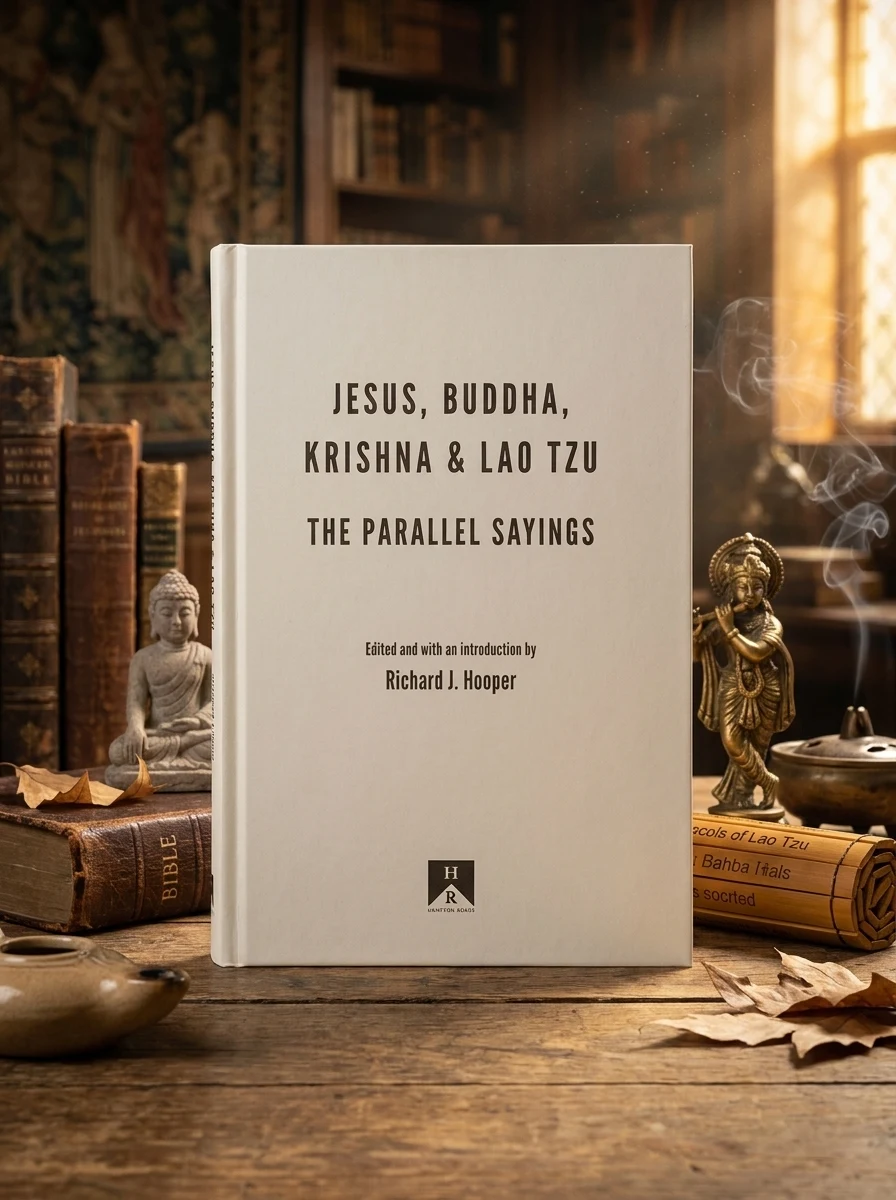
Jesus, Buddha, Krishna, & Lao Tzu: The Parallel Sayings
Hooper, RichardStock reported in the catalog; fulfillment is confirmed with your request.
Uncover the universal wisdom echoing through the ages from history's profound spiritual masters.
Richard Hooper's illuminating work meticulously uncovers the shared spiritual foundations of humanity's most revered traditions. By thematically organizing hundreds of direct sayings from Jesus, Buddha, Krishna, and Lao Tzu, he presents their wisdom in a unique four-column format for effortless comparison. Sourced from over fifty ancient Christian, Buddhist, Hindu, and Taoist texts, this volume reveals how these figures, across cultures and millennia, spoke to the same core truths. Each section features a concise introduction, guiding the reader through profound insights that resonate deeply with anyone seeking inner understanding and cross-cultural spiritual unity.
This volume sits firmly within the comparative religion and perennial philosophy traditions, synthesizing teachings from major Eastern and Western spiritual lineages into a unified framework. It reflects a modern esoteric approach that seeks common ground across Christianity, Buddhism, Hinduism, and Taoism.


📝 Description: Jesus, Buddha, Krishna, & Lao Tzu: The Parallel Sayings
💎 Expert review
📖 Why choose it
Why this book is worth reading
Readers seeking spiritual unity and inner peace will find immense value in this gentle, accessible guide. It is perfect for those curious about the intersections of different faiths without needing to dive into dense theological debates. The four-column format allows for effortless comparison, making it ideal for meditation practice or casual reflection. If you feel a resonance between the teachings of Jesus and Buddha, this book validates that intuition with curated wisdom from fifty ancient texts. It offers a soothing bridge for seekers wanting to understand how diverse traditions point to the same universal truths, fostering a sense of global spiritual brotherhood.
⭐ Reader reviews
Reader rating
This compilation serves as a gentle primer for those interested in comparative spirituality, offering a clean, thematic layout that highlights shared ethical and metaphysical concepts. However, it does not suit academic scholars or theologians seeking rigorous critical analysis, historical context, or doctrinal debate. The work prioritizes harmony over scholarly depth, which may feel reductive to experts in Christian or Buddhist studies. It is best enjoyed by lay readers looking for inspiration rather than intellectual challenge. Those expecting original commentary or deep exegetical insight will be disappointed, as the book relies entirely on curated excerpts. It is a beautiful, simple tool for unity, not a comprehensive scholarly reference.
❓ Frequently asked questions
📖 Who should read this
If you're drawn to the perennial philosophy, curious about comparative mysticism, or seeking universal spiritual principles beyond denominational divides, this book is for you. It's an essential resource for anyone yearning to understand the shared heart of humanity's greatest spiritual legacies.
🎯 Key themes and symbolism
The Path to Enlightenment
Delve into the convergent teachings on personal transformation and liberation. Whether termed salvation, nirvana, moksha, or the Tao, these masters offer parallel guidance on spiritual development, ethical conduct, and the journey towards inner peace and profound realization. The book highlights the common practical steps for seekers on their personal quest.
Addressing Human Suffering
Explore how each of these monumental figures grappled with the pervasive reality of suffering. From its origins to its alleviation, the book juxtaposes their diverse yet complementary perspectives on finding solace, transcending pain, and cultivating resilience. It offers timeless wisdom for navigating life's challenges with grace and understanding.
💬 Quotes from the book
“The path to peace lies not in external striving, but in understanding the stillness within.”
“To alleviate suffering, one must first recognize its source, and then extend compassion universally.”
📜 Historical context
📚 Glossary
- Parallel Sayings
- Perennial Philosophy
- Mysticism
📔 Questions to reflect on
- Considering the parallel wisdom presented, what universal truth resonates most deeply with your personal spiritual journey, and why?
- Choose a teaching from a tradition less familiar to you within this book. How might applying its insight transform a current challenge or perspective in your own life?
- Reflect on how the concept of 'the divine' or 'ultimate reality' is implicitly or explicitly addressed by these four masters. What common threads emerge in their descriptions?
✍️ More books by this author Hooper, Richard
All books by this author →
🏛 Books from this publisher Hampton Roads Publishing Company
All books from this publisher →


 88
88


You might also like
See more →





 91
91