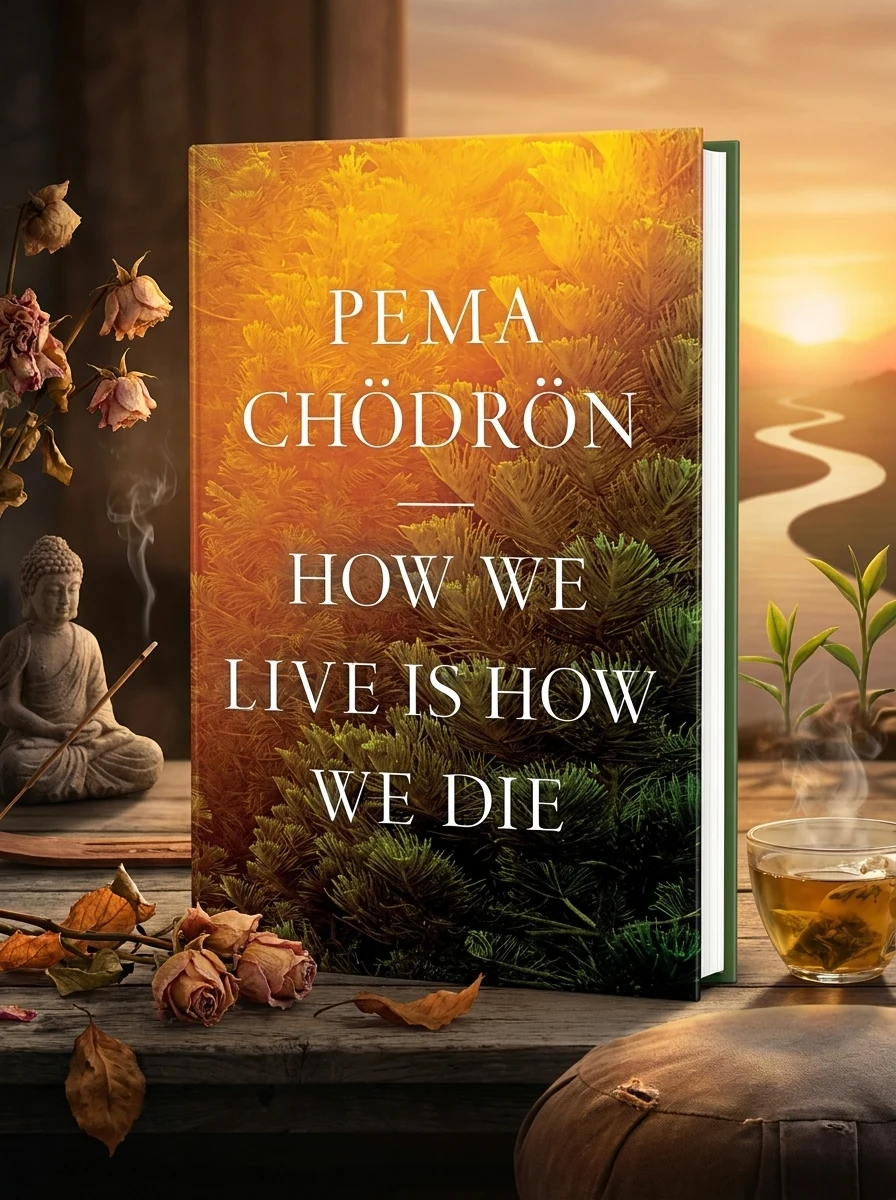
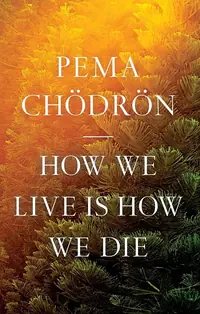
How We Live Is How We Die
Chodron, PemaStock reported in the catalog; fulfillment is confirmed with your request.
Embrace life's constant flux: find freedom in every ending, wisdom in every beginning.
Pema Chödrön, the revered Buddhist teacher, invites us to reframe our perception of life's inherent impermanence. This profound work explores how consciously engaging with the continuous cycle of endings and new beginnings — from a simple breath to the ultimate transition of death — can unlock deeper ease and compassion. Through her signature accessible wisdom, Chödrön guides readers to embrace uncertainty, transform challenging emotions, and cultivate an open heart for both living fully and facing the unknown with courage and clarity.
This work sits firmly within the contemporary Tibetan Buddhist tradition, specifically drawing on the Mahayana and Vajrayana teachings of impermanence and compassion. It represents a modern, accessible interpretation of ancient contemplative practices for Western audiences seeking spiritual grounding.


📝 Description: How We Live Is How We Die
💎 Expert review
📖 Why choose it
Why this book is worth reading
Readers who feel anchored by the fear of change or the heaviness of uncertainty will find profound relief in Pema Chödrön’s gentle guidance. This book is ideal for those navigating personal transitions, grief, or existential anxiety, offering a compassionate framework to view endings not as losses but as essential parts of existence. By learning to embrace flux with an open heart, readers gain the courage to face life's unknowns with clarity and ease. It serves as a vital companion for anyone wishing to transform challenging emotions into wisdom, making it particularly beneficial for spiritual seekers who value accessible, practical advice over dense theoretical study. The text provides a steady hand during turbulent times, helping individuals cultivate deep compassion for themselves and others amidst the constant rhythm of beginnings and endings.
⭐ Reader reviews
Reader rating
Chödrön delivers a soothing yet potent exploration of impermanence, making complex Buddhist concepts digestible for the layperson. Her accessible wisdom shines as she encourages readers to find freedom in every ending. However, this text may not suit those seeking rigorous academic theology or structured dogmatic instruction, as it prioritizes experiential understanding over doctrinal precision. Skeptics of mindfulness practices might find the tone overly sentimental or lacking in critical edge. It is best for those already open to contemplative approaches who desire emotional resonance and practical tools for daily living rather than intellectual debate or historical analysis of religious texts.
❓ Frequently asked questions
📖 Who should read this
If you seek profound wisdom for navigating life's relentless changes, or wish to approach death with greater serenity, this book is for you. Pema Chödrön's compassionate guidance offers solace and practical tools for cultivating an open heart amidst life's uncertainties.
🎯 Key themes and symbolism
Navigating Life's Transitions
Chödrön illuminates the pervasive nature of change, from the mundane to the monumental. She teaches us to observe how every moment is a micro-transition, offering opportunities to practice presence and equanimity. This reframing helps cultivate resilience and a more peaceful engagement with life's inevitable ebbs and flows.
Understanding the Bardo States
Drawing from ancient Tibetan Buddhist teachings, this book demystifies the concept of the bardo, or transitional states. Chödrön explains how these periods of uncertainty are not just about death, but are relevant to every shift in our daily lives, providing a framework for mindful navigation of the unknown.
Transforming Difficult Emotions
Practical methods are offered to transmute the fear and resistance often associated with change and loss. Chödrön emphasizes cultivating curiosity and openness, guiding readers to convert challenging emotional landscapes into pathways for profound awakening and unconditional love, fostering inner freedom.
💬 Quotes from the book
“Every ending holds a seed of beginning, even if what follows remains unclear.”
“The way we approach the small transitions each day is precisely how we prepare for the biggest ones.”
📜 Historical context
📚 Glossary
- Bardo
- Impermanence
- Equanimity
📔 Questions to reflect on
- Reflect on a recent "ending" in your life, however small. How did you react to it, and how might you have approached it with more curiosity or openness?
- Consider a current period of uncertainty or transition. What emotions arise for you, and how might understanding the concept of bardo offer a different perspective?
- Pema Chödrön suggests transforming challenging emotions into a path of awakening. Choose one difficult emotion you're currently experiencing and explore how you might apply this teaching.
🏛 Books from this publisher Shambhala
All books from this publisher →
 87
87
You might also like
See more →
 88
88
 87
87