How to Render Eye-Catching Textures with Copic Markers
This edition can be ordered. No arrival date is confirmed.
Transform humble markers into vessels of metallic and masonry realism.
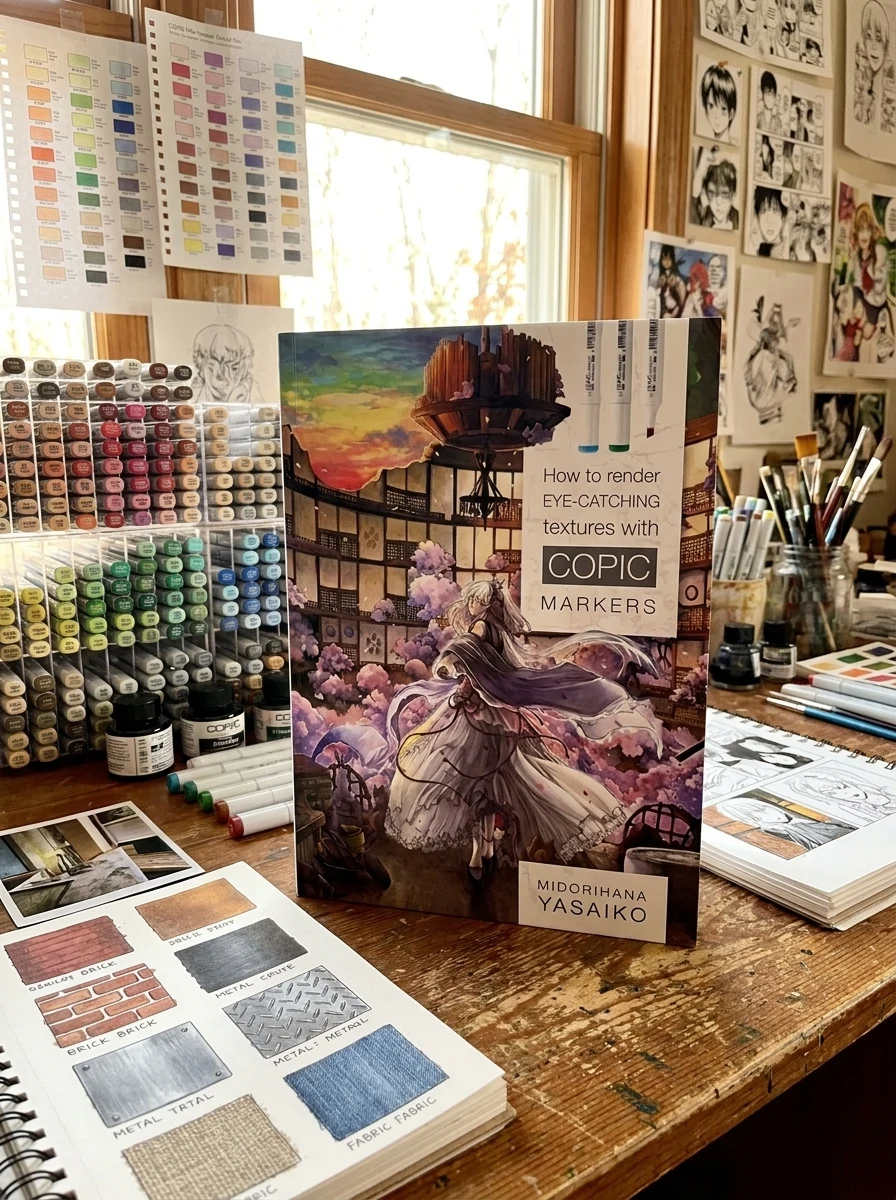
Yasaiko Midorihana, a celebrated manga artist, demystifies the art of texture creation using Copic markers. This comprehensive guide bridges the gap between basic application and masterful realism, offering step-by-step visual instructions for rendering diverse materials like polished metals and rough bricks. The text includes extensive color sample sheets to aid in selection, ensuring that even complex surfaces appear tangible and convincing. It is a vital resource for artists seeking to elevate their work beyond flat color into lifelike depth, proving that these popular tools can achieve photographic fidelity.
This volume sits within the contemporary intersection of Japanese manga illustration techniques and Western craft publishing, specifically focusing on advanced material rendering. It reflects the modern trend of democratizing professional-grade artistic skills through accessible, step-by-step visual guides.


📝 Description: How to Render Eye-Catching Textures with Copic Markers
💎 Expert review
📖 Why choose it
Why this book is worth reading
This book is an essential resource for digital and traditional artists who feel their work lacks tactile presence. Yasaiko Midorihana empowers creators to transcend flat color, offering a bridge to photographic fidelity through humble markers. If you struggle with rendering polished metals or rough bricks, this guide provides the visual logic needed to make surfaces tangible. It is particularly valuable for manga enthusiasts and illustrators seeking to elevate their portfolio with lifelike depth. The extensive color samples ensure accurate material selection, making complex realism achievable without expensive tools. By demystifying texture creation, it invites artists to explore metallic and masonry realism with confidence, proving that advanced effects are within reach of those willing to learn the specific application techniques detailed in these pages.
⭐ Reader reviews
Reader rating
This exceeded my expectations. The text itself is dense but rewarding — you get out what you put in. I found myself reading passages aloud just to sit with them. My only regret is not ordering it sooner.
A friend in my study group recommended this one. Some sections stopped me cold in the best way. Great value for what you get.
This exceeded my expectations. Every rereading turns up something I missed. My only quibble is the cover feels thinner than expected. Still worth having on the shelf.
Midorihana’s guide is a practical manual for achieving high-fidelity textures using Copic markers. It excels in its step-by-step visual instructions, effectively bridging the gap between basic application and masterful realism. The inclusion of color sample sheets is a significant advantage for accurate material representation. However, this book does not suit readers seeking theoretical art history or abstract conceptual frameworks. It is strictly a technical manual focused on specific tool mastery rather than broader artistic philosophy. Those looking for general drawing advice outside of texture rendering may find the scope too narrow. It is also unsuitable for artists who prefer digital-only workflows without physical marker practice.
❓ Frequently asked questions
📖 Who should read this
Illustrators and manga artists seeking to break the limits of flat shading. If you crave tactile realism in your digital or traditional work, this manual is your essential guide to mastering material simulation.
🎯 Key themes and symbolism
Material Realism
The book meticulously breaks down how to simulate physical substances, focusing on the interplay of light and surface. By layering specific ink combinations, Midorihana teaches readers to replicate the sheen of steel, the porosity of stone, and the grain of wood, turning abstract color into concrete, touchable reality on paper.
Color Mastery
Beyond mere application, this text emphasizes the strategic selection and blending of hues. Extensive sample sheets serve as a visual dictionary, guiding the artist through complex palettes required for shadows, highlights, and mid-tones, ensuring that every texture feels chemically and physically accurate rather than artificially colored.
Technique Evolution
Progressing from foundational strokes to advanced texturing, the guide offers a structured path for skill development. It moves readers past simple coloring into the realm of illustration, demonstrating how controlled marker manipulation can produce powerful, realistic imagery that defies the medium's reputation for flatness.
💬 Quotes from the book
“Drawings introduced in this book are powerful, and quite realistically rendered.”
“Nobody would ever guess that they were drawn with COPIC markers!”
📜 Historical context
📚 Glossary
- Alcohol-Based Ink
- Color Sample Sheet
- Hyper-Realism
📔 Questions to reflect on
- Which mundane object in your room has the most complex texture you wish you could replicate?
- How does the reflection of light change the perceived color of a metallic surface?
- What layering strategy would you use to make paper look like worn leather?
🏛 Books from this publisher Schiffer Craft
All books from this publisher →

 83
83
You might also like
See more →

 90
90
 89
89

 89
89