US shipping Secure card payment Occult and esoteric books

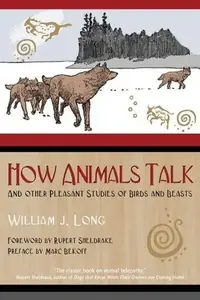
How Animals Talk: And Other Pleasant Studies of Birds and Beasts

Long, William J
Reader rating
4.5
(3 reviews) 106 sold
Availability to be confirmed

This edition can be ordered. No arrival date is confirmed.

📚 ABOUT THE BOOK

Witness the silent, telepathic language of the wild in this pioneering 1919 esoteric naturalist text.

This seminal work dismantles the barrier between human and animal consciousness, arguing that wildlife possesses a rich, telepathic existence far beyond mere instinct. Drawing from decades of intimate field studies, the author reveals how creatures communicate through invisible currents of thought and emotion. It is not merely a biological study but a spiritual inquiry into the shared psychic fabric of all living things, challenging our anthropocentric view of intelligence and moral capacity in the natural world.

Key themes
Animal Telepathy Wilderness Psychology Inter-species Empathy
Historical context

This work emerges from the early 20th-century esoteric naturalist tradition, bridging Victorian spiritualism with modern occult philosophy. It reflects the era's growing interest in non-material forces and the interconnectedness of all life forms within a psychic framework.

Difficulty
●● Moderate
Fans will love it
Edward Berdoe · Arthur E. Waite · Theosophical Society literature · Nature mysticism texts
🕯️ Occult Philosophy
🏛 Bear & Company 📖 312 pages 📔 Paperback 📐 Paperback ISBN: 9781591430568
Fun fact
Long’s text is a vital artifact for the occult naturalist, offering a mystical lens on wildlife that remains startlingly relevant. It excels in evoking wonder and re-framing nature as a psychic community. However, hardline scientists may dismiss its lack of empirical rigor. It sits uniquely between nature writing and parapsychology, essential for those who view the wild as a living, conscious entity rather than a machine of instincts.
📚 This book appears in Esoterica Books

📝 Description: How Animals Talk: And Other Pleasant Studies of Birds and Beasts

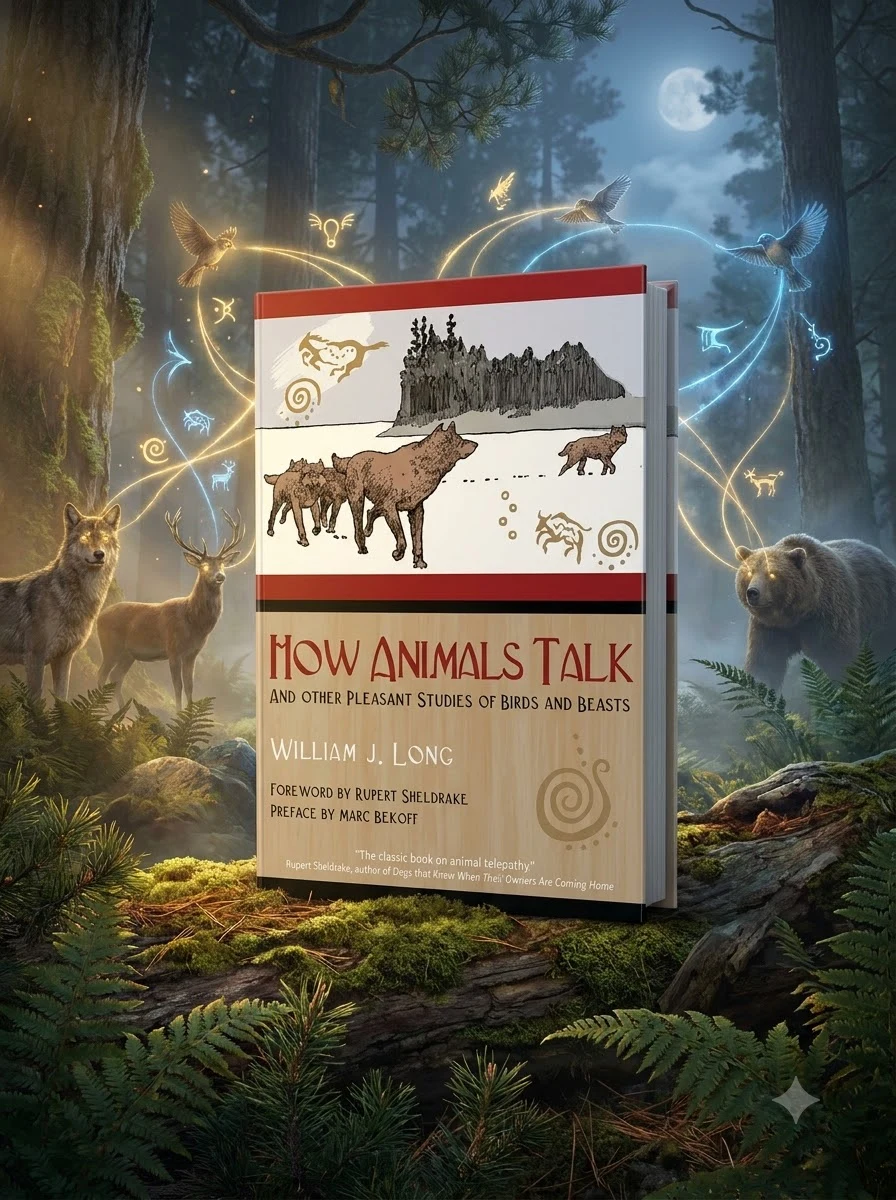
The classic and original text that first explored the telepathic methods of communication of wild animals - Based on years of detailed field observations, first published in 1919 - Written by the famous American naturalist who was the first to study telepathy in the wild - Forewords by biologists Rupert Sheldrake, who has spent 15 years researching the unexplained powers of animals, and Marc Bekoff, the editor of the three-volume Encyclopedia of Animal Behavior Many sources have commented on the silent communication abilities of pets, but never before and not since the first publication of this book in 1919 has the subject of animal telepathy in the wild been so fully researched. How Animals Talk explores the phenomenon of vocal, silent, and even motionless communication among animals. From crow talk to instant herd communication, author William J. Long theorizes that animals are much more intelligent, emotional, and moral than we have traditionally thought and that their ability to sense the presence of other living beings is an innate ability shared by humans as well. Based on many years of field observations, this classic text contains numerous examples of animal behavior that defy conventional explanation. Long believed in the importance and validity of anecdotal evidence. He recognized the dangers of conventional research in reducing animals to mere numbers and how the cold third-person prose of scientific study can objectify animals, distancing "us" from "them." His findings on the impact of our presence on animal life--and the cost that we pay in separating ourselves from animals, who help define our place in the natural world--may be more relevant today than ever before.

💎 Expert review

💎
Esoterica Books editorial team
Occult literature desk
While intellectually stimulating for its time, this book may frustrate readers expecting rigorous scientific methodology or empirical data. Those strictly adhering to materialist biology will likely dismiss its telepathic claims as mere anecdote rather than evidence. The text demands a willingness to accept esoteric premises without traditional validation, which might alienate skeptics. However, for the spiritually inclined naturalist, it remains a vital, if dated, artifact. It does not suit those seeking dry taxonomy or hard science, but rather offers a poetic, psychic inquiry into the shared emotional currents of beasts and birds.
✓ EDITOR'S REVIEW

📖 Why choose it

📖

Why this book is worth reading

Readers drawn to the intersection of spirituality and natural history will find profound resonance in this pioneering exploration of animal consciousness. It appeals particularly to those seeking to dismantle anthropocentric views of intelligence, offering a gentle but firm challenge to conventional biological boundaries. If you have ever felt a silent connection with wildlife or suspected a deeper psychic fabric uniting all living things, this text validates those intuitions through decades of intimate field study. It is ideal for occult practitioners interested in telepathy, naturalists open to esoteric interpretations, and anyone yearning for a more respectful, spiritual dialogue with the wild world around them.

⭐ Reader reviews

The starting rating comes from the team Esoterica Books —
⭐ Esoterica editorial review Editorial rating 4.6/5
★★★★
Readers fascinated by parapsychology, those skeptical of materialist biology, and anyone seeking a deeper, mystical connection with the animal kingdom through proven observational lore.

Reader rating

4.5
Based on 3 reviews
5
1
4
2
3
0
2
0
1
0
A
Ashley M. ✓ Verified purchase
May 15, 2026
A treasure

Exactly what I was looking for. The historical context alone makes it worth the price. It pairs well with more modern commentaries on the same tradition. My only regret is not ordering it sooner.

C
Caleb D. ✓ Verified purchase
September 12, 2024
Solid edition

Was skeptical at first. It's become a regular reference in my practice. Delivery took a bit longer than quoted. Good, with the caveats above.

E
Esoterica Books editorial team

While intellectually stimulating for its time, this book may frustrate readers expecting rigorous scientific methodology or empirical data. Those strictly adhering to materialist biology will likely dismiss its telepathic claims as mere anecdote rather than evidence. The text demands a willingness to accept esoteric premises without traditional validation, which might alienate skeptics. However, for the spiritually inclined naturalist, it remains a vital, if dated, artifact. It does not suit those seeking dry taxonomy or hard science, but rather offers a poetic, psychic inquiry into the shared emotional currents of beasts and birds.

❓ Frequently asked questions

No. It is an esoteric exploration of psychic phenomena observed in nature, blending naturalist observation with spiritual theory rather than peer-reviewed biological data.
While it mentions domestic contexts, its primary focus and groundbreaking contribution lie in the telepathic behaviors of wild animals in their natural habitats.

📖 Who should read this

Readers fascinated by parapsychology, those skeptical of materialist biology, and anyone seeking a deeper, mystical connection with the animal kingdom through proven observational lore.

🎯 Key themes and symbolism

Animal Telepathy

Wilderness Psychology

Inter-species Empathy

💬 Quotes from the book

“The wild is not silent; it speaks in a tongue we have forgotten how to hear.”

“Intelligence is not the monopoly of man, but a flame burning equally in the beast.”

📜 Historical context

Emerging in 1919, this text predates modern ethology by decades, sitting at the crossroads of early spiritualism and natural history. It influenced later thinkers like Rupert Sheldrake, bridging the gap between Victorian nature writing and 20th-century psychic research, establishing animal communication as a legitimate field of esoteric study.

📚 Glossary

Wild Telepathy
Moral Sense
Field Observation

📔 Questions to reflect on

  1. When was the last time you felt a creature's presence without seeing it? Describe the sensation.
  2. How might your relationship with animals change if you believed they communicated via thought rather than sound?
  3. What moral judgments do you unconsciously apply to animal behavior that might be projections of human values?

🏛 Books from this publisher Bear & Company

All books from this publisher →
You might also like

See more →