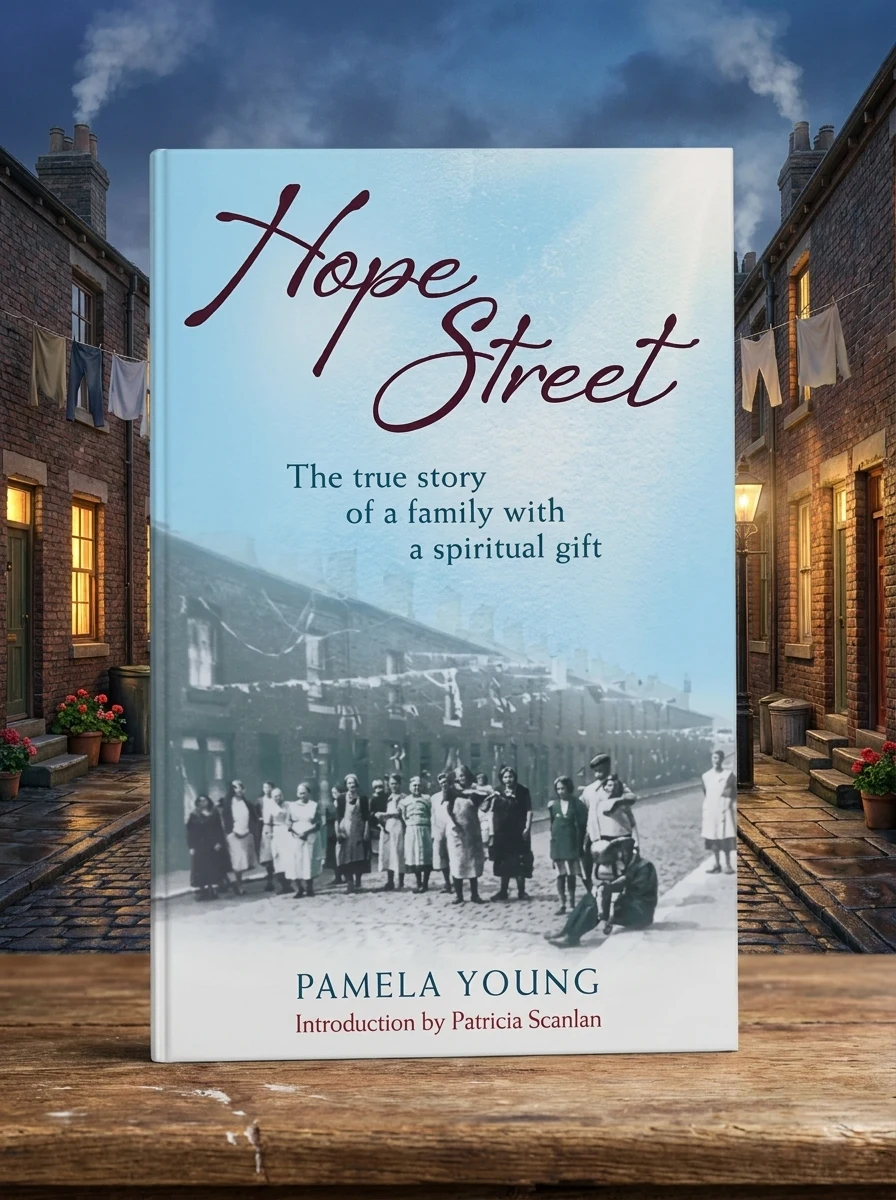
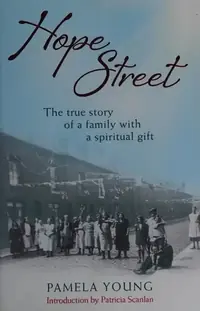
Hope Street


This edition can be ordered. No arrival date is confirmed.
A visceral memoir of Horwich’s cobbled streets, where grief meets the spirit world through generations of psychic women.
Pamela Young unearths the hidden history of her North Manchester family, where the cobblestones of Hope Street North witnessed both brutal tragedy and supernatural communion. Amidst the terraced houses of a traditional working-class community, the family endured profound losses—from diphtheria to a double suicide—yet remained anchored by a rare inheritance. The women possessed the ability to bridge the veil, hosting sittings that drew spirits into their humble homes. This narrative weaves together the raw reality of class struggle with the ethereal comfort of spiritualism, offering a poignant exploration of how faith and psychic gift sustain a lineage through the darkest hours of human existence.
This work sits firmly within the tradition of British spiritualism and working-class memoir, exploring how psychic gifts sustained lineage through the harsh realities of early 20th-century industrial England. It bridges the gap between historical social history and personal occult practice, reflecting a period where spiritual communion was a vital coping mechanism for grief.


📝 Description: Hope Street
💎 Expert review
📖 Why choose it
Why this book is worth reading
Readers drawn to the intersection of personal grief and supernatural experience will find profound resonance here. Those interested in the hidden histories of working-class women gain a poignant window into how spiritualism provided both comfort and community amidst brutal loss. The narrative offers a unique perspective on resilience, showing how psychic inheritance served as an anchor through tragedy. It appeals to anyone seeking to understand how faith bridges the gap between life and death in times of despair. The visceral connection to place, specifically Horwich’s cobbled streets, grounds the ethereal experiences in tangible reality. This book is essential for those who believe that history is not just written by the living but mediated by those who can hear the dead.
⭐ Reader reviews
Reader rating
Honestly wasn't sure what to expect, but I'm impressed. I found myself reading passages aloud just to sit with them. I appreciated how the argument builds steadily from first principles. It assumes more background than a beginner might have. Still worth having on the shelf.
I've read excerpts online before, but having the full text is different. Some sections stopped me cold in the best way. It's become a regular reference in my practice. One of my better finds this year.
Young delivers a compelling, albeit heavy, account of familial trauma and psychic duty. While the atmosphere is richly drawn through the setting of Hope Street North, readers seeking lighthearted escapism or purely academic occult theory may find it lacking. The raw depiction of diphtheria and suicide might alienate those sensitive to graphic descriptions of mortality. However, for those willing to engage with its somber tone, the exploration of generational trauma through a spiritualist lens is both authentic and moving. It does not shy away from the dark side of the veil, making it a challenging but rewarding read for dedicated students of esoteric history.
❓ Frequently asked questions
📖 Who should read this
Readers drawn to authentic spiritual memoirs, those interested in the sociology of British spiritualism, and anyone seeking comfort in narratives that validate the persistence of the soul beyond physical death.
🎯 Key themes and symbolism
Intergenerational Psychic Gift
Working-Class Spiritualism
Grief and Resilience
💬 Quotes from the book
“The cobbled streets of Hope Street North held more than just memories; they held the echoes of those who had crossed the veil.”
“In the heart of the terraced houses, the women did not just survive tragedy; they translated it into conversation with the unseen.”
📜 Historical context
📚 Glossary
- Mediumship
- Horwich
- Sitting
📔 Questions to reflect on
- What family secrets or unspoken histories do you carry that might shape your own spiritual or emotional landscape?
- How do you interpret the concept of 'home' when it serves as a sanctuary for both grief and transcendence?
- In what ways have you experienced the persistence of love or presence after a significant loss?
🏛 Books from this publisher Hodder & Stoughton
All books from this publisher →
You might also like
See more →