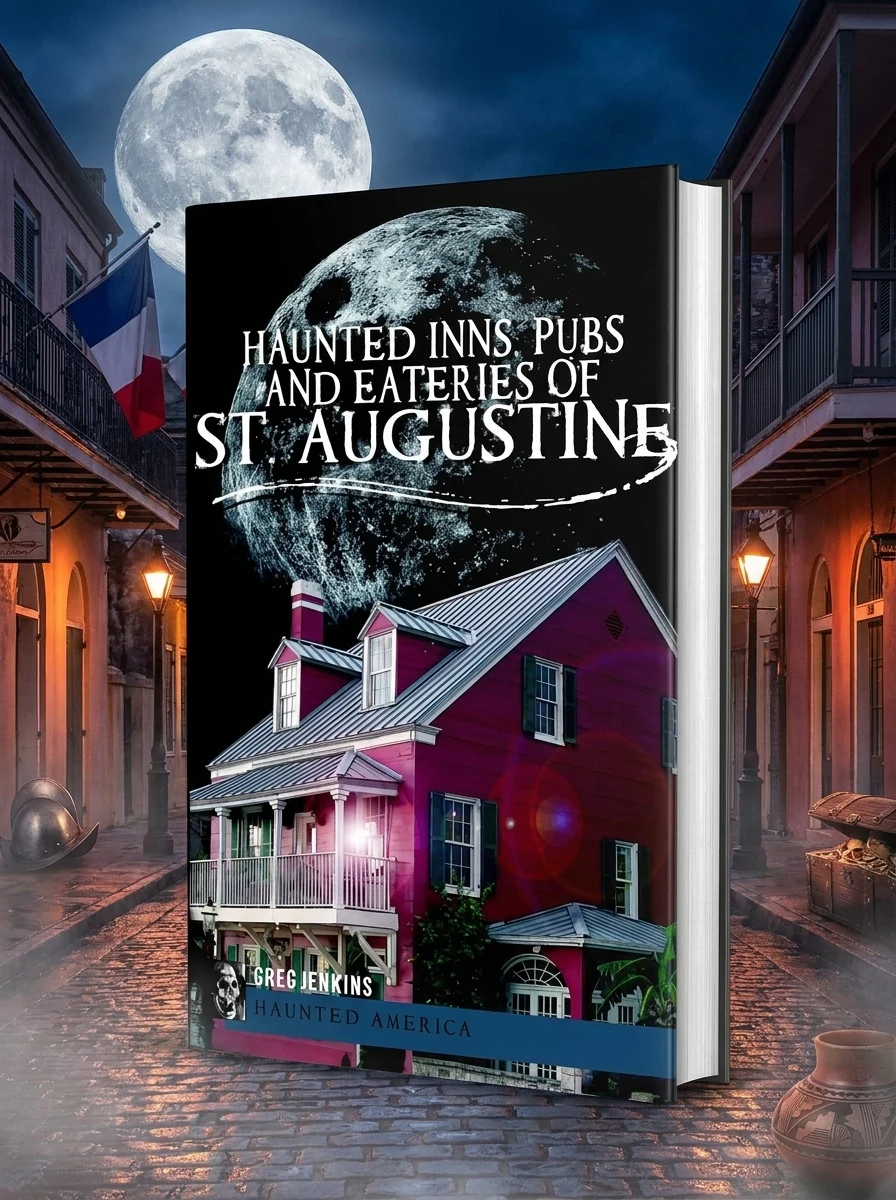
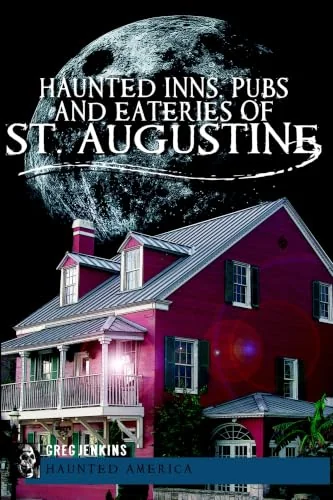
Haunted Inns, Pubs and Eateries of St. Augustine
✍️ Jenkins, GregCurrently unavailable
This book is sold out right now. Leave your email — we'll let you know if it comes back, and you'll get 10% off any book today.
In stock now — readers of this book also loved:








This captivating volume delves into the pervasive paranormal activity reported within St. Augustine's oldest establishments. Greg Jenkins meticulously connects the city's turbulent past, from colonial conflicts involving French Huguenots, Spanish forces, and indigenous tribes to later English privateer raids, with the lingering spirits said to inhabit its inns, pubs, and eateries. Readers will uncover tales of spectral residents who never truly departed, offering a unique blend of Florida's ancient history and chilling supernatural encounters. Prepare to journey through time and beyond, encountering the unseen within the heart of the nation's oldest city.


📝 Description: Haunted Inns, Pubs and Eateries of St. Augustine
📑 What's inside
- Preface
- Acknowledgements
- Introduction / St. Augustine: An Ancient City of Dreams
- House of Sea & Sun: 2-B Street
- Bayfront Marin House: 142 Avenida Menendez
- Casablanca Inn: 24 Avenida Menendez
- Casa de Suenos: 20 Cordova Street
- St. Francis Inn: 279 St. George Street
- Miss Caroline's Guest House: 41 San Marcos Avenue
- Ancient City Inn: 47 San Marcos Avenue
- Our House of St. Augustine: 7 Cincinnati Avenue
- O.C. White's Seafood & Spirits: 118 Avenida Menendez
- Harry's Seafood Bar & Grille: 46 Avenida Menendez
- Prince of Wales Restaurant: 54 Cuna Street
- Scarlett O'Hara's Bar and Restaurant: 70 Hypolita Street
- Stogies Jazz Club & Listening Room: 36 Charlotte Street
- Hurricane Patty's Restaurant: 69 Lewis Boulevard
- Epilogue
- References
- About the Author
💎 Expert review
📖 Why choose it
Why this book is worth reading
Readers who crave a tangible connection to the past will find immense satisfaction in this volume, particularly those with an affinity for St. Augustine’s rich and turbulent heritage. It is ideal for history buffs eager to see how colonial conflicts involving French Huguenots, Spanish forces, and indigenous tribes echo through modern spiritual encounters. Travelers planning visits to the nation's oldest city can use it as a chilling guide to hidden narratives. Those interested in the intersection of English privateer raids and contemporary paranormal activity will appreciate Jenkins’ meticulous linking of earthly history with lingering spirits. It offers a unique blend of ancient Florida history and supernatural intrigue, making it perfect for anyone seeking to understand the unseen residents inhabiting historic inns and eateries.
⭐ Reader reviews
Reader rating
Jenkins provides an engaging compilation of spectral whispers that effectively bridges the gap between historical fact and paranormal folklore. The narrative successfully connects the city’s turbulent past with current hauntings, offering a cohesive experience for enthusiasts of local legends. However, readers seeking rigorous academic historiography or scientific debunking of ghost stories should look elsewhere, as this text prioritizes anecdotal evidence and atmospheric storytelling over critical analysis. It is not suitable for skeptics demanding empirical proof or those uninterested in the specific cultural context of St. Augustine’s colonial era. The book shines best as a companion for ghost tours rather than a scholarly reference.
❓ Frequently asked questions
📖 Who should read this
Are you fascinated by the convergence of history and the unseen? Do you seek out the spectral echoes in ancient places, or plan to visit St. Augustine? This book is for the curious explorer and the armchair ghost hunter alike, offering a compelling journey into the city's haunted past and present.
🎯 Key themes and symbolism
Historical Hauntings Unveiled
This book meticulously links specific historical events—from early colonial skirmishes between French Huguenots and Spanish forces to later English privateer raids—with the supernatural phenomena observed today. It suggests that St. Augustine's tumultuous past is not merely recorded in archives but actively manifests as spectral residents in its ancient buildings, providing deep context for each ghostly report.
Gastronomic Ghost Encounters
Focusing on inns, pubs, and eateries, the volume explores how these very places of sustenance and merriment often become sites of intense spectral activity. It posits that the vibrant energy of human gathering, coupled with the long and often dramatic histories of these establishments, creates fertile ground for spirits to linger, often interacting with unsuspecting patrons and staff.
Cultural Echoes of the Departed
St. Augustine's diverse past, shaped by indigenous tribes, Spanish conquistadors, French settlers, and English occupiers, is explored not just as history but as a tapestry influencing its paranormal landscape. The book suggests that the city's multifaceted cultural heritage directly contributes to the unique nature and variety of its reported ghostly phenomena, enriching each encounter with historical depth.
📜 Historical context
📚 Glossary
- Residual Haunting
- Poltergeist
- Apparition
📔 Questions to reflect on
- If you were to encounter a spirit in one of St. Augustine's historic eateries, what specific question would you most want to ask it about its past or lingering presence?
- Consider a place in your own town with a long, perhaps tumultuous history; what kind of spirits or energies do you imagine might linger there, and what stories might they tell?
- How might the intense, often violent, and culturally diverse history of a place like St. Augustine contribute to the unique intensity or frequency of its reported paranormal activity?
📖 Read on the blog
📖 From the series “Haunted America”
All books in the series →






✍️ More books by this author Jenkins, Greg
All books by this author →


🏛 Books from this publisher History Press
All books from this publisher →





You might also like
See more →

Have a question about this item?
Ask about the edition, condition, delivery or anything else — we reply by email or phone, usually within a day.
