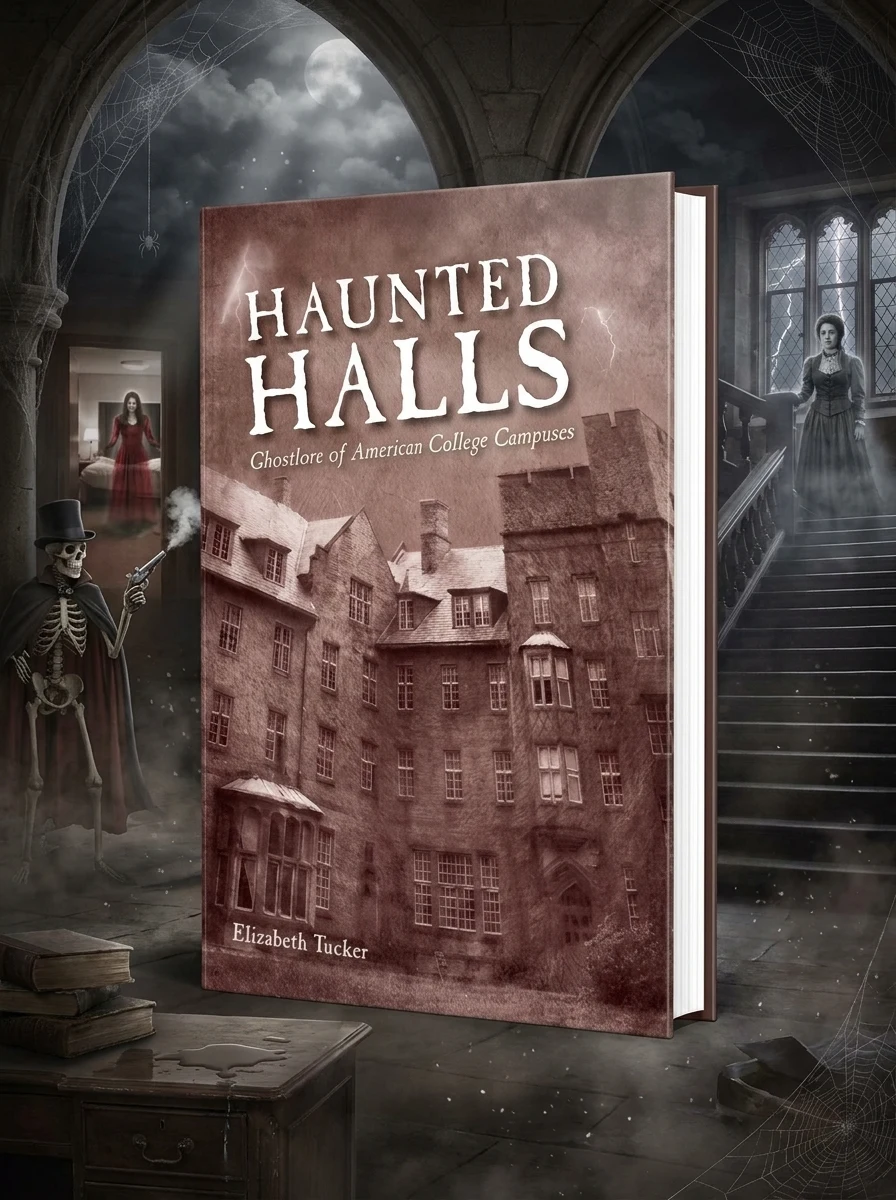
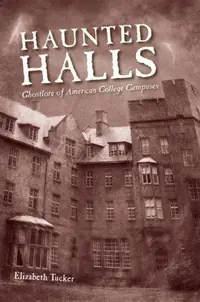
Haunted Halls: Ghostlore of American College Campuses
Tucker, ElizabethStock reported in the catalog; fulfillment is confirmed with your request.
Uncover the spectral secrets haunting America's venerable university halls, where student legends whisper.
Elizabeth Tucker's 'Haunted Halls' offers the first comprehensive study of American college campus ghostlore. She explores why generations of students encounter and share tales of the spectral, from Emory's mischievous Dooley to Mansfield's tragic Sara and Huntingdon's Red Lady. Tucker analyzes these narratives through social, psychological, and cultural lenses, giving special weight to student interpretations and their modern methods of communication. This work reveals how these ethereal figures function as potent metaphors for disorder, identity, and the very spirit of academic life.
This work sits at the intersection of American folklore studies and higher education history, documenting the unique spectral traditions that emerge within academic institutions. It contributes to the broader genre of campus ghostlore by analyzing how student communities construct and share these narratives.


📝 Description: Haunted Halls: Ghostlore of American College Campuses
💎 Expert review
📖 Why choose it
Why this book is worth reading
Readers with a deep affection for university traditions or those fascinated by the intersection of academia and the supernatural will find this book particularly engaging. It serves as an essential resource for anyone interested in how student communities use ghost stories to navigate identity and social disorder. By examining specific legends like those of Emory and Mansfield, the text offers a unique window into the psychological landscape of campus life. It is ideal for folklore enthusiasts who appreciate sociological analysis over mere scare tactics, providing context for why these spectral figures persist as potent metaphors within the structured environment of higher education.
⭐ Reader reviews
Reader rating
Tucker provides a rigorous academic examination of campus ghostlore that may disappoint readers seeking purely entertaining horror stories or sensationalist accounts. The text prioritizes social and cultural analysis over narrative thrill, making it potentially dry for those looking for light entertainment. However, scholars and serious enthusiasts of American folklore will appreciate the comprehensive scope and the focus on student interpretations. It is not suitable for casual readers expecting quick, spooky anecdotes without analytical depth. Those interested in how spectral narratives reflect academic identity will find value here, while others may find the methodological approach too dense.
❓ Frequently asked questions
📖 Who should read this
If you're fascinated by the intersection of folklore and academic life, or curious about the supernatural narratives woven into American culture, this book is for you. Dive into the psychology behind campus legends and discover what these spectral stories truly reveal about student experiences.
🎯 Key themes and symbolism
Student Storytelling & Folklore
This book meticulously documents how college students are the primary creators and disseminators of campus ghostlore. Tucker examines the evolution of these legends from the mid-1960s to 2006, highlighting how modern communication methods like email and instant messages have influenced their sharing and adaptation within academic communities over time.
Ghosts as Cultural Metaphors
Beyond mere spooky tales, campus ghosts are presented as powerful symbolic representations. Tucker reveals how these specters embody deeper societal and psychological themes, serving as metaphors for academic anxieties, social disorder, individual identity struggles, and even the collective spirit of the institution itself, reflecting student experiences and beliefs.
Analytical Interpretations
Tucker employs a robust, multidisciplinary approach, blending social science, psychology, and cultural analysis to dissect campus ghost narratives. Her work focuses not just on cataloging stories but on understanding the profound meanings and significance students themselves attribute to these supernatural phenomena, providing fresh insights into their cultural function.
💬 Quotes from the book
“The spectral figure on campus is rarely just a frightful apparition; it is often a mirror reflecting the anxieties of academic pressure or the echoes of institutional memory.”
“From the whispered tales in dormitories to the instant messages exchanged across networks, the continuity of campus ghostlore speaks to a universal human need for narrative meaning within liminal spaces.”
📜 Historical context
📚 Glossary
- Ghostlore
- Ethnography
- Campus Legend
📔 Questions to reflect on
- Consider a ghost story from your own schooling or community. What social or psychological anxieties might it secretly express, and for whom?
- How do modern communication technologies (like social media or instant messaging) change the way local legends or supernatural tales are shared and evolve compared to traditional oral storytelling?
- If a university campus can be considered a 'liminal space' between youth and adulthood, how might ghost stories there function as rites of passage or cautionary tales for new students?
✍️ More books by this author Tucker, Elizabeth
All books by this author →
🏛 Books from this publisher University Press of Mississippi
All books from this publisher →
 83
83
You might also like
See more → 88
88
 83
83
 83
83
 91
91