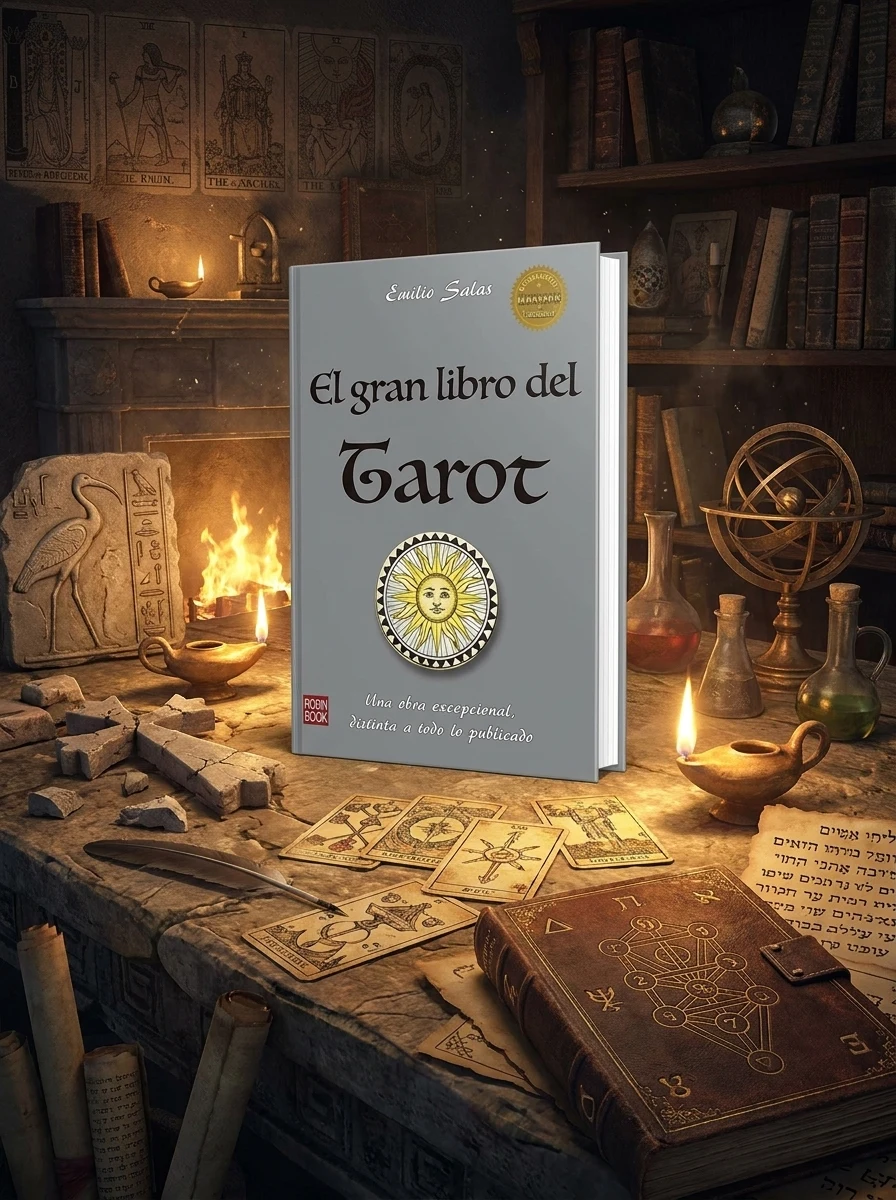
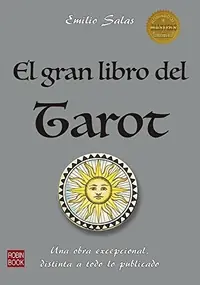
El Gran Libro del Tarot Salas, Emilio
Stock reported in the catalog; fulfillment is confirmed with your request.
Uncover Tarot's ancient origins, a graphical gnosis born from Hermetic and Kabbalistic wisdom.
Emilio Salas's "El Gran Libro del Tarot" delves into the profound origins of the Tarot, tracing its emergence in the 13th century following the decline of the Cathars. The book positions Tarot as a unique graphical system, a synthesis that elegantly merges the ancient wisdom of Greco-Egyptian Hermeticism and Hebraic Kabbalah. It presents the cards not merely as predictive tools, but as a sophisticated doctrinal framework embodying occult knowledge from antiquity. Salas further explores how the Tarot functions as a material foundation for expanding intuitive faculties in divination, adapting its archetypal meanings to each individual's journey.
This work situates the Tarot within the esoteric currents of Hermeticism and Kabbalah, framing the deck as a synthesis of Greco-Egyptian and Hebraic wisdom rather than mere fortune-telling artifacts. It engages with historical narratives linking the cards to post-Cathar developments in the 13th century.


📝 Description: El Gran Libro del Tarot Salas, Emilio
💎 Expert review
📖 Why choose it
Why this book is worth reading
Readers deeply invested in the mystical roots of Western occultism will find this volume indispensable for understanding the Tarot as a sophisticated doctrinal framework. Emilio Salas offers more than simple card meanings; he provides a graphical gnosis that bridges ancient Hermetic and Kabbalistic traditions. Those seeking to expand their intuitive faculties through archetypal analysis rather than rigid prediction will appreciate the individualized approach to divination. It is essential for practitioners who view the cards as a mirror for personal spiritual evolution, offering a profound exploration of how these symbols serve as a material foundation for expanding consciousness and connecting with ancient wisdom.
⭐ Reader reviews
Reader rating
Salas presents a dense intellectual architecture that may overwhelm casual hobbyists seeking quick fortune-telling guidance. This text is strictly for those committed to the philosophical underpinnings of esotericism, requiring patience for its historical and theological arguments. Readers expecting straightforward predictive methods or light entertainment will likely find it dry and overly academic. However, for scholars and serious occultists, it offers a compelling synthesis of Greco-Egyptian and Hebraic thought. It does not suit those who prefer modern psychological interpretations devoid of historical doctrinal weight, nor those uncomfortable with complex metaphysical systems rooted in antiquity.
❓ Frequently asked questions
📖 Who should read this
If you seek to understand the Tarot beyond simple fortune-telling, this book is for you. It will appeal to students of Hermeticism, Kabbalah, and anyone curious about the profound historical and philosophical underpinnings that shape the cards' enduring power and symbolism.
🎯 Key themes and symbolism
Tarot's Historical Genesis
This book meticulously charts the Tarot's appearance in the early 13th century, contextualizing it within the intellectual landscape after the Cathar eradication. It posits the deck as a groundbreaking visual language that bridged the dominant esoteric traditions of its time, providing a tangible link to ancient occult thought.
Graphical Gnosis & Synthesis
Salas illuminates how Tarot operates as a unique "graphical gnosis," a visual system for profound spiritual knowledge. He details its role in synthesizing the distinct yet complementary streams of Greco-Egyptian Hermeticism and Hebraic Kabbalah, forging a new, accessible conduit for esoteric wisdom.
Divination & Personal Adaptation
Beyond its historical and symbolic roots, the text explores Tarot's practical application in divination. It emphasizes the cards as a framework to enhance intuitive perception, suggesting that while core meanings exist, each individual unconsciously molds the archetypes to resonate deeply with their personal psyche and experiences.
💬 Quotes from the book
“In the crucible of the early 13th century, after the suppression of the Cathars, Tarot emerged as a visual synthesis of two profound gnoses.”
“Beyond mere fortune-telling, the arcanas function as archetypal mirrors, subtly adapting their ancient meanings to the unique resonance of each inquirer.”
📜 Historical context
📚 Glossary
- Hermeticism
- Kabbalah
- Gnosis
📔 Questions to reflect on
- How does the concept of Tarot as a "graphical gnosis" change your understanding of its purpose and power?
- Consider the synthesis of Hermeticism and Kabbalah within the Tarot. What new insights does this offer into the interconnectedness of ancient esoteric traditions?
- In what ways do you believe the archetypal meanings of the Tarot adapt to your personal experiences and subconscious, as suggested by the author?
You might also like
See more →
 91
91

![The Uncommon Tarot: (78-Card Deck and Guidebook) [With Book(s)]](/img/the-uncommon-tarot-78-card-deck-and-guidebook-with-book-s-scene.webp)
