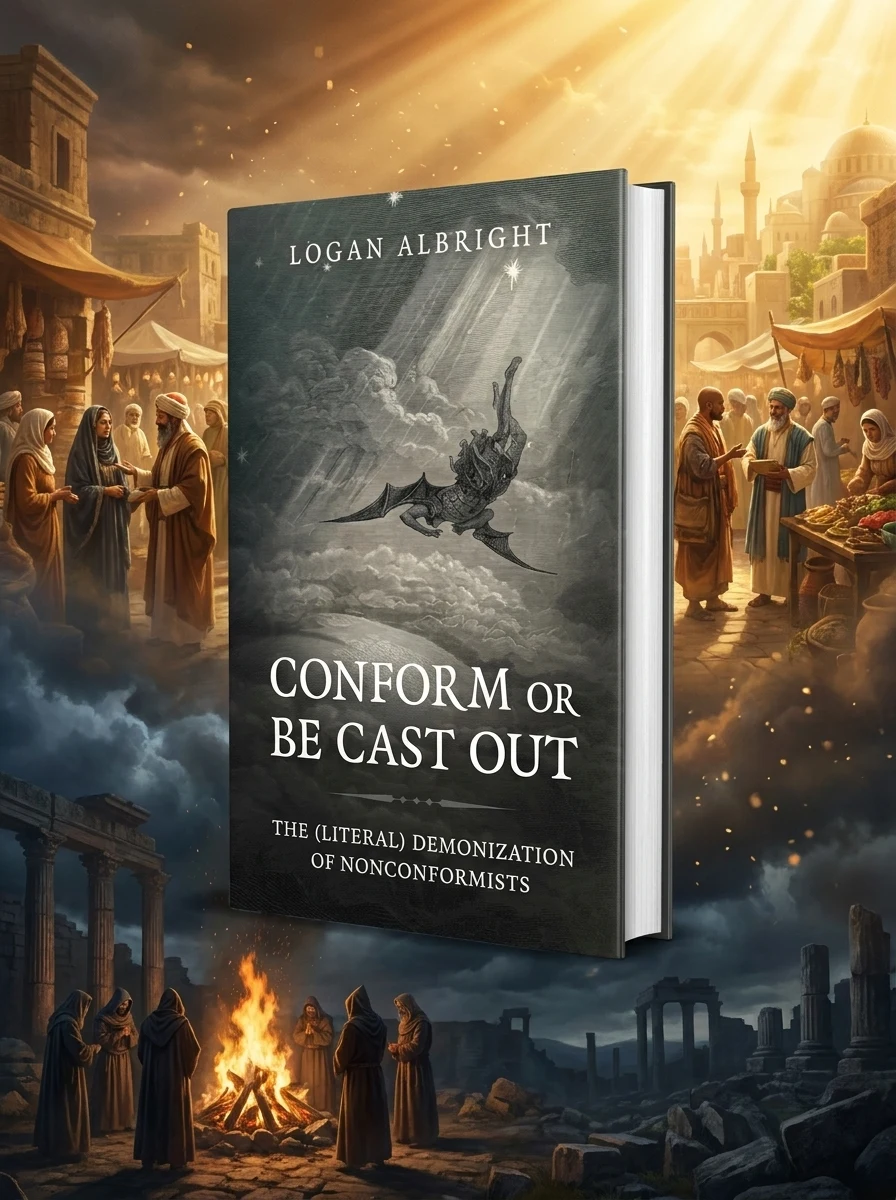
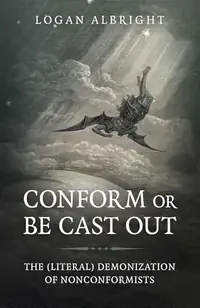
Conform or Be Cast Out: The (Literal) Demonization of Nonconformists
Albright, LoganThis edition can be ordered. No arrival date is confirmed.
Unmasking the ancient roots of demonizing difference, this book reveals why nonconformists become monsters.
Logan Albright’s incisive work delves into humanity’s persistent habit of not just shunning, but actively labeling nonconformists as demonic or evil. Tracing this phenomenon from primeval folklore and mythical devil figures through historical societal shifts, the book exposes how societies enforce conformity by casting out those who deviate. It’s a compelling exploration of the spiritual and social condemnation of difference, arguing for a renewed commitment to tolerance, open dialogue, and universal human dignity in an increasingly polarized world.
Situated within the intersection of occult philosophy and social critique, this work explores the spiritual mechanics of exclusion found in esoteric traditions. It bridges ancient folklore with modern societal dynamics to examine how nonconformity is metaphysically constructed.


📝 Description: Conform or Be Cast Out: The (Literal) Demonization of Nonconformists
💎 Expert review
📖 Why choose it
Why this book is worth reading
This book serves as a vital mirror for anyone who has ever felt marginalized by rigid social or spiritual norms. It offers profound comfort to nonconformists by validating their experiences through a deep historical lens, showing that the label of 'demon' is often a projection of societal fear rather than an inherent truth. Readers seeking to understand the root causes of polarization will find clarity here, as Albright unpacks the mechanisms of condemnation. It is essential for those wishing to cultivate greater tolerance and dignity in their communities, providing intellectual tools to dismantle the ancient habits that dehumanize difference. Ultimately, it empowers readers to reject unjust labels and embrace a more inclusive worldview grounded in open dialogue.
⭐ Reader reviews
Reader rating
Albright delivers a compelling dissection of how societies enforce conformity through spiritual condemnation. The argument is robust, tracing the lineage from primeval folklore to modern polarization with incisive clarity. However, this text may not suit readers seeking purely academic historiography or those who prefer detached, dry analysis over thematic exploration. It also might challenge individuals deeply invested in rigid dogmatic structures that rely on clear distinctions between 'good' and 'evil.' Despite these limitations, the work succeeds in its goal of exposing the social utility of demonization. It is a necessary read for understanding the psychological underpinnings of exclusion, though its persuasive tone may feel too prescriptive for those preferring neutral observation.
❓ Frequently asked questions
📖 Who should read this
If you're fascinated by the intersection of social psychology, mythology, and the dark undercurrents of human intolerance, this book is for you. It's a vital read for anyone questioning why difference still sparks such profound, often irrational, fear and condemnation in our world.
🎯 Key themes and symbolism
The Demonic Other
This book meticulously chronicles how societies throughout history have not merely ostracized those who deviate from the norm, but have actively ascribed malevolent, often supernatural, qualities to them. It examines the deep-seated human impulse to transform the unconventional into the diabolical, from ancient scapegoating rituals to modern cultural anxieties.
Historical Scapegoating
Delving into the origins of societal fear, Albright traces the evolution of scapegoat figures and literal devil archetypes across diverse mythologies and folk traditions. It reveals how these symbolic roles became mechanisms for social control, allowing communities to project their anxieties and maintain conformity by casting out perceived threats.
Contemporary Conformity & Tolerance
The work critically assesses how contemporary society, despite its liberal ideals, continues to grapple with intense pressures for conformity. It argues that the underlying mechanisms for demonizing nonconformity persist, highlighting the urgent need for a renewed commitment to open discourse, mutual respect, and the fundamental acceptance of human diversity.
💬 Quotes from the book
“The impulse to declare the different as 'evil' is not a relic of a primitive past; it is a persistent shadow that continues to shape our present, even cloaked in modern rationales.”
“From the village pariah of ancient myth to the marginalized voice in contemporary discourse, the mechanics of exclusion, cloaked in moral panic, remain chillingly consistent.”
📜 Historical context
📚 Glossary
- Demonization
- Nonconformist
- Scapegoat
📔 Questions to reflect on
- Consider a time in history or your own life when someone was unfairly labeled or ostracized for being different. What were the underlying fears or motivations at play?
- How might contemporary social media or political rhetoric inadvertently echo ancient patterns of 'demonizing' opposing viewpoints or nonconformist ideas?
- In what ways can we, as individuals and communities, cultivate genuine tolerance and mutual respect without sacrificing the importance of robust, critical debate?
✍️ More books by this author Albright, Logan
All books by this author →
🏛 Books from this publisher Moon Books
All books from this publisher →

 81
81

 89
89



You might also like
See more →
 91
91
 91
91