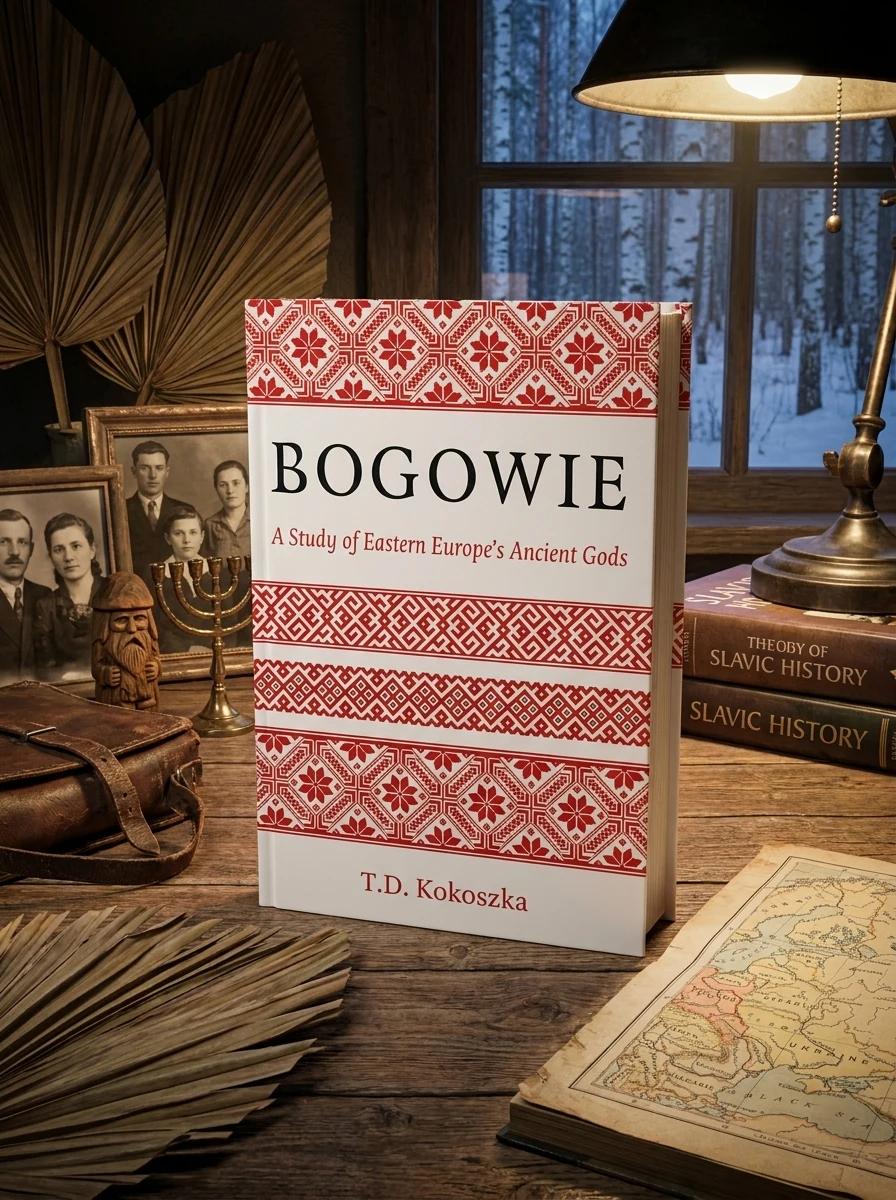
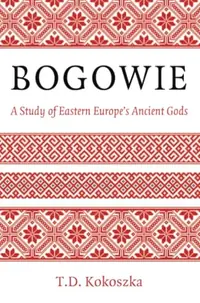
Bogowie: A Study of Eastern Europe's Ancient Gods
Stock reported in the catalog; fulfillment is confirmed with your request.
Unearth the forgotten pantheon of Eastern Europe's ancient Slavic gods and their vibrant spiritual heritage.
Delve into the rich, often overlooked spiritual traditions of the ancient Slavs with T.D. Kokoszka's meticulous study. Born from the author's personal quest to understand his Eastern European heritage, this volume moves beyond outdated Soviet-era interpretations to offer a fresh perspective on Slavic paganism. Kokoszka draws upon previously neglected sources, including a wealth of comparative folklore from various Slavic nations, Ossetian, and Mordvin cultures, to reconstruct the complex tapestry of their deities and beliefs. It's an essential journey into a vibrant spiritual world rarely explored with such depth and care.
This work sits within the modern revival of interest in pre-Christian European spiritualities, specifically focusing on the reconstructed traditions of ancient Slavic paganism. It addresses the gap left by Soviet-era interpretations by drawing on comparative folklore from various Slavic, Ossetian, and Mordvin cultures.


📝 Description: Bogowie: A Study of Eastern Europe's Ancient Gods
💎 Expert review
📖 Why choose it
Why this book is worth reading
Readers with a deep curiosity about Eastern European heritage will find this volume profoundly rewarding. It is ideal for those seeking to move beyond outdated historical narratives and engage with the vibrant, often overlooked spiritual traditions of the ancient Slavs. T.D. Kokoszka’s personal quest provides an intimate lens through which to view complex deities and beliefs, making it essential for anyone wishing to understand a spiritual world rarely explored with such depth. If you value meticulous scholarship grounded in neglected sources like Ossetian and Mordvin folklore, this book offers a unique and necessary reconstruction of a forgotten pantheon.
⭐ Reader reviews
Reader rating
Kokoszka delivers a robust study that successfully challenges Soviet-era interpretations of Slavic paganism through careful analysis of comparative folklore. The author’s personal connection to the material adds warmth to an otherwise academic reconstruction of ancient deities. However, readers expecting modern ritual guides or practical magical applications will be disappointed, as this is strictly a scholarly exploration. It may also feel dense to those unfamiliar with Eastern European ethnography. While it lacks narrative flair, its value lies in its fresh perspective and reliance on previously neglected sources, making it a vital resource for serious students of esoteric history rather than casual hobbyists.
❓ Frequently asked questions
📖 Who should read this
If you're a seeker of forgotten spiritual wisdom, a scholar of comparative religions, or someone with Eastern European roots yearning to connect with ancestral traditions, this book is for you. Prepare to uncover a profound and often misrepresented spiritual heritage.
🎯 Key themes and symbolism
Reconstructing Slavic Paganism
This work meticulously reassembles the fragmented spiritual landscape of ancient Eastern Europe. It goes beyond mere compilation, critically analyzing historical records and folklore to present a coherent, scholarly understanding of the pre-Christian Slavic pantheon and its associated practices, offering a vital resource for modern practitioners and scholars alike.
Comparative Cultural Insights
Kokoszka masterfully contextualizes Slavic beliefs by drawing illuminating parallels with neighboring and related cultures like Ossetian and Mordvin traditions. This comparative approach not only highlights unique aspects of Slavic spirituality but also reveals broader Indo-European mythological currents, enriching our understanding of their divine archetypes.
Bridging Historical Gaps
Addressing the historical neglect and misinterpretations surrounding Slavic paganism, the book actively counters previous scholarship, particularly that from the Soviet period. It champions a new analytical framework, utilizing previously overlooked resources to provide a more authentic, nuanced portrayal of these ancient spiritual systems, free from ideological biases.
💬 Quotes from the book
“The true challenge lies not in mere collection, but in meticulously re-weaving the scattered threads of myth and custom into a coherent tapestry of belief, free from the distortions of later interpretations.”
“By juxtaposing the localized narratives of the Polish 'borowy' with parallel spirit beliefs found in Ossetian traditions, we uncover a deeper, shared substratum of animistic reverence.”
📜 Historical context
📚 Glossary
- Borowy
- Slavs
- Paganism
📔 Questions to reflect on
- How might understanding ancient Slavic spirituality reshape our perception of Eastern European cultural identity today?
- Considering the book's use of comparative folklore, what parallels do you find between Slavic deities and those from other mythological systems you know?
- In what ways do you think modern societies could benefit from re-engaging with the nature-centric beliefs of ancient pagan traditions?
🏛 Books from this publisher Moon Books
All books from this publisher →
 81
81
 89
89

You might also like
See more →
 91
91
 91
91