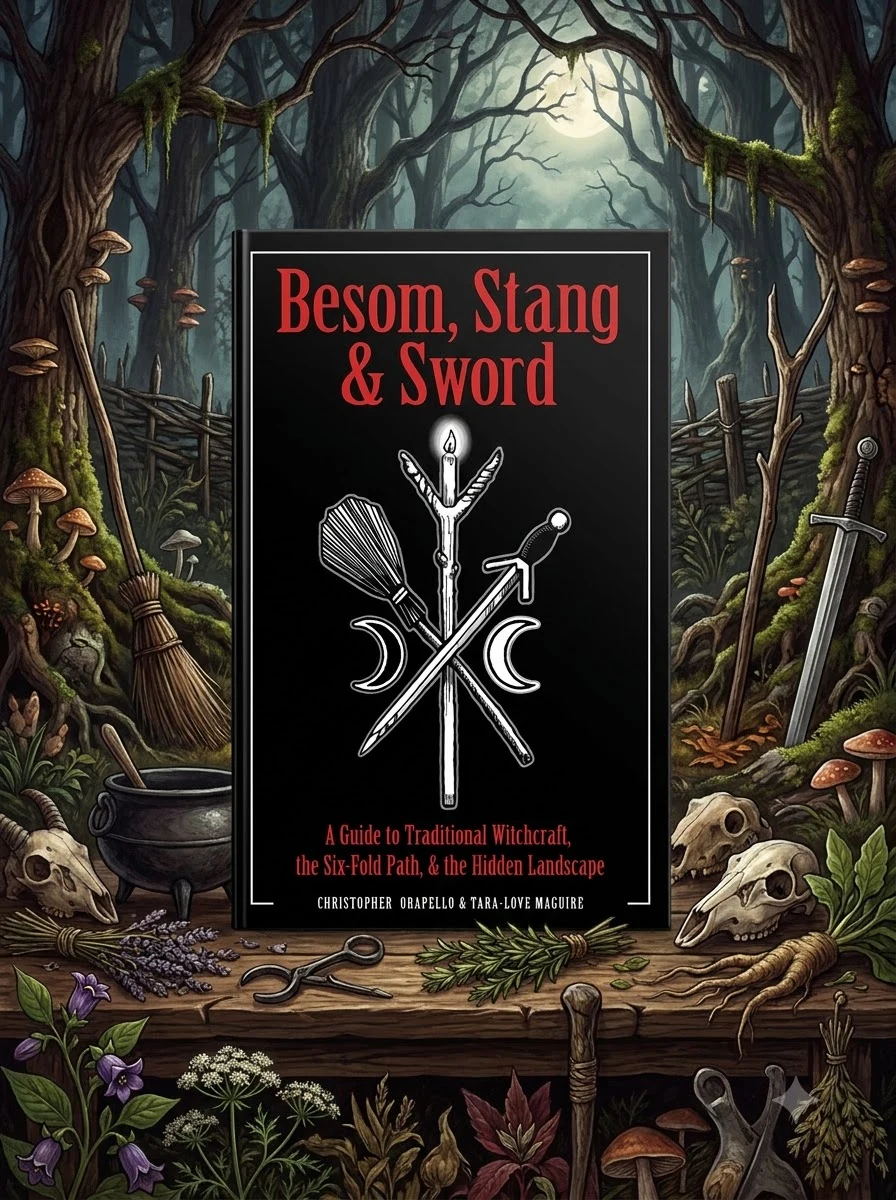
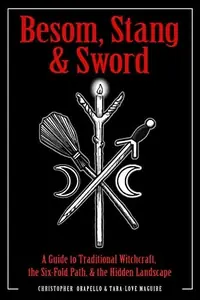
Besom, Stang & Sword: A Guide to Traditional Witchcraft, the Six-Fold Path & the Hidden Landscape
This edition can be ordered. No arrival date is confirmed.
Discover authentic witchcraft rooted in your own landscape, far beyond garden-variety magick.
This compelling guide reclaims the visceral heart of witchcraft, moving beyond modern Neopagan forms to embrace an animistic, regionally attuned practice. It invites practitioners to forge a deep connection with their immediate surroundings—be it wildlands or urban spaces—and ancestral wisdom, rather than relying on abstract deities or distant traditions. Offering a complete, adaptable system, it delves into ritual, chant, trance, and a distinctive "six-fold path," providing a grounded, non-dogmatic approach to the Craft.
This work sits within the traditional witchcraft movement, specifically addressing the gap between modern Neopagan practices and older, animistic regional traditions. It emphasizes a return to grounded, landscape-based spirituality distinct from mainstream Wiccan structures.


📝 Description: Besom, Stang & Sword: A Guide to Traditional Witchcraft, the Six-Fold Path & the Hidden Landscape
💎 Expert review
📖 Why choose it
Why this book is worth reading
Readers seeking a departure from abstract, dogmatic Neopaganism will find profound value in this guide. It is ideal for those who feel disconnected from distant deities and crave a visceral, immediate connection to their local environment. Whether you live amidst wildlands or concrete urban spaces, this book offers a practical, adaptable system for forging deep ties with ancestral wisdom and the hidden landscape of your own region. It appeals to practitioners tired of 'garden-variety' magick who desire an authentic, non-dogmatic approach rooted in animism and regional attunement.
⭐ Reader reviews
Reader rating
Orapello delivers a compelling reclamation of the visceral heart of witchcraft, offering a robust alternative to modern Neopagan forms. The six-fold path provides a clear, adaptable framework for ritual, chant, and trance work grounded in one's immediate surroundings. However, this book is not suited for readers seeking established Wiccan liturgies or abstract theological debates. It may also disappoint those who prefer highly structured, traditionalist systems over the author’s emphasis on personal landscape attunement. For those willing to engage with the raw, unfiltered connection to their local environment and ancestors, it serves as an essential, grounding manual for authentic practice.
❓ Frequently asked questions
📖 Who should read this
If you seek a pragmatic, earth-centered approach to witchcraft unburdened by dogma or foreign pantheons, this book is for you. It's for those ready to connect with their immediate environment and ancestral currents, building a personal practice from the ground up.
🎯 Key themes and symbolism
Animism & Local Practice
The book champions an animistic worldview, encouraging witches to connect with the spirits inherent in their local environment. It shifts focus from universal deities to the specific energies of one's own backyard, emphasizing the practical application of folk magic within the practitioner's immediate landscape, be it rural or urban.
Beyond Neopagan Dogma
Besom, Stang & Sword offers a clear departure from the fertility-focused, deity-centric practices often associated with Wicca and other Neopagan traditions. It presents a non-religious, adaptable framework for witchcraft that prioritizes direct experience, ancestral ties, and the raw forces of nature over prescribed harvest festivals or abstract theological structures.
The Six-Fold Path
Central to this system is a defined "six-fold path" of witchcraft, detailed within the text. This path provides a structured yet flexible methodology for engaging with the Craft, incorporating elements like ritual, chant, and trance. It guides practitioners through a robust practice that avoids academic pretense, focusing instead on direct, embodied magical engagement.
💬 Quotes from the book
“The truest magic resides not in distant pantheons or ancient texts, but in the soil beneath your feet and the wind whispering through your local trees.”
“To truly know the Craft is to shed the pretense of borrowed traditions and rediscover the raw, untamed current flowing through your own ancestry and landscape.”
📜 Historical context
📚 Glossary
- Animism
- Hedge-Witchery
- Six-Fold Path
📔 Questions to reflect on
- How do the immediate natural and urban environments around you speak to an animistic consciousness, and how might you begin to forge a magical relationship with them?
- Reflect on your own ancestral lineage, not just as people, but as a source of inherited wisdom or energetic currents. How might these inform your magical practice?
- Considering the book's non-religious stance, how do you define "sacred" in your personal practice, and what rituals might you create that align with a regional, animistic approach?
🏛 Books from this publisher Weiser Books
All books from this publisher →



 87
87
You might also like
See more →
 91
91