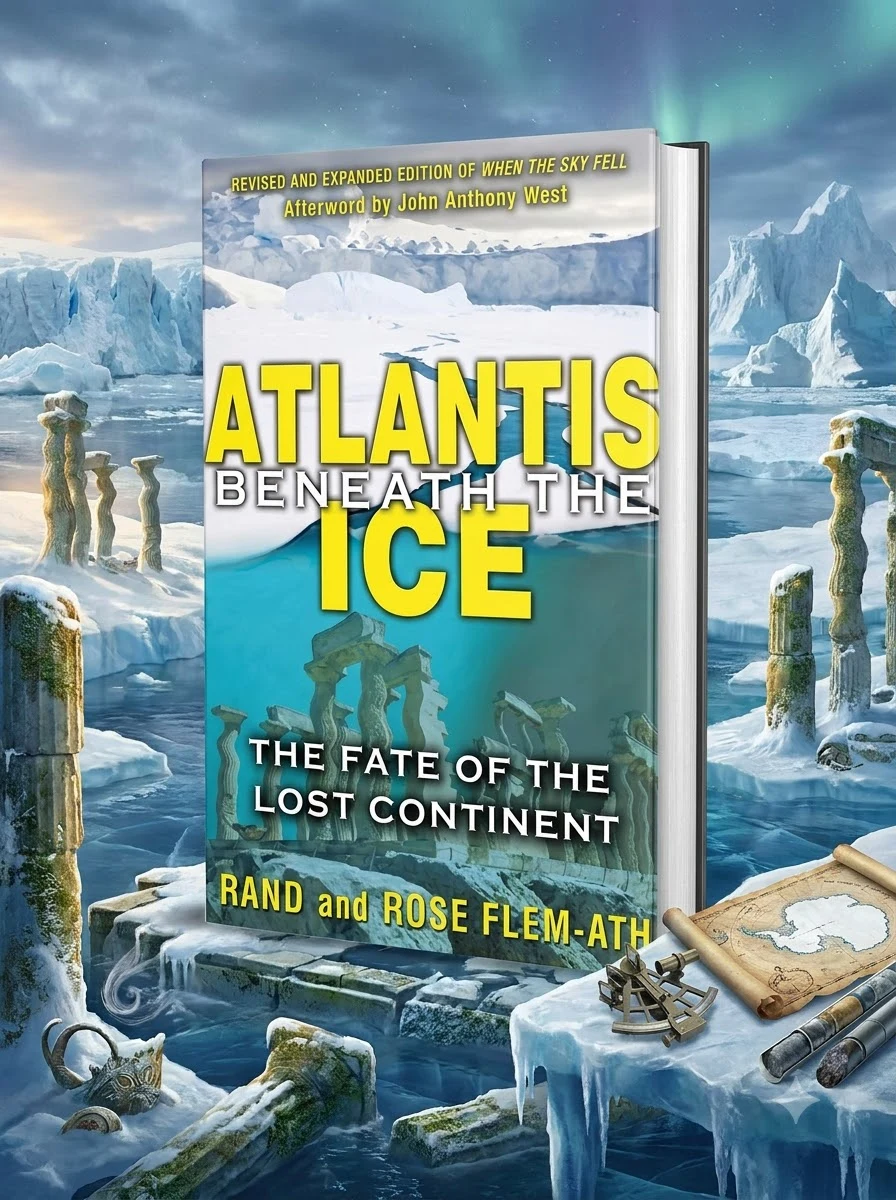
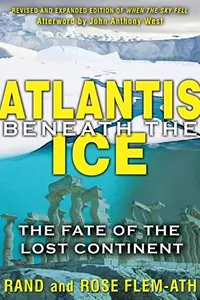
Atlantis Beneath the Ice: The Fate of the Lost Continent (Revised, Expanded)


Stock reported in the catalog; fulfillment is confirmed with your request.
Antarctica's frozen depths may conceal the legendary city of Atlantis, radically rewriting human history.
This compelling volume posits that Atlantis lies entombed beneath Antarctica's ice, a consequence of a dramatic geological upheaval around 9600 BCE. Drawing upon Charles Hapgood's theory of earth crust displacement, championed by Einstein, the authors present a mosaic of evidence. They analyze enigmatic ancient maps, such as the Piri Reis chart, which appear to depict a pre-glacial Antarctic continent. Furthermore, they connect a multitude of global flood myths and tales of cataclysm to a singular, devastating event, offering a unified explanation for ancient mysteries, climate shifts, and the synchronous rise of early agriculture worldwide.
This work belongs to the tradition of alternative history and esoteric geology, popularizing fringe theories that challenge mainstream archaeological consensus. It emerges from the late 20th-century resurgence of interest in lost civilizations and cataclysmic earth changes within occult circles.


📝 Description: Atlantis Beneath the Ice: The Fate of the Lost Continent (Revised, Expanded)
💎 Expert review
📖 Why choose it
Why this book is worth reading
Readers fascinated by the intersection of geology, mythology, and ancient history will find this volume a compelling read. It offers a unified narrative for global flood myths and the sudden rise of agriculture, appealing to those who enjoy speculative connections between disparate historical events. If you are intrigued by the idea that a single cataclysmic event around 9600 BCE reshaped human civilization, this book provides a detailed mosaic of evidence. It is particularly rewarding for enthusiasts of alternative geographical theories and those seeking explanations for enigmatic ancient maps like the Piri Reis chart.
⭐ Reader reviews
Reader rating
This text presents a bold hypothesis that Atlantis lies beneath Antarctica, utilizing Charles Hapgood's earth crust displacement theory to explain global myths and climate shifts. While the synthesis of ancient cartography and geological upheaval is intriguing for believers in alternative history, it demands a suspension of mainstream scientific skepticism. It does not suit readers who prefer rigorously peer-reviewed archaeological data or those uninterested in speculative links between disparate ancient cultures. The argument relies heavily on interpreting ambiguous evidence through a specific theoretical lens, which may feel unsubstantiated to academic historians or strict materialists seeking conventional historical timelines.
❓ Frequently asked questions
📖 Who should read this
If you are captivated by alternative historical narratives, ancient mysteries, and speculative geology, this book offers a paradigm-shifting perspective. It's for those who question conventional timelines and seek to connect disparate pieces of archaeological and mythological evidence into a coherent, compelling theory.
🎯 Key themes and symbolism
Earth Crust Displacement
The book meticulously explores Charles Hapgood's radical theory, which suggests the Earth's entire outer crust can periodically shift over its molten core. This geological phenomenon is presented as the mechanism by which a thriving Atlantis was rapidly relocated from temperate zones to the frigid polar region, becoming encased in ice and forever altering global geography and climate.
Enigmatic Ancient Cartography
A significant portion of the evidence revolves around ancient maps, notably the Piri Reis map of 1513. The authors argue these remarkably precise charts reveal details of a landmass beneath Antarctica, free of ice, long before it was supposedly discovered. They suggest these maps are remnants of advanced pre-cataclysmic knowledge, passed down through forgotten civilizations.
Global Cataclysm Narratives
The Flem-Aths meticulously gather and analyze flood and disaster myths from diverse cultures across the globe. They demonstrate striking parallels in these seemingly disparate accounts, proposing they are collective ancestral memories of a singular, worldwide catastrophe – the same event that led to Atlantis's demise and profoundly reshaped the planet's surface and climate.
💬 Quotes from the book
“Imagine an ancient civilization, not drowned, but thrust beneath the polar ice by a sudden, violent shift of our very planet's skin.”
“The echoes of a singular, catastrophic event resonate through the flood myths of every culture, from the Americas to the Near East, betraying a shared ancestral memory.”
📜 Historical context
📚 Glossary
- Earth Crust Displacement
- Piri Reis Map
- Atlantis
📔 Questions to reflect on
- If the Flem-Aths' theory of Earth Crust Displacement is correct, what implications does it have for our understanding of human history and geological stability?
- Consider how ancient maps like Piri Reis's might challenge our assumptions about past cartographic knowledge and the intelligence of ancient civilizations.
- How might the universal presence of flood myths worldwide be reinterpreted through the lens of a single, global cataclysm, as proposed in this book?
🏛 Books from this publisher Bear & Company
All books from this publisher →

You might also like
See more →