


Archetypal Psychology
Hillman, JamesStock reported in the catalog; fulfillment is confirmed with your request.
Unearth the soul's mythical depths and redefine psychological understanding with James Hillman's seminal work.
Originally conceived as a foundational entry for an Italian encyclopedia, this indispensable work serves as a succinct yet profound introduction to James Hillman's Archetypal Psychology. It meticulously explores core concepts such as the psyche's polytheistic nature, the soul-spirit distinction, anima mundi, and the therapeutic role of imagination and 'soul-making.' Hillman draws deeply from Greek mythology, C.G. Jung, Henry Corbin, and Adolf Portmann to forge a compelling understanding of psychopathology. This updated edition further enriches the text with three additional essays, illuminating the very essence and unique perspective of this transformative psychological paradigm.
This work stands as a pivotal text within the Jungian analytical psychology tradition, bridging classical mythological studies with modern therapeutic theory through the lens of archetypal psychology.


📝 Description: Archetypal Psychology
💎 Expert review
📖 Why choose it
Why this book is worth reading
Readers seeking to unearth the soul's mythical depths and redefine their understanding of psychology will find this seminal work indispensable. It offers a profound introduction to Archetypal Psychology, meticulously exploring core concepts like the psyche's polytheistic nature and the therapeutic role of imagination. Those interested in 'soul-making' and the distinction between soul and spirit will appreciate Hillman’s deep engagement with Greek mythology and previous thinkers. This updated edition, enriched by three additional essays, illuminates the essence of this transformative paradigm for anyone ready to look beyond surface-level analysis and into the rich, complex layers of the human psyche.
⭐ Reader reviews
Reader rating
Hillman’s text serves as a succinct yet profound introduction to his unique psychological paradigm, drawing heavily from Jung, Corbin, and Portmann. It is an essential resource for those wishing to understand psychopathology through the lens of the anima mundi and polytheistic psyche. However, readers expecting straightforward, clinical advice or empirical scientific validation will likely find this work unsuitable. The dense theoretical framework and reliance on mythological metaphor may alienate those preferring modern, data-driven psychological approaches. It is best suited for scholars and enthusiasts of esoteric thought who value imaginative depth over practical utility.
❓ Frequently asked questions
📖 Who should read this
If you're a student of Jungian thought, a therapist seeking deeper frameworks, or anyone fascinated by mythology, philosophy, and the human soul, this book is essential. Challenge conventional paradigms and discover a richer, more imaginative approach to understanding the psyche's profound depths.
🎯 Key themes and symbolism
Polytheism and the Psyche
Hillman challenges conventional monotheistic views of the psyche, proposing instead a rich, multifaceted, and polytheistic model. He argues that understanding the soul through diverse mythological figures and archetypes offers a deeper, more nuanced approach to human experience and psychological states, moving beyond singular perspectives to embrace complexity.
Soul-Making and Imagination
This book positions imagination not as mere fantasy, but as a primary faculty for engaging with the soul's depths. Through 'soul-making,' Hillman suggests we actively transform experiences into deeper meaning, allowing the psyche to reveal its inherent patterns and wisdom, often drawing on mythological narratives to give form to inner life.
Myth and Psychopathology
Hillman radically reinterprets psychopathology, viewing symptoms not merely as disorders to be cured, but as expressions of deeper archetypal patterns. By engaging with Greek mythology and its pantheon, the book invites us to find meaning and even a sacred dimension within suffering, transforming distress into an opportunity for soul-level insight and development.
💬 Quotes from the book
“The soul's primary language is image, not concept. To understand ourselves, we must learn to read the myths etched into our daily experiences.”
“Every symptom, every affliction, is a disguised god demanding our attention. We must ask not what is wrong, but which deity is speaking through this distress.”
📜 Historical context
📚 Glossary
- Anima Mundi
- Soul-Making
- Polytheistic Psychology
📔 Questions to reflect on
- Consider a recurring personal challenge. Which mythological figure or archetype might be speaking through this experience, and what message does it convey?
- How might viewing your own psychological landscape as a 'polytheistic' realm, rather than a unified ego, change your understanding of internal conflicts or contradictions?
- Reflect on a moment of profound beauty or synchronicity. How could you apply the concept of 'anima mundi' to interpret this experience as a manifestation of the world's ensouled nature?
✍️ More books by this author Hillman, James
All books by this author →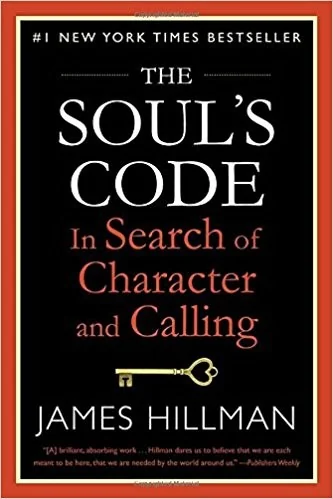
🏛 Books from this publisher Spring Publications
All books from this publisher →
You might also like
See more →




 91
91