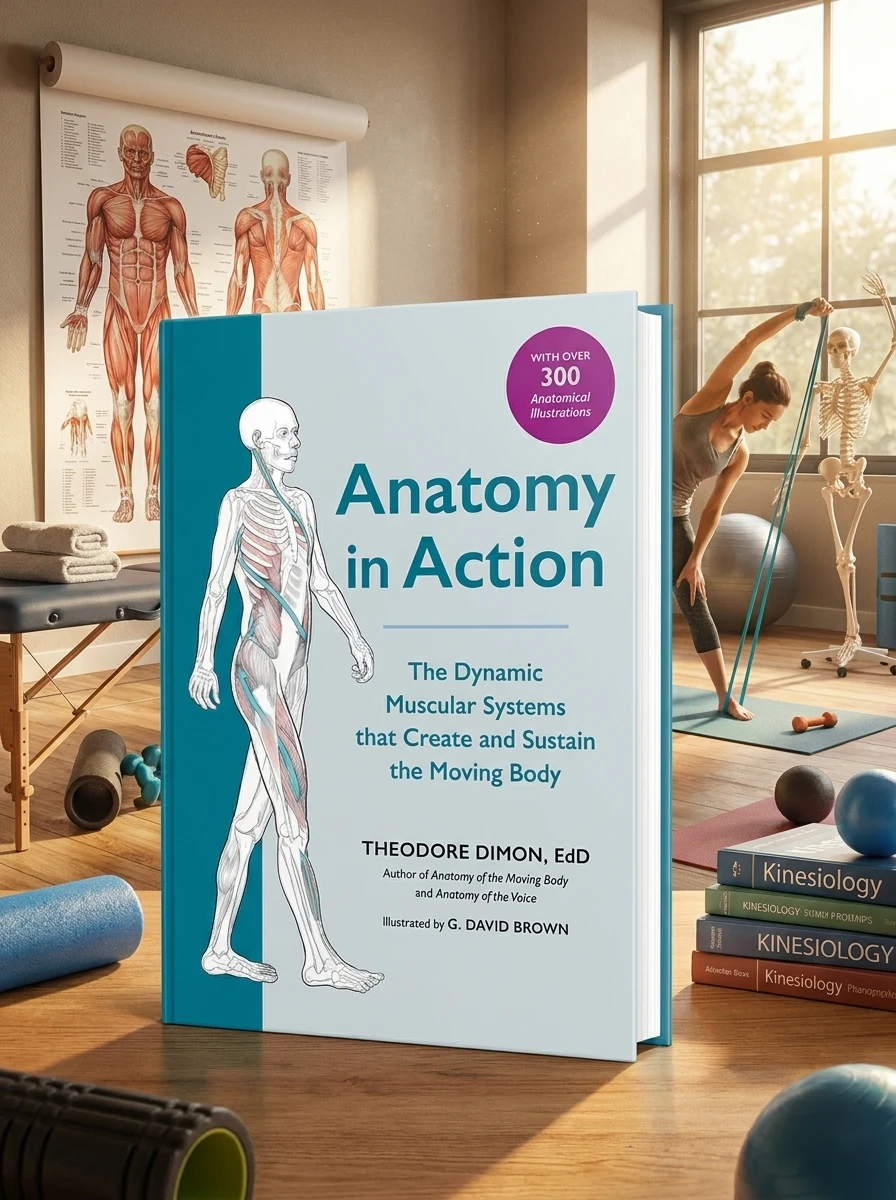

Anatomy in Action: The Dynamic Muscular Systems That Create and Sustain the Moving Body


Stock reported in the catalog; fulfillment is confirmed with your request.
Discover the hidden architecture of motion and heal through holistic muscular awareness.
Theodore Dimon challenges the fragmented approach to physical therapy by revealing how the body’s musculoskeletal system operates as an integrated whole. This illustrated manual moves beyond isolated muscle targeting, explaining how bones, muscles, and connective tissues collaborate dynamically. Readers gain practical exercises to activate these networks, enhancing proprioception and spinal stability. It is a vital resource for understanding efficient movement patterns that prevent injury and sustain long-term physical health through interconnected design rather than isolated fixes.
This work bridges the gap between modern anatomical science and holistic health traditions, reflecting a contemporary shift toward integrated body-mind practices within the esoteric and wellness spheres. It aligns with the occult-philosophy shelf's interest in hidden architectures of existence by treating the muscular system as a dynamic, interconnected network rather than a mechanical assembly.


📝 Description: Anatomy in Action: The Dynamic Muscular Systems That Create and Sustain the Moving Body
💎 Expert review
📖 Why choose it
Why this book is worth reading
This book is essential for practitioners, therapists, and dedicated students of somatic education who seek to move beyond fragmented physical therapy models. Readers gain a profound understanding of how bones, muscles, and connective tissues collaborate dynamically, allowing them to activate these networks for enhanced proprioception and spinal stability. It is ideal for those tired of isolated fixes, offering practical exercises that reveal the hidden architecture of motion. By focusing on efficient movement patterns and interconnected design, it empowers individuals to prevent injury and sustain long-term physical health through holistic muscular awareness, healing the body by understanding its unified whole.
⭐ Reader reviews
Reader rating
Grabbed this during a weekend order. A text you study rather than simply read. Plenty of passages worth underlining; my copy is already full of margin notes. Still worth having on the shelf.
Added this to my reference shelf. The print is clean and easy on the eyes for long sessions. It's become a regular reference in my practice. Still worth having on the shelf.
Came across this title in a footnote and had to track it down. It's become a regular reference in my practice. If you're drawn to this subject, don't hesitate.
I collect works on this subject and this is a worthy addition. The material is presented clearly and the structure makes it easy to revisit key passages. My only regret is not ordering it sooner.
Finally got around to ordering this. Not a light read, but far more accessible than I feared. It rewards patience more than any book I've bought this year. Some archaic spellings slow things down. Happy enough with the purchase.
My third book from this store and this one might be the best. The historical context alone makes it worth the price. The print is clean and easy on the eyes for long sessions. One of my better finds this year.
Bought this as a gift for my sister and ended up ordering a second copy for myself. It pairs well with more modern commentaries on the same tradition. I appreciated how the argument builds steadily from first principles. If you're drawn to this subject, don't hesitate.
Theodore Dimon provides a compelling challenge to the conventional, fragmented approach to physical therapy, presenting the musculoskeletal system as an integrated whole. The illustrated manual effectively explains dynamic collaboration between tissues, offering practical exercises that enhance proprioception. However, readers seeking quick, isolated fixes for specific pain points may find this holistic perspective frustrating or overly complex. It is not suited for those who prefer rigid, mechanical models of anatomy over dynamic systems thinking. While the focus on interconnected design is refreshing and vital for long-term health, the requirement to view the body as a unified network demands patience and a willingness to relearn basic movement principles from scratch.
❓ Frequently asked questions
📖 Who should read this
Movement therapists, yoga instructors, and dancers seeking to transcend traditional anatomical models. Ideal for practitioners who wish to understand the interconnected nature of the body to improve client outcomes and personal physical awareness.
🎯 Key themes and symbolism
Holistic Anatomy
Proprioception
Dynamic Movement
💬 Quotes from the book
“Our bodies are designed to work holistically, supported by an intelligently organized system.”
“Understanding how this system works in action is the key.”
📜 Historical context
📚 Glossary
- Proprioception
- Musculoskeletal Architecture
- Holistic Function
📔 Questions to reflect on
- Where do you feel tension that might stem from a distant, disconnected muscle group?
- How does your breathing change when you attempt to isolate a limb versus moving the whole body?
- What patterns of movement do you repeat daily that ignore the body's natural interconnected design?
🏛 Books from this publisher North Atlantic Books
All books from this publisher →






You might also like
See more →