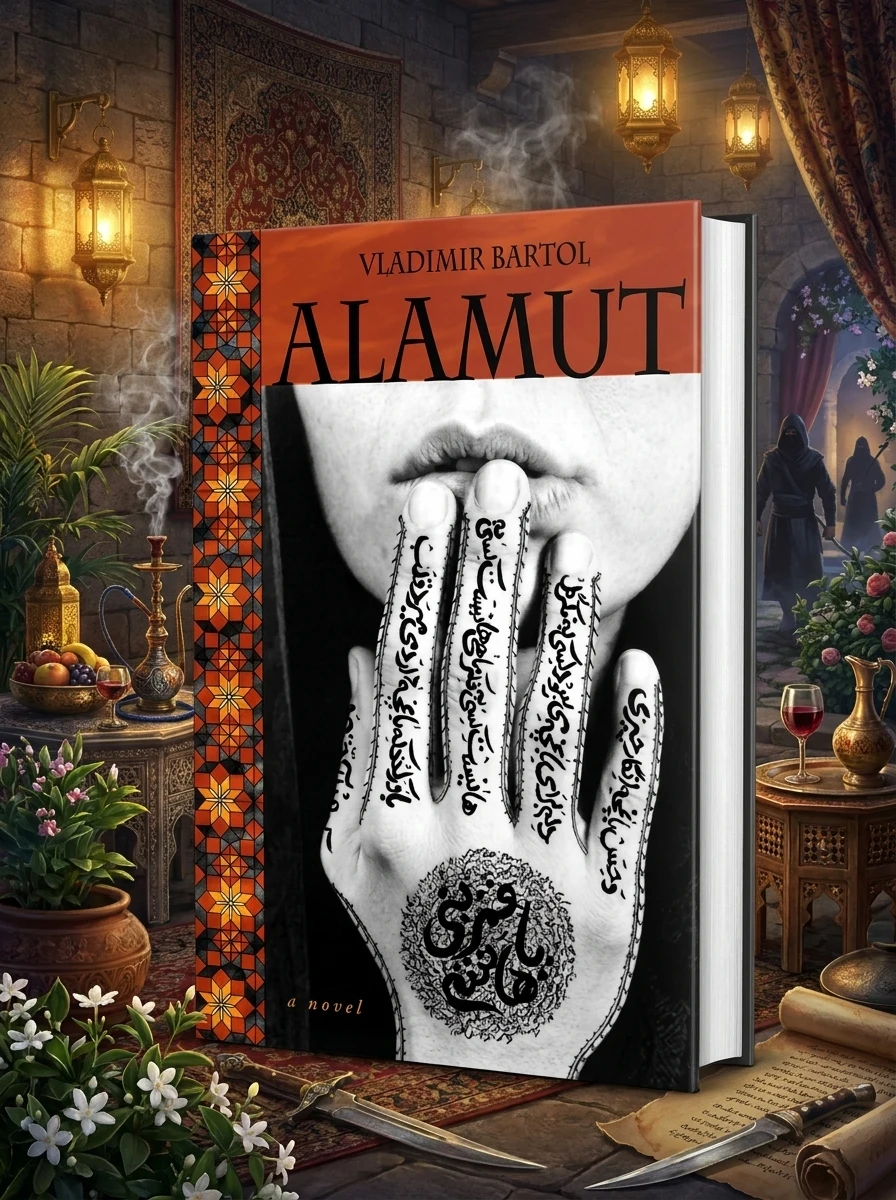
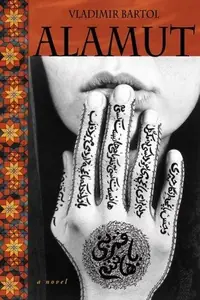
Alamut Bartol, Vladimir


Stock reported in the catalog; fulfillment is confirmed with your request.
Ascend to a fabricated paradise, where devotion becomes a weapon and truth is merely a tool.
Journey into 11th-century Persia, within the enigmatic fortress of Alamut, where the self-proclaimed prophet Hasan ibn Sabbah orchestrates a breathtaking scheme. He crafts an illusory paradise—replete with sensory delights—to indoctrinate young devotees, transforming them into his 'living daggers.' Sabbah’s philosophy, 'Nothing is true, everything is permitted,' becomes the foundation for his manipulation of religious fervor for strategic power. The narrative delves into his Machiavellian tactics and the experiences of individuals like the slave girl Halima, caught within his grand design, exploring the perilous intersection of faith, power, and human gullibility.
This work explores the historical intersection of esoteric orders and political maneuvering in medieval Persia, examining how spiritual narratives can be engineered for worldly control. It sits within the tradition of occult history that investigates the hidden mechanisms behind religious movements and secret societies.


📝 Description: Alamut Bartol, Vladimir
💎 Expert review
📖 Why choose it
Why this book is worth reading
Readers fascinated by the psychological mechanics of power and the manipulation of belief will find this book deeply compelling. It offers a unique lens into how reality can be constructed through sensory illusion and ideological conditioning, appealing to those interested in the history of secret societies or the philosophical implications of radical skepticism. Those who enjoy intricate historical narratives that blur the lines between fact and fabrication will appreciate the exploration of Hassan ibn Sabbah’s strategies. It is ideal for individuals questioning the nature of truth, faith, and the human capacity for devotion when faced with engineered environments, providing a stark look at how devotion can be weaponized.
⭐ Reader reviews
Reader rating
This text provides a stark examination of ideological engineering rather than a traditional spiritual guide. It suits readers interested in political philosophy, historical intrigue, and the sociology of belief systems. However, it does not suit those seeking uplifting spiritual advice or linear biographical storytelling, as the focus remains on manipulation and strategic power rather than personal growth. Readers expecting romanticized heroism may find the cold analysis of human gullibility and Machiavellian tactics unsettling or dry. It is best approached as a case study in control rather than an inspirational memoir.
❓ Frequently asked questions
📖 Who should read this
If you're captivated by historical narratives exploring the psychology of power, the seductive allure of manufactured belief, and chilling manipulation, this work is essential. It's for those who question the nature of truth and the boundaries of human devotion.
🎯 Key themes and symbolism
Illusions of Paradise
Sabbah masterfully constructs a sensory haven within Alamut, offering his followers a taste of heaven on earth. This artificial Eden, lavish with earthly pleasures, serves as a potent psychological tool, convincing recruits that ultimate bliss awaits them only through unwavering obedience and sacrifice. It's a profound exploration of manufactured desire.
Manipulation of Faith
At its core, the novel dissects how deeply held religious convictions can be expertly twisted for worldly ambition. Sabbah's chilling pragmatism, encapsulated in his mantra 'Nothing is true, everything is permitted,' reveals a calculated approach to exploiting human spiritual longing and desire for belonging, forging an army of zealous instruments.
Reality and Perception
The narrative provocatively questions the very foundation of objective truth, demonstrating how perception can be meticulously engineered. Sabbah's declaration that 'Nothing is true, everything is permitted' isn't just a slogan but a blueprint for a world where reality is fluid, serving the will of the powerful, blurring lines between faith and deception.
💬 Quotes from the book
“Believe in the paradise I have shown you, for only through absolute faith shall you truly enter it.”
“Truth, my young dagger, is but a tool. What matters is not what *is*, but what people can be made to *believe*.”
📜 Historical context
📚 Glossary
- Alamut
- Hasan ibn Sabbah
- Ismaili
📔 Questions to reflect on
- How do the concepts of 'virtual paradise' and 'living daggers' explore the extremes of human devotion and the cost of blind obedience?
- Considering Sabbah's philosophy, 'Nothing is true, everything is permitted,' how might this worldview impact personal morality and societal structure?
- Reflect on instances in contemporary society where leaders might manipulate desires or beliefs for their own strategic objectives. What parallels do you see with Alamut?
🏛 Books from this publisher North Atlantic Books
All books from this publisher →
You might also like
See more →