US shipping Secure card payment Occult and esoteric books

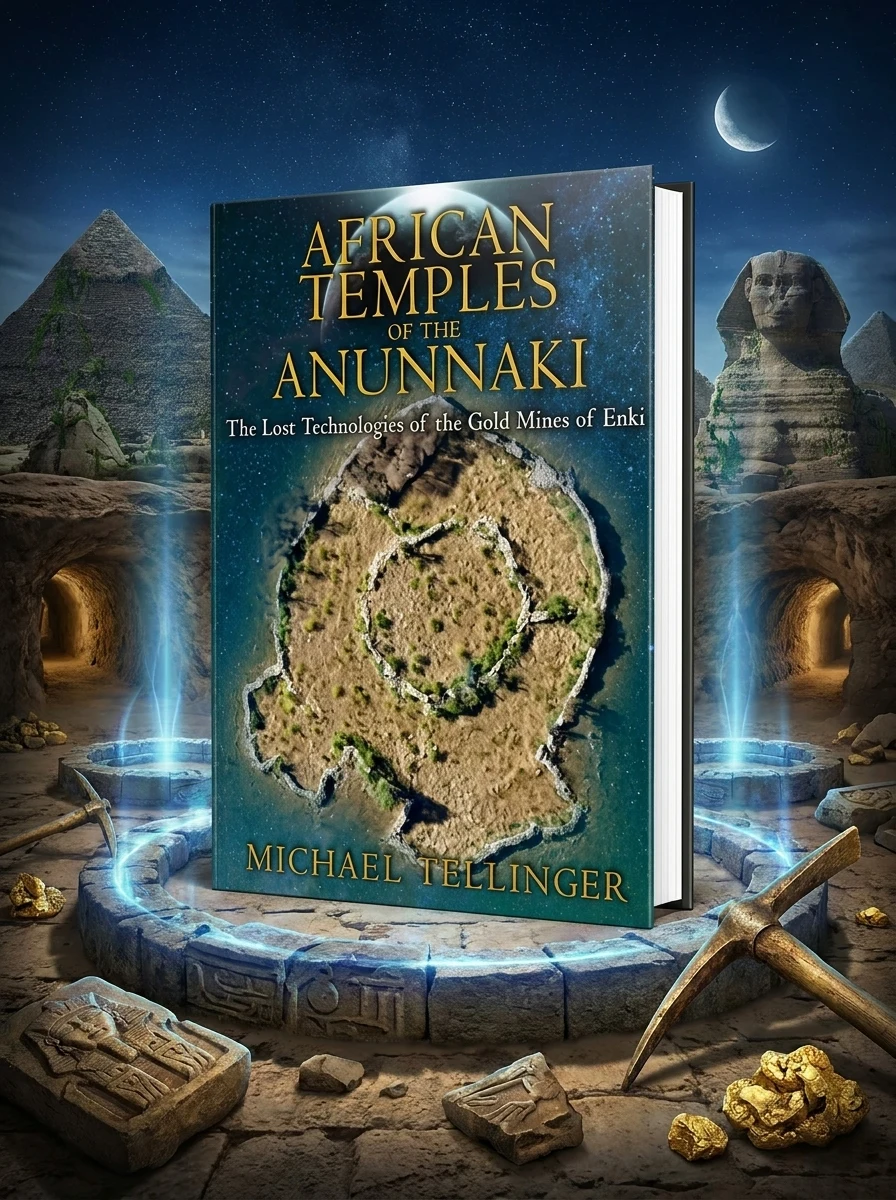
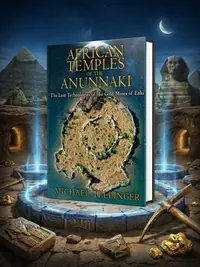
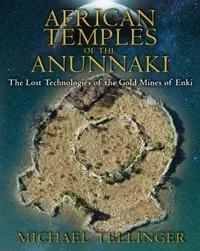
African Temples of the Anunnaki: The Lost Technologies of the Gold Mines of Enki

Tellinger, Michael
Reader rating
4.8
(6 reviews) 67 sold
In stock

Stock reported in the catalog; fulfillment is confirmed with your request.

📚 ABOUT THE BOOK

Unearth South Africa's ancient stone circles and their alleged link to Anunnaki gold mining.

Michael Tellinger presents a provocative argument that the circular stone ruins scattered across South Africa are not merely tribal enclosures but remnants of a sophisticated, pre-Sumerian civilization. He posits that these sites, dating back 200,000 years, served as the operational base for the Anunnaki, the extraterrestrial beings described in Sumerian texts. Through extensive aerial photography and ground-level documentation, Tellinger connects the layout of these structures to sacred geometry and suggests they functioned as Tesla-like energy generators. This work challenges conventional archaeological timelines by proposing that Enki’s city of Abzu was located here, leaving behind a landscape of gold mines and advanced engineering that predates known history.

Key themes
Anunnaki Archaeology Sacred Geometry Pre-Sumerian Civilization
Historical context

This work resides within the fringe archaeological and ancient astronaut genre, challenging mainstream historical narratives by integrating Sumerian mythology with alternative interpretations of African heritage. It aligns with esoteric traditions that seek to uncover pre-Sumerian civilizations and extraterrestrial influences on human development.


Difficulty
●● Moderate
Fans will love it
Zecharia Sitchin · Erich von Däniken · Graham Hancock
🕊️ Spiritualism
🏛 Bear & Company 📖 240 pages 📔 Paperback 📐 Paperback ISBN: 9781591431503
Fun fact
Tellinger delivers a visually striking case for a lost high-tech antiquity, offering enthusiasts a compelling narrative that bridges Sumerian myth and African archaeology. The aerial imagery is impressive and the thesis is engaging for those open to alternative histories. However, skeptics and academic archaeologists will likely dismiss the leaps in logic and lack of conventional dating evidence. It occupies a niche space between fringe ufology and pseudo-archaeology, best enjoyed for its imaginative scope rather than its scholarly rigor.
📚 This book appears in Esoterica Books

📝 Description: African Temples of the Anunnaki: The Lost Technologies of the Gold Mines of Enki

Archaeological proof of the advanced civilization on the southern tip of Africa that preceded Sumer and Egypt by 200,000 years - Includes more than 250 original full-color photographs of South Africa's circular stone ruins, ancient roads, prehistoric mines, large pyramids, and the first Sphinx - Reveals how these 200,000-year-old sites perfectly match Sumerian descriptions of the gold mining operations of the Anunnaki and the city of Enki - Shows how the extensive stone circle complexes are the remains of Tesla-like technology used to generate energy and carve tunnels straight into the Earth With more than 250 original full-color photographs, Michael Tellinger documents thousands of circular stone ruins, monoliths, ancient roads, agricultural terraces, and prehistoric mines in South Africa. He reveals how these 200,000-year-old sites perfectly match Sumerian descriptions of Abzu, the land of the First People--including the vast gold-mining operations of the Anunnaki from the 12th planet, Nibiru, and the city of Anunnaki leader Enki. With aerial photographs, Tellinger shows how the extensive stone circle and road complexes are laid out according to the principles of sacred geometry and represent the remains of Tesla-like technology used to generate energy and carve immensely long tunnels straight into the Earth in search of gold--tunnels that still exist and whose origins had been a mystery until now. He reveals, with photographic evidence, that the human civilization spawned by the Anunnaki was the first to create many totems of ancient Egypt, such as the Horus bird, the Sphinx, the Ankh, and large pyramids, as well as construct an accurate stone calendar, at the heart of their civilization, aligned with the Orion constellation. He explores how their petroglyphs, carved into the hardest rock, are nearly identical to the hieroglyphs of Sumerian seals. Mapping thousands of square miles of continuous settlements and three urban centers--each one larger than modern-day Los Angeles--Tellinger provides the physical proof of Zecharia Sitchin's theories on the Anunnaki origins of humanity.

💎 Expert review

💎
Esoterica Books editorial team
Occult literature desk
Tellinger presents a highly speculative thesis that may alienate conventional archaeologists due to its dismissal of standard dating methods. However, enthusiasts of alternative history will appreciate the detailed aerial documentation and geometric analysis supporting his claims. The book is not suitable for skeptics or those strictly adhering to mainstream academic consensus, as it relies heavily on reinterpretation rather than empirical proof. Readers seeking rigorous peer-reviewed science should look elsewhere, but fans of esoteric speculation will find the argument engaging and visually supported by extensive photographic evidence of the alleged Anunnaki sites.
✓ EDITOR'S REVIEW

📖 Why choose it

📖

Why this book is worth reading

Readers fascinated by the intersection of ancient history, mythology, and speculative science will find this book compelling. It offers a bold alternative perspective on South Africa's stone ruins, inviting you to reconsider established timelines and the origins of advanced technology. If you enjoy unraveling mysteries that connect modern spiritual concepts with ancient engineering, this text provides a provocative narrative linking Enki’s legacy to contemporary understanding. It is ideal for those who appreciate deep dives into sacred geometry and the potential role of extraterrestrial beings in shaping early human civilization, offering a fresh lens through which to view the past.

⭐ Reader reviews

The starting rating comes from the team Esoterica Books —
⭐ Esoterica editorial review Editorial rating 4.7/5
★★★★
Readers fascinated by alternative history, ancient astronaut theories, and the intersection of archaeology and esoteric lore will find this a stimulating, if controversial, exploration of South Africa's enigmatic past.

Reader rating

4.8
Based on 6 reviews
5
5
4
1
3
0
2
0
1
0
R
Raven V. ✓ Verified purchase
May 24, 2026
A serious text

Honestly wasn't sure what to expect, but I'm impressed. It rewards patience more than any book I've bought this year. Not a light read, but far more accessible than I feared. Recommended if you're ready to do the work.

J
Julia G. ✓ Verified purchase
March 9, 2026

Exactly what I was looking for. It connects ideas I'd only seen treated separately elsewhere. Will be gifting a copy to a friend.

G
Grace V. ✓ Verified purchase
August 1, 2025
A serious text

Not my usual area but wanted to branch out. You can tell why this work has endured. If you're drawn to this subject, don't hesitate.

C
Cora A.
June 29, 2025
My new favorite

Added this to my reference shelf. It rewards patience more than any book I've bought this year. Would buy from this store again.

C
Caleb W.
April 18, 2025
A treasure

Grabbed this during a weekend order. Not a light read, but far more accessible than I feared. The print is clean and easy on the eyes for long sessions.

E
Esoterica Books editorial team

Tellinger presents a highly speculative thesis that may alienate conventional archaeologists due to its dismissal of standard dating methods. However, enthusiasts of alternative history will appreciate the detailed aerial documentation and geometric analysis supporting his claims. The book is not suitable for skeptics or those strictly adhering to mainstream academic consensus, as it relies heavily on reinterpretation rather than empirical proof. Readers seeking rigorous peer-reviewed science should look elsewhere, but fans of esoteric speculation will find the argument engaging and visually supported by extensive photographic evidence of the alleged Anunnaki sites.

❓ Frequently asked questions

No, it is a speculative work of alternative history and esoteric theory, relying on interpretive connections rather than conventional academic peer review.
It does not provide definitive proof, but rather argues that the physical ruins correspond closely to mythological accounts of the Anunnaki's activities.

📖 Who should read this

Readers fascinated by alternative history, ancient astronaut theories, and the intersection of archaeology and esoteric lore will find this a stimulating, if controversial, exploration of South Africa's enigmatic past.

🎯 Key themes and symbolism

Anunnaki Archaeology

Sacred Geometry

Pre-Sumerian Civilization

💬 Quotes from the book

“These stone circles are not just walls; they are the remnants of a Tesla-like technology used to generate energy.”

“The landscape matches Sumerian descriptions of the Anunnaki's gold mining operations with startling precision.”

📜 Historical context

This work emerges from the late 20th-century resurgence of interest in ancient astronaut theories, popularized by authors like Erich von Däniken. Tellinger aligns with the broader esoteric tradition that seeks to connect Sumerian mythology with physical evidence, specifically challenging the mainstream archaeological consensus on the timeline of human civilization in Africa. It sits alongside debates about the origins of the Great Zimbabwe ruins and other African stone structures.

📚 Glossary

Abzu
Anunnaki
Sacred Geometry

📔 Questions to reflect on

  1. How might our understanding of history change if we viewed ancient ruins as functional technology rather than mere religious structures?
  2. What parallels do you see between the myths of the Anunnaki and modern accounts of UFOs or extraterrestrial contact?
  3. In what ways does the concept of sacred geometry influence your perception of ancient architecture and its intended purpose?

🏛 Books from this publisher Bear & Company

All books from this publisher →
You might also like

See more →