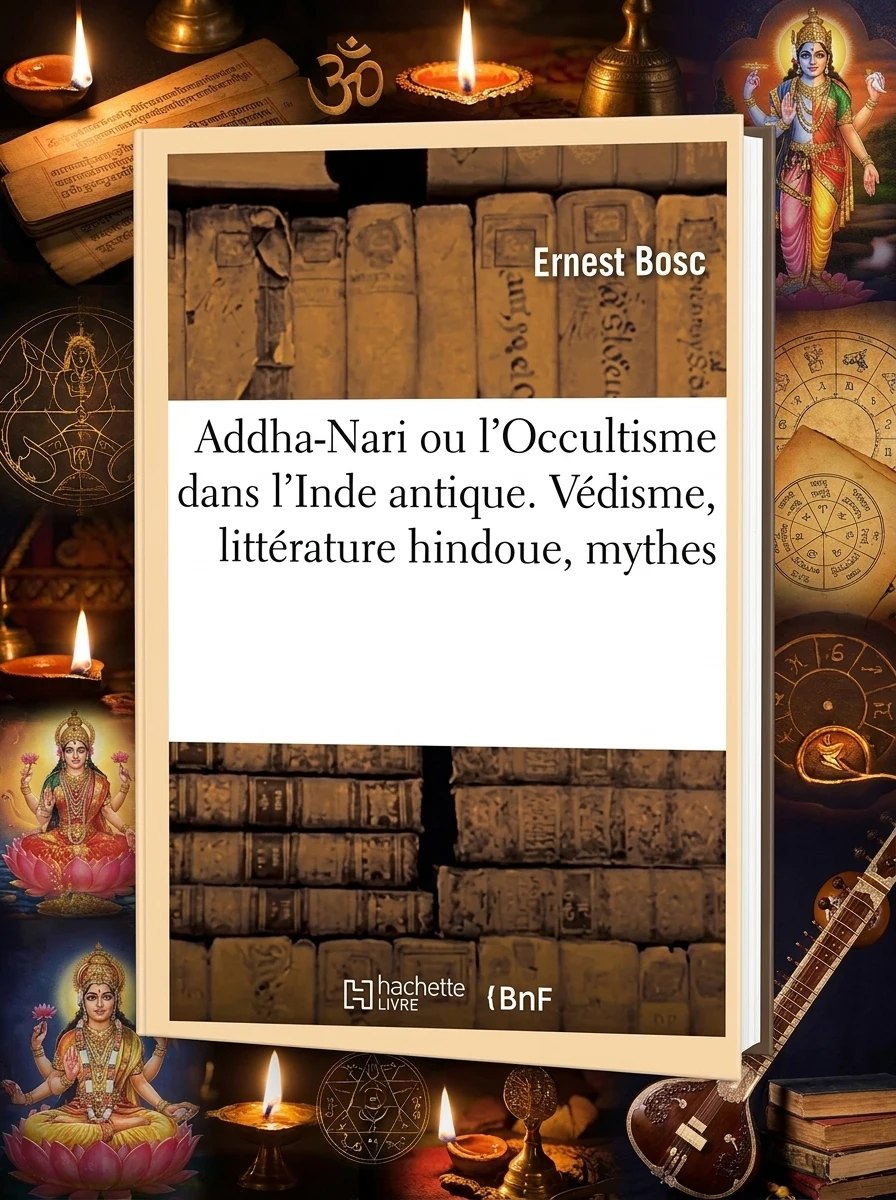
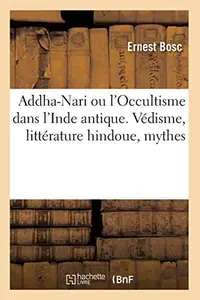
Addha-Nari Ou l'Occultisme Dans l'Inde Antique. Védisme, Littérature Hindoue, Mythes (1893) Bosc, Ernest


Stock reported in the catalog; fulfillment is confirmed with your request.
Unearth the hidden spiritual wisdom veiled within ancient India's mystical traditions.
Ernest Bosc's 1893 work, "Addha-Nari," delves into the profound occult landscape of ancient India. This comprehensive volume explores the esoteric dimensions of Vedism, meticulously examining Hindu literature, myths, and religious practices to uncover their mystical underpinnings. Bosc dissects core concepts like the soul's cosmogonies, spiritism, and psychism, culminating in an insightful analysis of the doctrine of Karma. Readers are invited to discover the rich tapestry of spiritual knowledge and hidden traditions that shaped Indian thought, presented through the lens of late 19th-century esoteric scholarship.
This 1893 publication represents the late 19th-century European esoteric fascination with ancient Indian spirituality, specifically focusing on the hidden dimensions of Vedism and Hindu mythology. It reflects a period where Western scholars sought to decode the mystical underpinnings of Eastern religious practices through the lens of occultism.


📝 Description: Addha-Nari Ou l'Occultisme Dans l'Inde Antique. Védisme, Littérature Hindoue, Mythes (1893) Bosc, Ernest
💎 Expert review
📖 Why choose it
Why this book is worth reading
This volume is essential for the serious student of comparative religion and esoteric history who seeks to understand how late 19th-century thinkers interpreted ancient Indian mysticism. It offers a unique window into the scholarly discourse surrounding karma, spiritism, and psychism during that era. Readers interested in the transmission of Vedic wisdom to the West will find this analysis of Hindu literature and myths invaluable for tracing the intellectual lineage of modern occult thought.
⭐ Reader reviews
Reader rating
Bosc’s work serves as a dense historical artifact rather than a practical guide, appealing primarily to those with academic interest in the history of ideas. It is not suitable for casual readers seeking accessible spiritual advice or contemporary magical practices. The text assumes familiarity with complex theological concepts and may frustrate those expecting straightforward mythological retellings. Its value lies in its scholarly perspective on how Vedism was perceived through an occult lens, making it a niche resource for historians of religion rather than general practitioners.
❓ Frequently asked questions
📖 Who should read this
If you're drawn to the ancient roots of esoteric wisdom, or seek to understand the mystical currents flowing through early Indian spiritual traditions, this historical text offers a fascinating, if dated, exploration. Ideal for students of occult history and comparative religion.
🎯 Key themes and symbolism
Ancient Indian Occultism
This book serves as a late 19th-century window into the esoteric practices and mystical philosophies of India. Bosc meticulously unpacks the hidden meanings within Vedic traditions, Hindu myths, and religious doctrines, revealing a sophisticated system of spiritual knowledge that transcends mere ritual.
Cosmogonies of the Soul
Explore the intricate theories concerning the soul's origin, journey, and ultimate destiny as understood in ancient Indian thought. Bosc investigates various spiritual doctrines, including spiritism and psychism, offering a detailed perspective on how these traditions conceptualized the soul's evolution and its connection to universal forces.
The Doctrine of Karma
A central pillar of Indian philosophy, Karma is thoroughly examined not merely as cause and effect, but as a profound spiritual law governing existence. The book elucidates its esoteric implications, demonstrating how actions, intentions, and even thoughts shape one's spiritual trajectory and reincarnation cycle.
💬 Quotes from the book
“To truly grasp the arcane truths of the East, one must peel back the layers of popular myth to reveal the foundational esoteric doctrines that pulse beneath.”
“The dance of Shiva and Shakti, often seen as mere divine play, represents the profound polarity essential to all creation, a key to unlocking the universe's secret mechanism.”
📜 Historical context
📚 Glossary
- Védisme
- Ésotérique
- Karma
📔 Questions to reflect on
- How might a 19th-century European occultist's interpretation of Indian spiritual concepts differ from a modern, indigenous understanding?
- Reflect on the concept of "cosmogonies of the soul" as presented by Bosc. How does this resonate with or challenge your own beliefs about the soul's journey?
- Consider the doctrine of Karma through an esoteric lens. What deeper, unseen mechanisms might be at play beyond simple cause and effect?
📖 From the series “Philosophie”
All books in the series →




🏛 Books from this publisher Hachette Livre Bnf
All books from this publisher →
You might also like
See more →