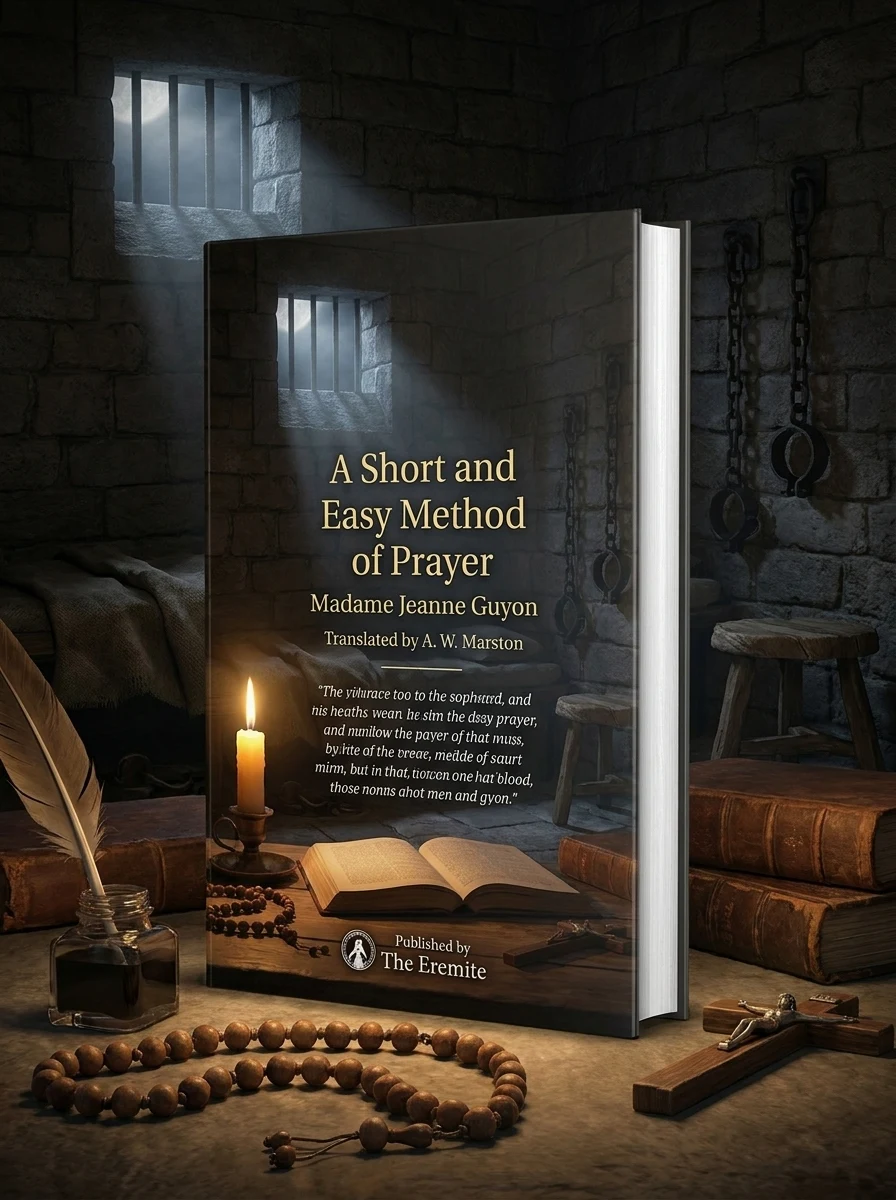
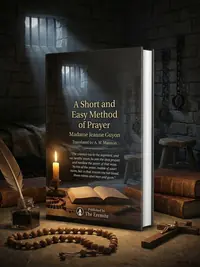

A Short and Easy Method of Prayer
Stock reported in the catalog; fulfillment is confirmed with your request.
A forbidden guide to inner communion, powerful enough to earn its author a prison cell.
Step into the profound spiritual world of Madame Jeanne Guyon with her revolutionary 18th-century treatise on prayer. This slim volume unveils a method of devotion rooted in constant, heart-centered connection to the divine, transcending formal rituals for an unbroken state of love. Guyon's radical simplicity, which once led to her imprisonment, offers timeless insights for anyone yearning for a deeper, more intimate spiritual walk. It's an invitation to transform every moment into an interior exercise of love and presence.
This work represents the quietist tradition of 18th-century Christian mysticism, emphasizing passive reception of divine grace over active intellectual effort. It stands as a historical counterpoint to formal religious rituals, advocating for a direct, unmediated spiritual experience.


📝 Description: A Short and Easy Method of Prayer
💎 Expert review
📖 Why choose it
Why this book is worth reading
Readers seeking to dismantle the complexity of traditional religious practice will find profound liberation in this text. Those weary of rigid rituals and external forms will appreciate Guyon’s invitation to a simpler, heart-centered devotion. It is ideal for spiritual seekers who desire an unbroken state of love and presence, transforming mundane moments into interior exercises of the divine. Anyone yearning for a deeper, more intimate walk with the sacred, free from the burden of performative piety, will discover in these pages a timeless guide to inner communion that prioritizes genuine connection over structured obligation.
⭐ Reader reviews
Reader rating
While this slim volume offers a revolutionary approach to prayer through radical simplicity, it is not suited for those who crave intellectual rigor or doctrinal precision. Readers expecting complex theological arguments or practical step-by-step rituals will likely find the text too abstract and lacking in concrete guidance. It demands a willingness to surrender control and embrace ambiguity, which may frustrate those accustomed to structured spiritual disciplines. Furthermore, individuals skeptical of mystical experiences or those who view formal ritual as essential to faith may feel alienated by its dismissal of external practices. It is a niche work for the intuitively minded rather than the analytically inclined.
❓ Frequently asked questions
📖 Who should read this
For seekers yearning for a deeper, more intimate spiritual practice. If you feel traditional prayer is insufficient, or if you're drawn to a direct, heart-based connection with the divine, this classic offers profound, liberating guidance.
🎯 Key themes and symbolism
Unceasing Inner Dialogue
Guyon posits prayer not as an intermittent activity but as a perpetual state of being, a continuous spiritual connection that transcends formal practice. She advocates integrating an unbroken communion with the divine into every aspect of daily life, fostering an ever-present awareness.
Heart-Centered Devotion
This work explores prayer as an act of pure, unadulterated love originating from the deepest core of one's being. Guyon's approach prioritizes genuine affection and spiritual intimacy, emphasizing the heart's application to God over intellectual understanding, complex theology, or prescribed forms of worship.
Radical Spiritual Simplicity
Guyon boldly strips away complex theological constructs and elaborate rituals, advocating for a direct, uncomplicated path to divine connection. Her method emphasizes accessibility, suggesting an innate capacity for spiritual union is available to all, regardless of their station or intellectual prowess.
💬 Quotes from the book
“Prayer is nothing else but the application of the heart to God, and the interior exercise of love.”
“St Paul commands us to 'pray without ceasing'.”
📜 Historical context
📚 Glossary
- Quietism
- Continuous Prayer
- Divine Indwelling
📔 Questions to reflect on
- How might viewing prayer as a continuous 'application of the heart' change your daily experience of spirituality?
- What external religious practices or internal expectations might you need to release to embrace a more direct, simple connection with the divine?
- Consider a moment when you felt a profound, unmediated connection to something greater than yourself. How did that feeling compare to more formal spiritual practices?
You might also like
See more →

 91
91