Free preview
How to Read Your Birth Chart
by Adrian Cole
Get the e-book — $4.99Available — EPUB for your phone, tablet or e-reader
Contents
-
Your Chart Is Already Telling a Story
Start with your own online-generated birth chart and discover three essential placements: Sun, Moon, and Rising sign. Follow a simple first-reading exercise that turns these familiar symbols into an initial interpretation, giving you an immediate sense of how a natal chart works.

-
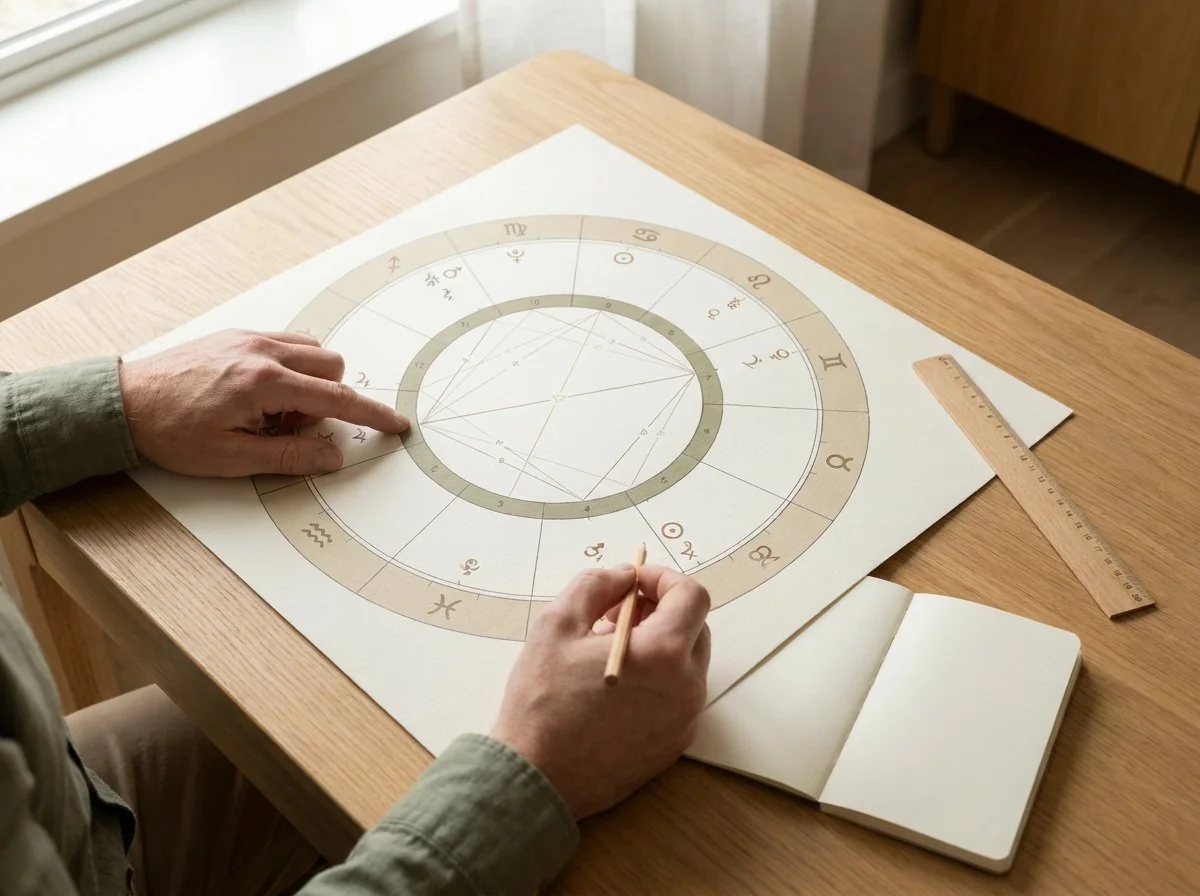
Find Your Way Around the Wheel
Learn to navigate the circular chart, identify its twelve sections, locate planetary symbols, and understand the lines connecting different placements. A fully explained sample wheel shows how to read the chart without getting lost in its visual details.
-
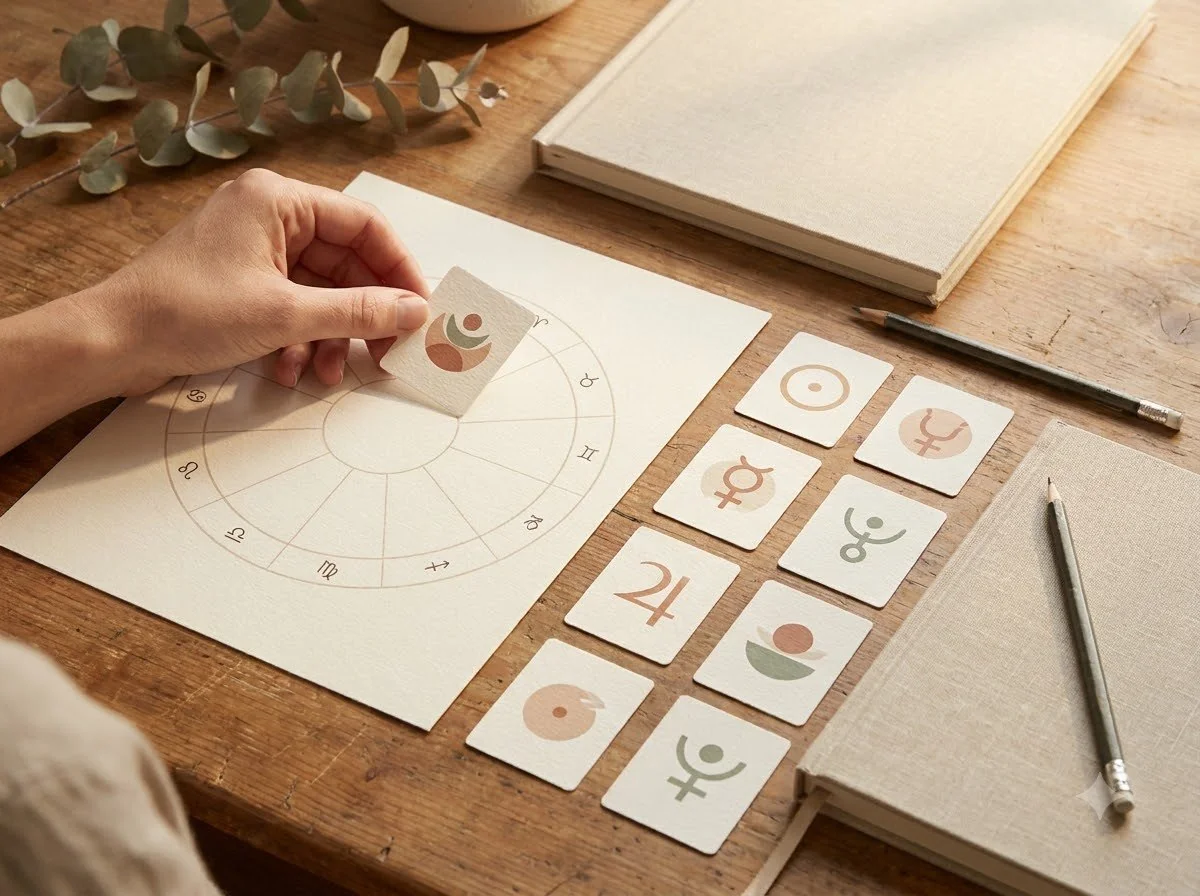
Meet the Planets and Their Personalities
Explore the Sun, Moon, Mercury, Venus, Mars, Jupiter, Saturn, Uranus, Neptune, and Pluto as symbolic characters in an astrological interpretation. Learn the distinct questions each planet raises and practice identifying their roles in a sample birth chart.
-
The Zodiac Signs Give Every Planet a Voice
Discover how the twelve zodiac signs describe different styles of expression and modify planetary symbolism. Work through contrasting examples, such as Venus in Aries and Venus in Taurus, to see why the same planet can produce very different astrological interpretations.

-
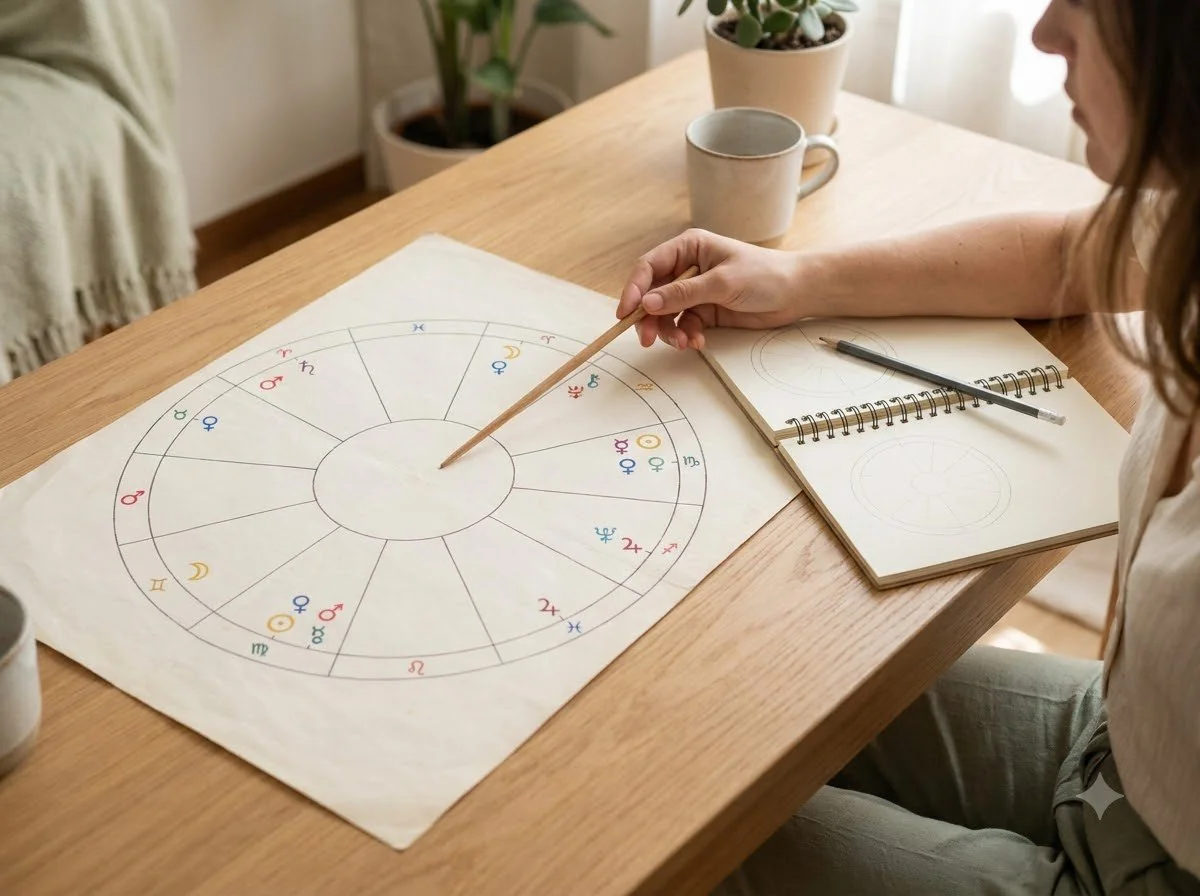
Twelve Houses, Twelve Areas of Experience
Understand what the twelve houses represent, how house numbers are arranged, and why a planet's house placement matters. A practical walkthrough explains how to identify the first, seventh, tenth, and other houses and connect them with the subjects of a chart.
-
Put the First Three Pieces Together
Combine planet, sign, and house into one interpretable placement using a repeatable sentence-building exercise. Several worked examples demonstrate how to move beyond isolated definitions and create a nuanced interpretation of an actual chart position.
-
Read the Lines That Connect Everything
Explore conjunctions, oppositions, squares, trines, and sextiles, learning how aspects describe symbolic relationships between planets. Follow annotated examples to understand major aspect patterns without treating challenging or harmonious configurations as fixed predictions.
-
Love, Connection, and the Seventh House
Use Venus, Mars, the Moon, the seventh house, and relevant aspects to explore relationship preferences and interpersonal themes. Learn to interpret your own chart thoughtfully and introduce synastry as a comparison of two charts rather than a verdict about compatibility or another person's feelings.
-
Work, Purpose, and Your Public Self
Explore the tenth and sixth houses, Midheaven, Saturn, and other relevant placements to consider vocational interests, working styles, and ambitions. A worked example demonstrates how to combine several indicators without claiming that astrology determines a particular profession or guarantees career success.
-
When the Chart Starts Repeating Itself
Move beyond individual placements to recognize clusters, planetary emphasis, recurring elements, chart rulers, and other interpretive patterns. Apply the M.A.P.S. Method to a more complex sample chart and learn to distinguish meaningful repetition from overinterpretation.
-
Different Traditions, Different Maps
Discover the distinction between Western tropical astrology and Vedic astrology, including their different frameworks and interpretive conventions. Learn why numerology and astronomy are separate subjects, how birth information affects chart calculations, and why different online chart generators may display different results.
-
Become the Reader of Your Own Chart
Bring all four M.A.P.S. stages together in a complete birth chart reading, from identifying the dominant placements to interpreting houses, aspects, relationships, and recurring themes. Finish with a reusable reading template, a self-checking process, and guidance for approaching increasingly complex charts with curiosity and interpretive humility.
About this book
You have your birth chart in front of you, but the wheel looks more like a diagram from an unfamiliar board game than a guide to understanding yourself: planetary symbols, zodiac signs, twelve numbered houses, and a web of connecting lines seem to demand that you learn everything at once. You may recognize your Sun sign, but that familiar label tells only a small part of the chart's story.
The useful discovery is that a birth chart becomes easier to interpret when you stop treating its symbols as separate meanings. A planet describes a symbolic function, its zodiac sign gives that function a style of expression, its house places it in an area of life, and its aspects show how it relates to other planetary placements. The connections matter as much as the individual pieces.
By learning the M.A.P.S. Method, you will develop a practical way to read your own natal chart, recognize recurring themes, and build thoughtful interpretations of personality, relationships, and career interests. You will move from identifying three familiar placements to constructing a complete reading in your own words, without mistaking astrological symbolism for a fixed description or prediction of your life.
The M.A.P.S. Method: Four Moves from Birth Chart Symbols to a Complete Reading
- Mark — Locate the planets, zodiac signs, house numbers, chart angles, and connecting lines on the natal chart wheel so you know exactly what you are looking at before interpreting anything.
- Assign — Give each placement its three essential components by identifying what the planet symbolizes, how its zodiac sign colors its expression, and which area of life its house traditionally represents.
- Pair — Connect planetary placements through major aspects, recognize repeated themes, and explore how different symbolic influences can reinforce, contrast with, or complicate one another.
- Synthesize — Bring the individual placements and their relationships together into a coherent interpretation, using worked examples and careful reasoning to create a complete reading in your own words.
Your First Three Clues: A 3-Minute Sun, Moon, and Rising Reading
This exercise is designed to help you move past the "Sun sign" trap and see how your chart begins to form a cohesive picture.
- Open Your Natal Chart — Open an online Western natal chart calculator and enter your birth date, birth time, and birthplace if known. Display the resulting chart wheel and keep the chart visible while you work.
- Find Your Big Three — Locate the Sun, Moon, and Ascendant (ASC) symbols or their listed placements. Write down the zodiac sign beside each one, noting that the Rising sign marks the beginning of the first house.
- Give Each Placement a Role — Write one short phrase for each placement: the Sun represents identity and vitality, the Moon represents emotions and instinct, and the Ascendant describes the chart's starting orientation and traditional approach to engaging with the world.
- Build Three Interpretive Clues — Combine each planet or chart angle with its zodiac sign to make a simple interpretive sentence. Treat the result as an astrological possibility to reflect on, not an established fact about your personality. For example, if you have Moon in Taurus, your sentence might be: "My emotional instinct seeks stability and sensory comfort."
- Read the Three Together — Place your three sentences side by side and look for a theme, contrast, or interesting question they raise together. Write one concluding sentence beginning with "One theme I might explore is..." to create your first connected chart interpretation.
Turn the wheel toward yourself, follow the connections, and discover how to read the chart as a whole rather than a collection of disconnected astrological definitions.
