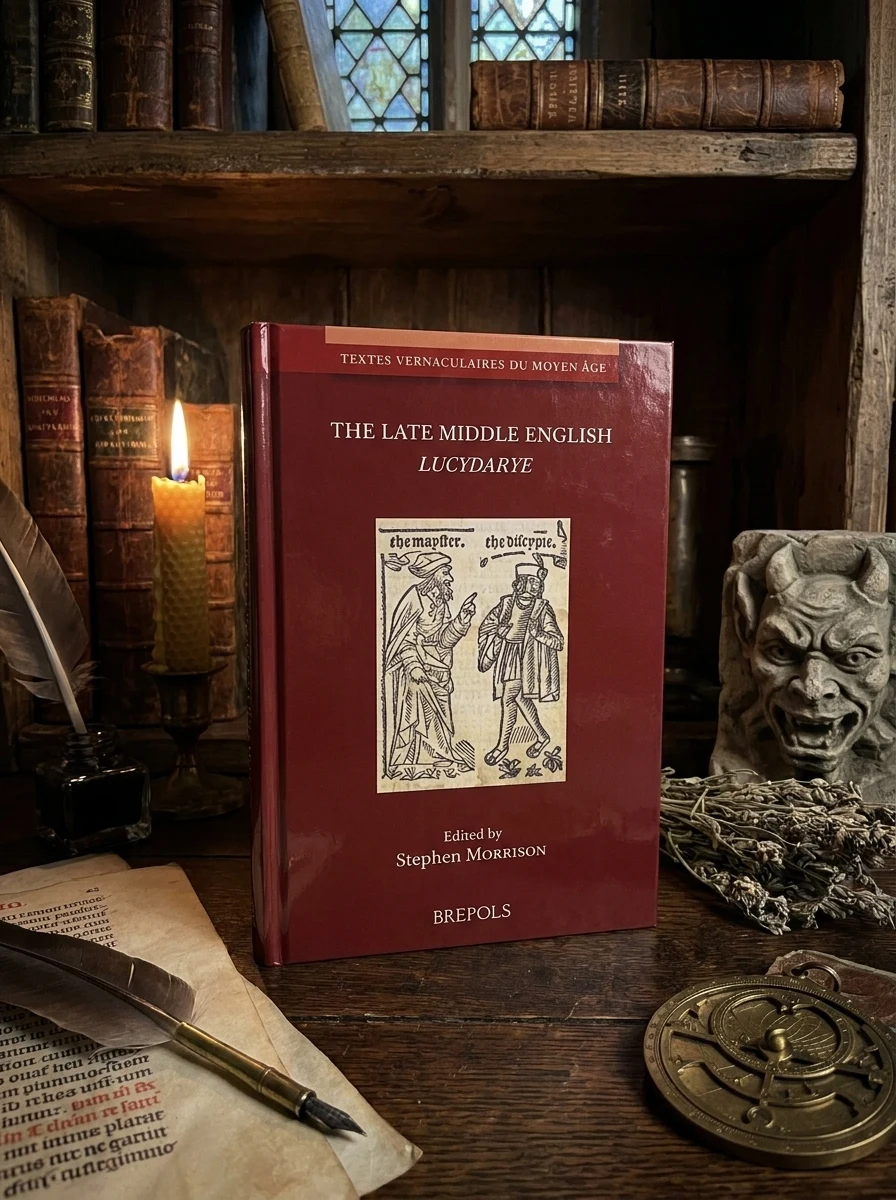
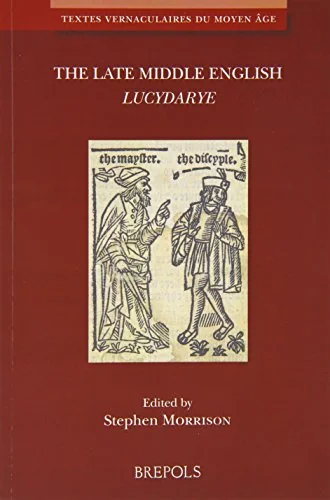
The Late Middle English 'Lucydarye' Morrison, Stephen
Stephen Morrison's scholarly edition unveils "The Lucydarye," a fascinating Late Middle English instructional text. Presented as a dialogue between a master and student, this work offers a window into medieval popular thought. While primarily religious, it delves into intriguing discussions of witchcraft, demonic forces, and atmospheric phenomena. This pioneering publication, derived from a Wynkyn de Worde print, illuminates the intersection of piety, superstition, and early scientific inquiry, making accessible a crucial document of intellectual and spiritual history. It reveals how complex ideas were disseminated to the common person in the late medieval period.
📝 Description: The Late Middle English 'Lucydarye' Morrison, Stephen
💎 Expert review
📖 Why choose it
Why this book is worth reading
Scholars and enthusiasts of medieval intellectual history will find immense value in this pioneering publication. By making accessible a crucial document derived from a Wynkyn de Worde print, the book illuminates how complex theological and naturalistic ideas were disseminated to the common person. Readers interested in the nuances of faith, demonic forces, and atmospheric phenomena will appreciate the unique window into medieval popular thought. It is essential for those studying the evolution of witchcraft narratives or the early scientific inquiry that coexisted with religious devotion, offering a rare glimpse into the spiritual landscape of the era.
⭐ Reader reviews
Reader rating
Stephen Morrison’s scholarly edition provides an invaluable resource for historians of religion and science, bridging the gap between academic rigor and accessible primary source material. However, this text is strictly for those with a specific interest in Late Middle English or esoteric history; it will likely bore general readers seeking narrative fiction or contemporary self-help. The dense focus on religious instruction and atmospheric phenomena may feel dry to those without a background in medieval studies. It is not suitable for casual browsing but stands as an indispensable reference for understanding the complex interplay of piety and superstition in late medieval England.
❓ Frequently asked questions
📖 Who should read this
For anyone drawn to the medieval mind, scholars of literary history, or those fascinated by the origins of occult beliefs, this book is an essential read. It offers a direct conduit to the popular understanding of faith, magic, and the cosmos from centuries past.
🎯 Key themes and symbolism
Medieval Religious Pedagogy
This volume showcases how spiritual guidance and moral instruction were imparted to the populace. Through its master-disciple format, "The Lucydarye" explores theological concepts and ethical behavior, reflecting the Church's role in shaping daily life and understanding for the average medieval person, often simplifying complex doctrines.
Demonic and Occult Beliefs
Beyond piety, the text plunges into the era's pervasive fascination with the supernatural. It offers extensive insights into contemporary beliefs surrounding witchcraft, the nature of demons, and other 'psychic phenomena'. This provides a rare glimpse into the darker, more speculative side of medieval popular instruction, blending fear with explanation.
Transmission of Knowledge
Morrison's work highlights the intricate journey of medieval texts. "The Lucydarye" itself is a Middle English translation of a French adaptation of a Latin original, demonstrating the layered process of knowledge dissemination across languages and centuries. The parallel French text offers invaluable insight into translation practices and textual evolution during this period.
💬 Quotes from the book
“Understand, good discipulus, that the Lord's providence doth govern all, from the turning of the spheres to the least whisper of wind. Yet, beware the subtle lures of the fiend, who doth seek ever to ensnare the unwary soul.”
“Concerning those who do practice hidden arts, know that their power cometh not from God, but from pacts most foul. For a witch, through diabolical aid, may stir tempests or bring blight, but such works are but illusions of the Evil One.”
📜 Historical context
📚 Glossary
- Magister
- Discipulus
- Elucidarium
📔 Questions to reflect on
- How might the medieval blend of religious doctrine and discussions of witchcraft have shaped daily life and moral understanding for the common person?
- Considering "The Lucydarye"'s dialogue format, what are the advantages and disadvantages of learning complex subjects through a question-and-answer structure?
- Reflect on how the transmission of knowledge through translation and adaptation (Latin to French to English) might alter or preserve the original intent of a text over centuries.