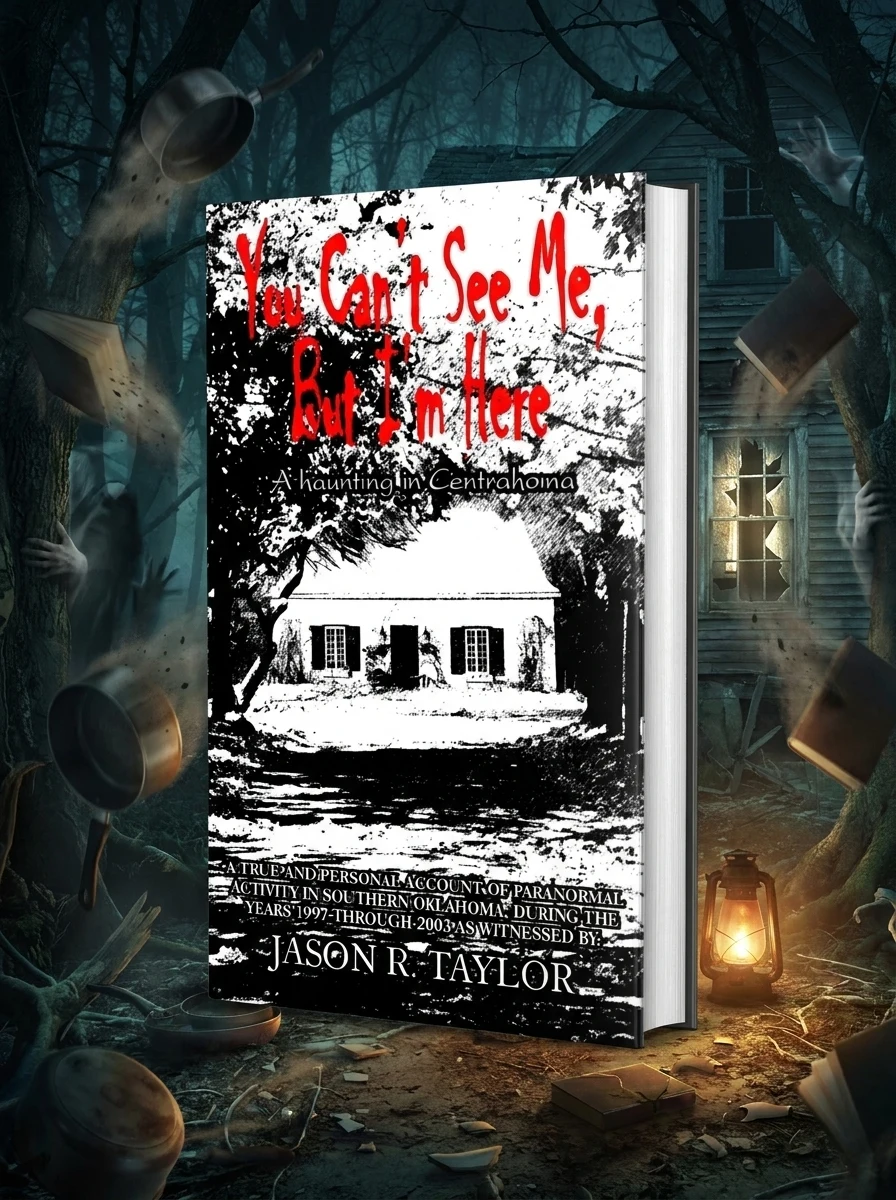
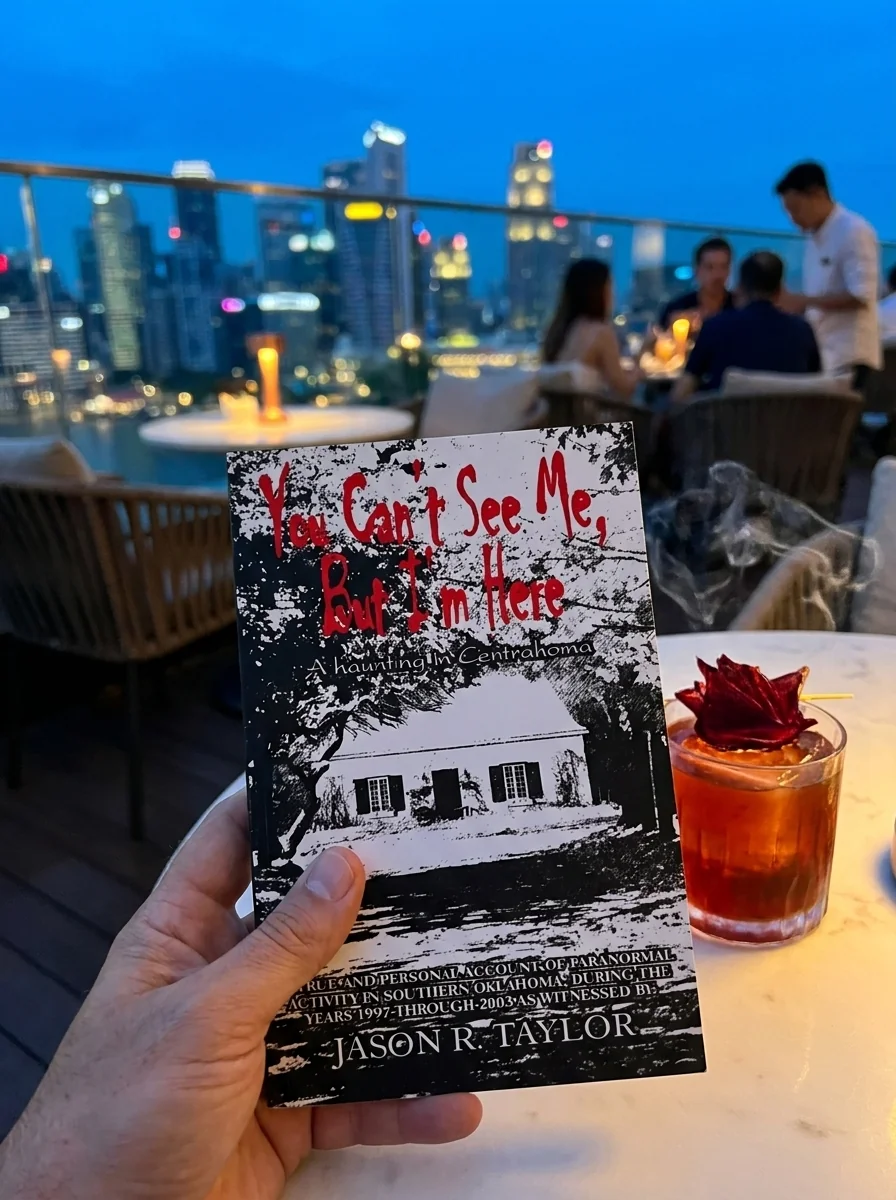

You Can't See Me, But I'm Here
Jason R Taylor chronicles his real-life investigation of an aggressive unseen entity haunting the Mcwethy family home.
This non-fiction account documents Jason R Taylor's direct encounters with a spirit called Michael inside the Mcwethy household. Taylor approaches the situation as a skeptic who encounters physical manifestations, including objects launched through the air at witnesses. The volume details the immediate reactions of those present as the activity unfolds. It concludes with Taylor's own theory regarding the entity's motives, presenting a personal case report based entirely on his time on the front lines of the haunting.
This account sits within contemporary American ghost hunting and paranormal investigation literature. It reflects the mid-2000s personal experience narrative format, where individual investigators record first-hand observations of hauntings inside private domestic residences.


📝 Description: You Can't See Me, But I'm Here
💎 Expert review
📖 Why choose it
Why this book is worth reading
Readers who crave visceral, unfiltered accounts of supernatural encounters will find this narrative deeply compelling. It is ideal for those fascinated by the psychological shift from rational skepticism to unavoidable belief, offering a front-row seat to terrifying telekinetic events. Fans of intense, personal ghost stories will appreciate the author's meticulous documentation of chaos and malevolence. This book serves as a stark reminder of the unseen world's dangerous unpredictability, providing both thrills and a sobering testament to the power of entities like Michael. It appeals to anyone seeking a raw, play-by-play account that challenges dismissal and immerses them in a harrowing investigation.
⭐ Reader reviews
Reader rating
This narrative offers a intense, albeit singular perspective on the McWethy haunting, focusing heavily on the author’s personal terror rather than objective analysis. While effective for fans of visceral horror, it may frustrate readers seeking scholarly rigor or detached observation. The emphasis on violent telekinesis and malevolent intent creates a gripping, if one-sided, account. Those preferring balanced, multi-perspective investigations might find the singular focus limiting. However, for those who enjoy the genre's traditional arc of skepticism crumbling under pressure, it delivers a potent, frightening experience that prioritizes emotional impact over academic precision.
❓ Frequently asked questions
📖 Who should read this
Readers interested in raw, unvarnished first-person accounts of hauntings, particularly those fascinated by the psychological shift from doubt to conviction. Ideal for enthusiasts of aggressive paranormal phenomena and the McWethy case specifically.
🎯 Key themes and symbolism
Skepticism to belief
Violent poltergeist activity
Unseen malevolence
📜 Historical context
📚 Glossary
- Poltergeist
- Telekinesis
- Haunting
📔 Questions to reflect on
- How does direct confrontation with the unknown alter your fundamental beliefs?
- What signs might indicate a presence is malevolent rather than merely present?
- How would you document an experience that defies logical explanation?
📖 Read on the blog
🏛 Books from this publisher Authorhouse
All books from this publisher →





You might also like
See more →

Have a question about this item?
Ask about the edition, condition, delivery or anything else — we reply by email or phone, usually within a day.
