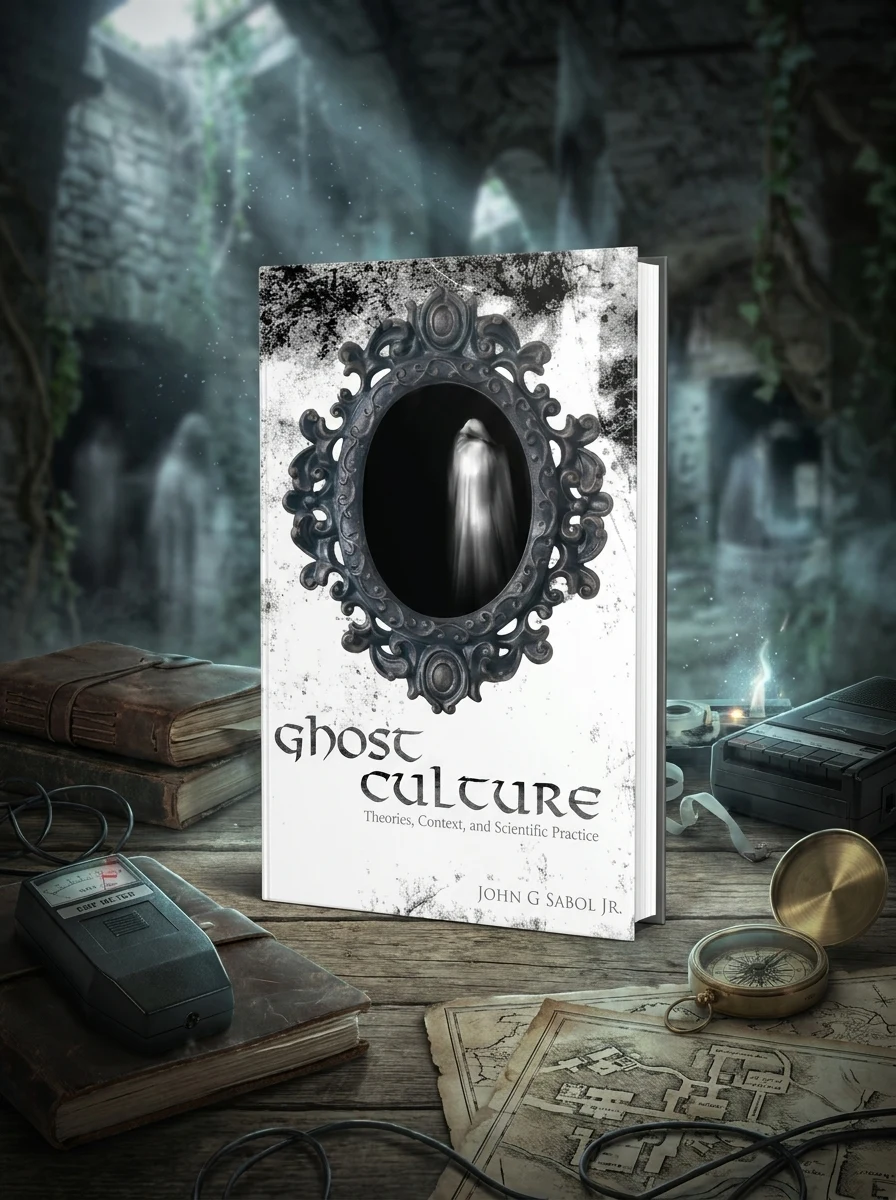
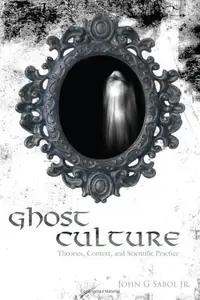
Ghost Culture: Theories, Context, and Scientific Practice
Stock reported in the catalog; fulfillment is confirmed with your request.
Sabol merges ethnographic theory with rigorous fieldwork to map the unseen cultural landscapes of haunting.
John Sabol moves beyond anecdotal ghost stories to establish a structured methodology for investigating cultural hauntings. Building on his previous ethnographic work, this text offers a theoretical framework for understanding how places become haunted through collective memory and trauma. It introduces specific, repeatable techniques for evaluating empirical data collected at haunted sites, treating these phenomena as valid subjects of scientific inquiry. By integrating symmetrical theory and practice, Sabol aims to construct a 'bottom-up' infrastructure for a future ghost science, inviting readers to contribute to a broader, mapped understanding of the supernatural.
This text sits at the intersection of contemporary ethnographic theory and the growing academic interest in paranormal phenomena, bridging the gap between folkloric tradition and empirical inquiry. It contributes to the modern re-evaluation of spiritualism by treating haunting as a legitimate subject for scientific and cultural analysis rather than mere superstition.


📝 Description: Ghost Culture: Theories, Context, and Scientific Practice
💎 Expert review
📖 Why choose it
Why this book is worth reading
Readers who approach the supernatural with an intellectual curiosity rather than a purely emotional one will find this book invaluable. It is ideal for ethnographers, sociologists, and serious paranormal investigators who are tired of anecdotal fluff and seek a rigorous framework for their work. By offering repeatable techniques for evaluating data, Sabol empowers readers to view hauntings through the lens of collective memory and trauma. This guide serves those ready to contribute to a 'bottom-up' infrastructure for ghost science, transforming personal experiences into structured, mapable cultural landscapes. It is essential for anyone wishing to understand the unseen mechanics of haunting with academic precision.
⭐ Reader reviews
Reader rating
This has been on my wishlist for months. Every rereading turns up something I missed. Not a light read, but far more accessible than I feared. Well worth it.
As someone who reads a lot in this field, I can be picky. The text itself is dense but rewarding — you get out what you put in. Will be gifting a copy to a friend.
I keep coming back to this one. The historical context alone makes it worth the price. The language takes some getting used to, but it becomes part of the charm. I'd have loved an index, but that's on the original text.
I collect works on this subject and this is a worthy addition. The ideas are old but land with surprising force today. Every rereading turns up something I missed. Would buy from this store again.
Perfect companion for my morning study sessions. The print is clean and easy on the eyes for long sessions. Highly recommend to serious students.
Sabol’s work is a significant contribution to the field, merging ethnographic theory with practical methodology in a way that few others do. However, it is not suited for casual readers seeking thrilling ghost stories or those who prefer mystical, non-empirical explanations for the paranormal. The text demands patience and an interest in theoretical frameworks, which may alienate those looking for quick entertainment. While ambitious in its goal to construct a future ghost science, the dense integration of symmetrical theory might feel overly academic to some. It is best appreciated by those willing to engage with complex ideas about place, memory, and scientific inquiry in the context of the supernatural.
❓ Frequently asked questions
📖 Who should read this
Readers interested in the intersection of anthropology, folklore, and paranormal investigation who seek a serious, methodological approach rather than sensationalism.
🎯 Key themes and symbolism
Cultural Hauntings
Ethnographic Methodology
Empirical Ghost Investigation
💬 Quotes from the book
“This search and analysis of haunting phenomena is seen as an approach that can be participated in by the many.”
“Help fill-in the 'blanks' of a 'ghost map' of what Shakespeare has called the 'undiscover'd country'.”
📜 Historical context
📚 Glossary
- Cultural Haunting
- Bottom-up Infrastructure
- Symmetrical Approach
📔 Questions to reflect on
- What historical event in your local area feels most 'present' or unresolved in the community's collective memory?
- How might the physical landscape of a haunted site reflect the emotional state of its inhabitants during a traumatic period?
- In what ways do you distinguish between a personal supernatural experience and a culturally shared haunting narrative?
🏛 Books from this publisher Authorhouse
All books from this publisher →
 82
82

 89
89
You might also like
See more →
 89
89
 88
88