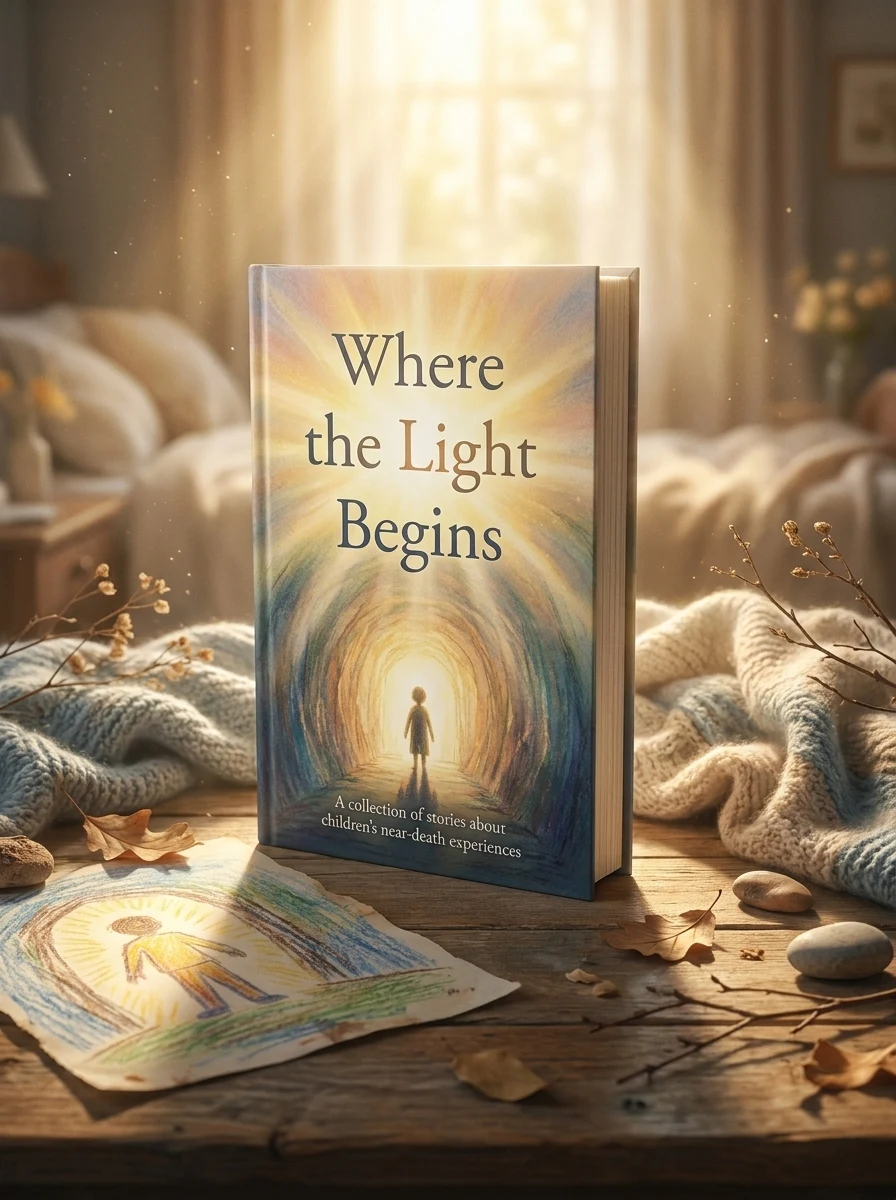


Where the Light Begins: Stories of Near-Death Experiences and After-Death Communications by Children and How They Experience Them Differently from Adu
Stock reported in the catalog; fulfillment is confirmed with your request.
Witness the profound, unadorned wisdom children bring back from the edge of existence.
This compelling volume delves into the often-overlooked world of children's near-death experiences and after-death communications. Daniela Klose illuminates how young minds uniquely process encounters with the beyond, offering direct, unspeculative accounts. Drawing from genuine case studies and hospice interactions, the book provides a vital child-centric lens on these profound events. Rather than seeking to validate an afterlife, it probes deeper: what do these experiences reveal about the fundamental nature of consciousness? Readers will discover how children return with an enduring shift in perception, marked by deepened compassion and diminished fear, supported by insightful interdisciplinary analysis.
This work resides within the modern spiritualist tradition of near-death experience literature, specifically focusing on the niche intersection of pediatric psychology and metaphysical inquiry. It contributes to the ongoing discourse on consciousness studies by highlighting developmental differences in post-mortem perception.


📝 Description: Where the Light Begins: Stories of Near-Death Experiences and After-Death Communications by Children and How They Experience Them Differently from Adu
💎 Expert review
📖 Why choose it
Why this book is worth reading
Readers seeking comfort in the face of loss or those deeply curious about the mechanics of consciousness will find this book profoundly moving. It offers a rare, child-centric lens that bypasses adult skepticism to reveal pure, unadorned wisdom. Those interested in spiritualism, hospice care, or the nature of death will appreciate the genuine case studies and interdisciplinary analysis. The book is ideal for anyone who believes that children’s perspectives offer unique insights into the afterlife, providing a sense of enduring compassion and diminished fear. It does not merely validate an afterlife but explores what these events reveal about our fundamental existence, making it essential for open-minded seekers.
⭐ Reader reviews
Reader rating
Daniela Klose provides a compelling, direct account of children's encounters with the beyond, avoiding speculative fluff in favor of genuine hospice interactions. However, readers expecting rigorous scientific proof or traditional religious doctrine may find this work lacking, as it focuses on perception shifts rather than theological validation. It is not suited for those who prefer adult-centric narratives or are uncomfortable with the idea of children possessing superior metaphysical insight. The tone is warm and insightful, yet the specific focus on pediatric experiences limits its broad appeal to general occultists. It serves best as a companion piece for spiritualists already familiar with NDE literature.
❓ Frequently asked questions
📖 Who should read this
Parents, educators, or researchers curious about consciousness and how young minds grapple with profound spiritual encounters will find this book essential. It offers invaluable insights for understanding near-death experiences through childhood's innocent, unfiltered lens.
🎯 Key themes and symbolism
Children's Unique Perceptions
This work highlights the distinct manner children encounter and articulate near-death experiences. Their accounts are characterized by striking simplicity and directness, devoid of adult speculation. It emphasizes their unvarnished recollections of "light" and "presence," offering a fresh perspective on these profound journeys.
Exploring Consciousness's Depths
Rather than debating an afterlife's existence, Klose uses these narratives to explore consciousness's very essence. The consistent perceptual shifts reported by children post-NDE—like heightened compassion and reduced fear—suggest a fundamental alteration in their understanding of reality, pointing towards consciousness as primary.
Lasting Perceptual Shifts
A central theme is the profound, enduring transformation that follows children's NDEs. Many return with a remarkably altered worldview, experiencing a softening of fear and an amplification of compassion. These changes are not temporary but integrate into their developing personalities, influencing life paths long after the event.
💬 Quotes from the book
“The child simply stated, 'The light felt like coming home, and everyone there knew me, even though I didn't know them before.'”
“Afterward, the little boy couldn't understand why people argued; he said he now felt everyone was connected, like threads in a giant, beautiful tapestry.”
📜 Historical context
📚 Glossary
- Near-Death Experience (NDE)
- After-Death Communication (ADC)
- Consciousness Studies
📔 Questions to reflect on
- How might a near-death experience in childhood shape a person's life trajectory differently than one experienced in adulthood?
- If consciousness can shift so profoundly after such an experience, what does this imply about its ordinary state and our everyday perceptions?
- Reflect on a time you felt a deep, unspoken connection to something or someone. How does that resonate with the 'connection beyond language' described in these accounts?
🏛 Books from this publisher Sacred Stories Publishing
All books from this publisher →
You might also like
See more →
 91
91