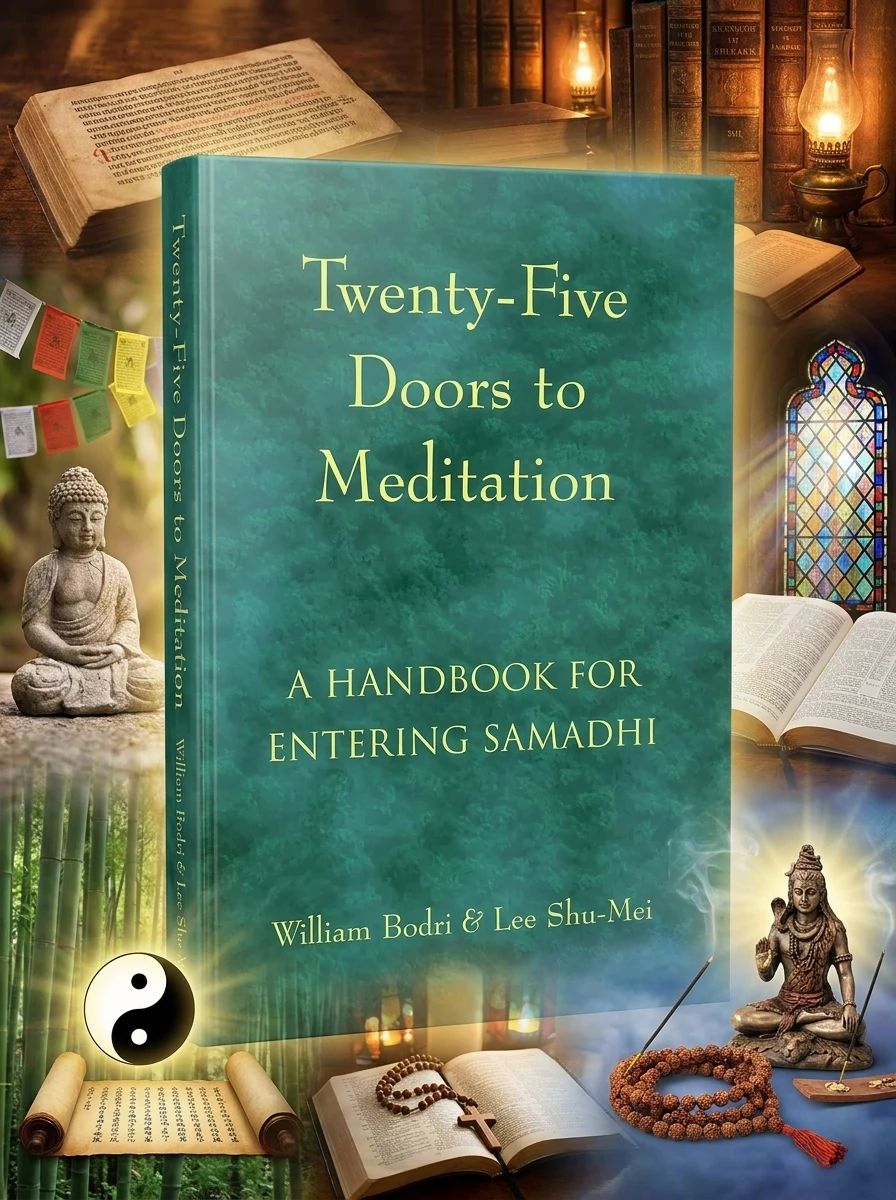

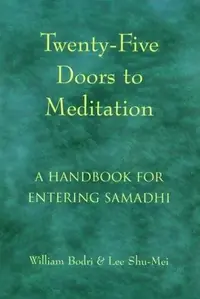
Twenty-Five Doors to Meditation: A Handbook for Entering Samadhi
Bodri, WilliamStock reported in the catalog; fulfillment is confirmed with your request.
Navigate the labyrinth of spiritual paths with a map that unites East and West.
Bodri and ShuMei offer a masterwork for seekers overwhelmed by conflicting spiritual advice. This volume dissects twenty-five distinct meditation techniques, revealing the hidden commonalities between Buddhist, Taoist, Christian, and Hindu practices. By mapping the developmental stages and scientific underpinnings of each method, they guide you toward samadhi. The text clarifies how disparate traditions intersect, providing a coherent framework for choosing the right path. With detailed descriptions and extensive reference lists, it serves as a practical manual for attaining deep meditative absorption.
This work sits at the intersection of comparative religion and modern practical mysticism, synthesizing ancient Eastern and Western esoteric traditions into a unified framework for spiritual development. It reflects the contemporary occult interest in bridging disparate metaphysical systems for coherent personal practice.


📝 Description: Twenty-Five Doors to Meditation: A Handbook for Entering Samadhi
💎 Expert review
📖 Why choose it
Why this book is worth reading
This book is an essential guide for seekers who feel paralyzed by the sheer volume of conflicting spiritual advice available today. If you are overwhelmed by choosing between Buddhist, Taoist, Christian, or Hindu methods, Bodri and ShuMei provide a clear map to navigate these diverse paths. It offers a coherent framework that reveals hidden commonalities across traditions, allowing you to understand the developmental stages and scientific underpinnings of each technique. Ultimately, it serves as a practical manual for those ready to move beyond confusion and attain deep meditative absorption, making it invaluable for anyone seeking unity in their spiritual journey.
⭐ Reader reviews
Reader rating
Took a chance on this and glad I did. Solid binding, decent paper — holds up to heavy use. Will be gifting a copy to a friend.
Ordered this after seeing it referenced in another book I was studying. Some sections stopped me cold in the best way. Well worth it.
Been hunting for a decent copy of this text for ages. Some chapters demand a slow, careful read, and that's exactly the point.
Ordered this after seeing it referenced in another book I was studying. The material is presented clearly and the structure makes it easy to revisit key passages. The text itself is dense but rewarding — you get out what you put in. Delivery took a bit longer than quoted. Recommended with reservations.
This volume is a robust masterwork for those serious about integrating varied spiritual disciplines into a single, effective practice. It excels in dissecting twenty-five distinct techniques to reveal the underlying unity of samadhi. However, it does not suit readers looking for quick fixes or superficial self-help platitudes; this text demands engagement with detailed descriptions and extensive reference lists. It is also less appropriate for those seeking purely dogmatic adherence to a single tradition, as its strength lies in comparative analysis rather than exclusive devotion. Readers must be prepared for a scholarly yet practical approach that bridges East and West without diluting the depth of either.
❓ Frequently asked questions
📖 Who should read this
Readers confused by fragmented spiritual advice who desire a structured, comparative approach to meditation. Ideal for serious practitioners seeking to understand the mechanics behind various traditions before committing to one.
🎯 Key themes and symbolism
Interfaith synthesis
Samadhi attainment
Comparative methodology
💬 Quotes from the book
“The authors show how Buddhist techniques can be explained through Taoist principles.”
“An indispensable book for individuals searching to find the meditation technique that is best for them.”
📜 Historical context
📚 Glossary
- Samadhi
- Syncretism
- Esoteric
📔 Questions to reflect on
- Which traditional barrier do you feel most strongly, and how does this text challenge that boundary?
- How does understanding the 'scientific basis' of a practice change your relationship to it?
- What does 'samadhi' mean to you personally, and which of the twenty-five doors resonates with that definition?
✍️ More books by this author Bodri, William
All books by this author →
🏛 Books from this publisher Weiser Books
All books from this publisher →





 87
87

You might also like
See more → 80
80