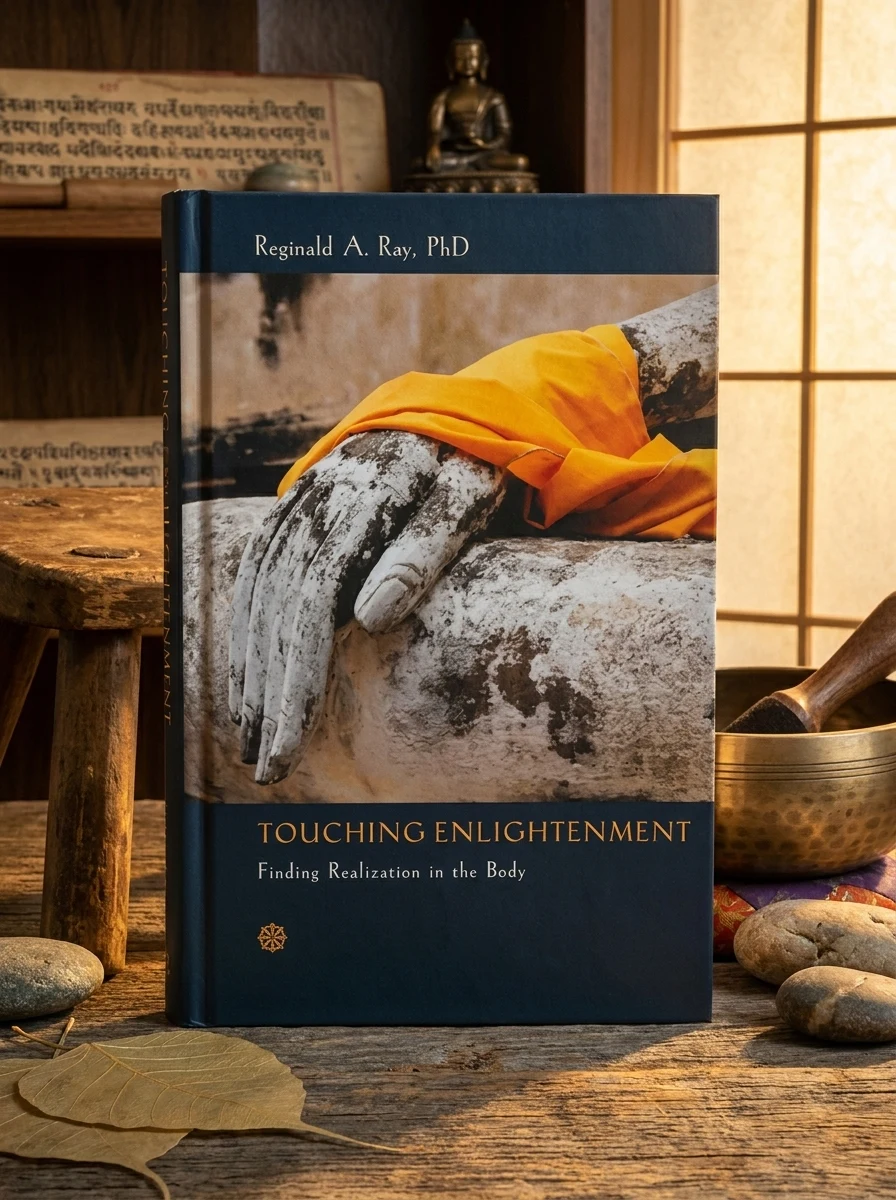

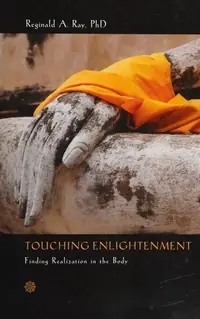
Touching Enlightenment: Finding Realization in the Body


Stock reported in the catalog; fulfillment is confirmed with your request.
Shatter mental abstraction and discover the Buddha's true path through embodied awakening.
Reggie Ray dismantles the notion that meditation is merely intellectual exercise, guiding you toward the original Buddhist practice of somatic realization. Drawing on decades of teaching and Tibetan yoga insights, he reveals how to inhabit the physical self fully. The text explores how rejected experiences imprint upon the body and how to receive them to reconstruct your humanity. By examining the three bodies—physical, interpersonal, and cosmic—Ray offers a systematic approach to awakening that prioritizes visceral awareness over cerebral gymnastics, inviting a profound, embodied communion with existence.
This work bridges traditional Tibetan yoga and Buddhist meditation with contemporary somatic psychology, reflecting a modern shift toward embodied spirituality within Western esoteric circles. It situates itself firmly in the mysticism shelf by addressing the intersection of ancient contemplative practices and physical awareness.


📝 Description: Touching Enlightenment: Finding Realization in the Body
💎 Expert review
📖 Why choose it
Why this book is worth reading
Readers who feel disconnected from their physical selves or frustrated by purely intellectual spiritual approaches will find profound relief in this text. Reggie Ray offers a vital antidote to mental abstraction, guiding you to reclaim the Buddha's original path through direct bodily experience. If you struggle with integrating meditation into daily life or wish to heal rejected experiences imprinted upon your body, this book provides a systematic, compassionate framework. It is essential for those seeking to reconstruct their humanity through visceral awareness rather than cerebral gymnastics. By exploring the physical, interpersonal, and cosmic bodies, Ray invites a deep, embodied communion with existence that transforms how you perceive reality and inhabit your own life.
⭐ Reader reviews
Reader rating
Needed this for my research. The symbolism is layered and generous to patient readers. The font runs small in the appendices. Good, with the caveats above.
Not my usual area but wanted to branch out. Plenty of passages worth underlining; my copy is already full of margin notes. Challenging in places, but never needlessly obscure. The font runs small in the appendices.
Ray successfully dismantles the notion that meditation is merely an intellectual exercise, offering a robust alternative through somatic realization. The text is valuable for its decades of teaching insights and systematic approach to awakening. However, it does not suit readers seeking quick fixes or those who prefer abstract philosophical discourse over practical, bodily engagement. Those unwilling to confront rejected experiences imprinted on their physical self may find the process demanding rather than illuminating. While the focus on visceral awareness is refreshing for many, it requires a willingness to inhabit discomfort. It remains a significant contribution to mysticism, prioritizing embodied awakening over traditional cerebral study.
❓ Frequently asked questions
📖 Who should read this
Practitioners feeling stuck in intellectual analysis or those seeking to integrate spiritual insight with physical sensation. It suits anyone ready to stop thinking about enlightenment and start touching it through their own flesh and breath.
🎯 Key themes and symbolism
Somatic Meditation
Tibetan Yoga
Embodied Realization
💬 Quotes from the book
“Until you answer this question, meditation may be no more than a mental gymnastic.”
“To be awake... is to be fully and completely embodied.”
📜 Historical context
📚 Glossary
- Three Bodies
- Karma of Cause
- Somatic Imprinting
📔 Questions to reflect on
- Where in your body do you feel most disconnected from your thoughts, and why?
- What specific sensation arises when you consider taking full responsibility for your current life circumstances?
- How might your practice change if you treated physical discomfort as a teacher rather than an obstacle?
🏛 Books from this publisher St. Martin's Essentials / Sounds True
All books from this publisher →

You might also like
See more →