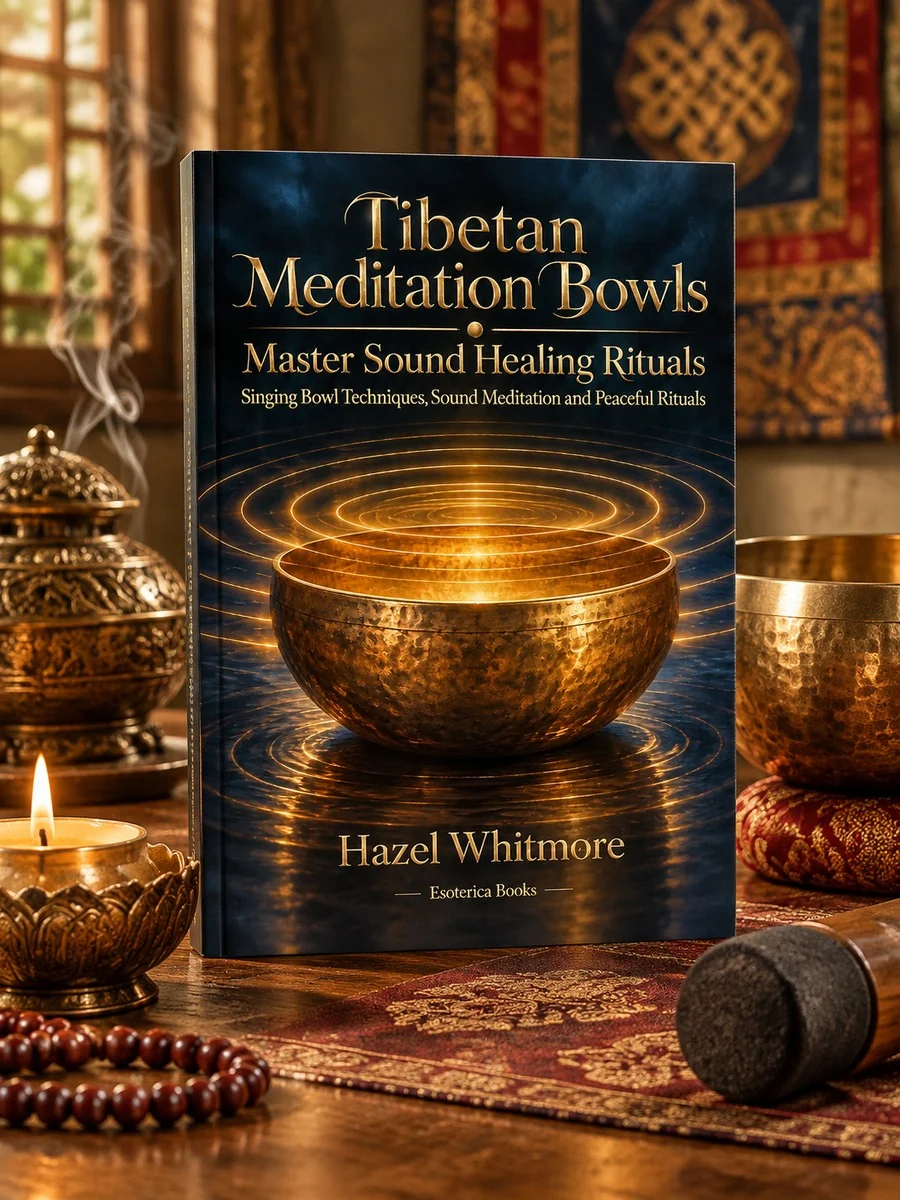
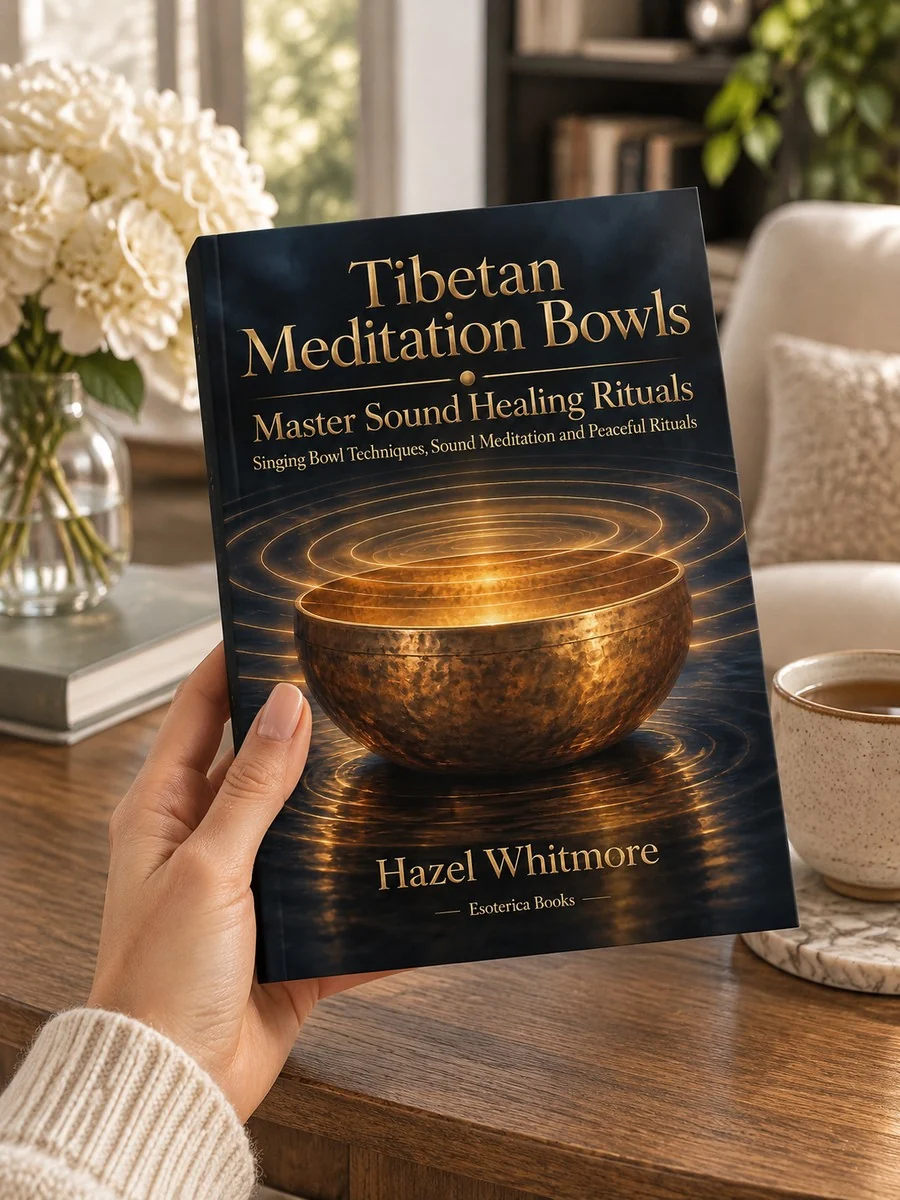
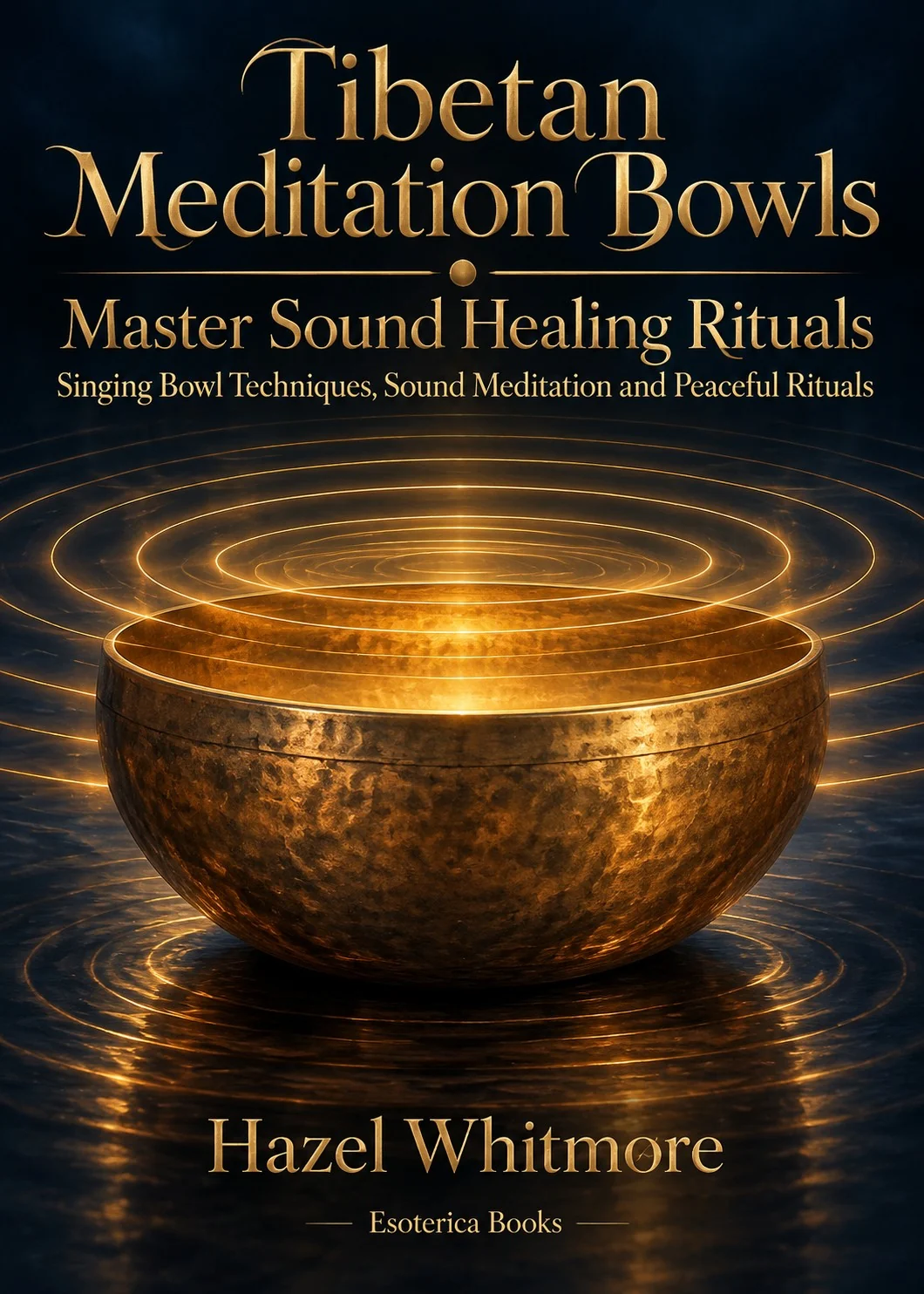
Tibetan Meditation Bowls: Master Sound Healing Rituals
Learn to hold, play, and care for a singing bowl, then create beautiful sound meditations and personal rituals.
Discover the art of Tibetan meditation bowls in this practical, welcoming guide for beginners. Hazel Whitmore introduces the S.O.U.N.D. Method, a five-step approach to understanding your bowl, producing clear and sustained tones, and building a personal sound meditation practice. Learn how to choose a bowl, work with wooden and padded mallets, explore rim-rubbing techniques, and care for different materials. With guided listening sessions, two-bowl arrangements, breathing exercises, moon-inspired rituals, and journaling prompts, the book takes you from your first strike to thoughtfully designed daily practices.
Tibetan singing bowls are metal instruments traditionally associated with sound and contemplative practices. Their spiritual associations and individual tones offer opportunities for attentive listening, symbolism, and personal reflection, while their precise historical origins remain uncertain.


📝 Description: Tibetan Meditation Bowls: Master Sound Healing Rituals
📖 Why choose it
Why this book is worth reading
The appeal of a singing bowl begins with hearing it, but learning to play one confidently takes a little patience and the right technique. This book addresses the practical questions beginners actually encounter: which mallet to choose, where to strike, how firmly to press when rim-rubbing, and why a sound sometimes stops unexpectedly. Its strongest feature is the progression from a first five-minute session to complete personal rituals, with plenty of opportunities to experiment with tone, silence, and reflection.
⭐ Reader reviews
Reader rating
Hazel Whitmore's guide succeeds where many beginner introductions can feel vague: it gives readers concrete playing instructions. The distinction between striking and rim-rubbing, the choice of wooden or padded mallets, and the attention paid to pressure and playing angles make the practical sections especially useful. The S.O.U.N.D. Method provides a clear organizing framework, while the later chapters expand the experience into evening listening, two-bowl arrangements, lunar rituals, and guided reflection. The five-minute introductory session and the longer practice plans offer an appealing progression. One limitation is that readers interested in making their own bowls or studying advanced musical theory will need a more specialized resource. Overall, this is an accessible, thoughtfully organized introduction.
❓ Frequently asked questions
📖 Who should read this
Ideal for complete beginners, curious spiritual practitioners, and anyone who owns a singing bowl but struggles to produce a sustained singing tone. Readers looking for practical playing instructions alongside meditation, mindful listening, and personal ritual ideas will find a particularly useful introduction here.
🎯 Key themes and symbolism
Singing Bowl Techniques
Sound Meditation
Personal Rituals
Lunar Reflection
📜 Historical context
📚 Glossary
- Singing bowl
- Mallet
- Rim-rubbing
- Harmonics
- Resonance
- Sound meditation
📔 Questions to reflect on
- What do I notice about my singing bowl's tone, harmonics, and resonance when I listen without rushing to produce another sound?
- Which intention would I like to bring to a morning, midday, or evening sound meditation, and what opening words would express it naturally?
- What personal meaning do the new moon, full moon, and waning moon hold for me, and how might I reflect those themes through sound and journaling?
📖 Read on the blog
✍️ More books by this author Hazel Whitmore



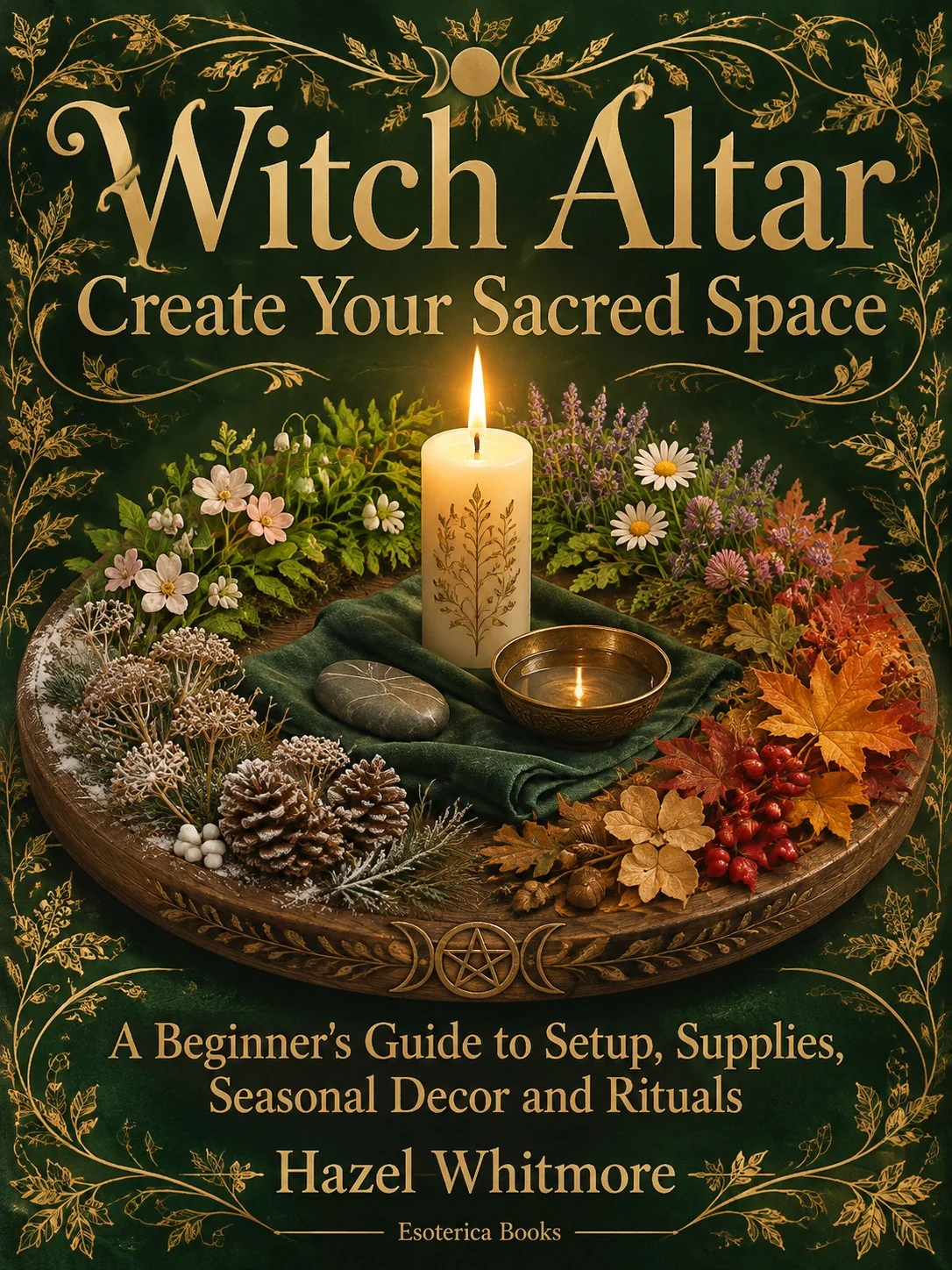
🏛 Books from this publisher Esoterica Books
All books from this publisher →


You might also like
See more →
Have a question about this item?
Ask about the edition, condition, delivery or anything else — we reply by email or phone, usually within a day.
