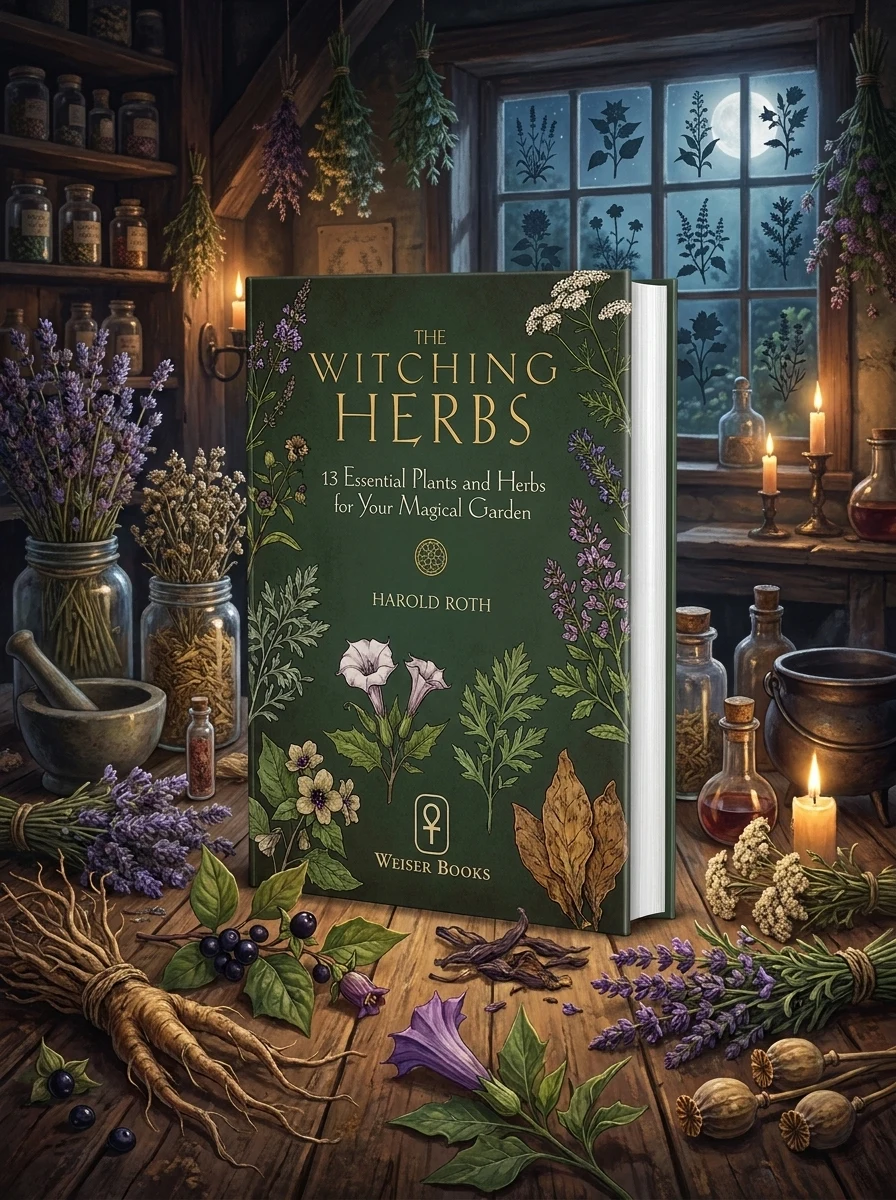
The Witching Herbs: 13 Essential Plants and Herbs for Your Magical Garden
Roth, HaroldThis edition can be ordered. No arrival date is confirmed.
Harold Roth unveils thirteen potent botanical spirits, merging ancient lore with thirty years of practical cultivation wisdom.
This volume delves into the esoteric and agrarian dimensions of thirteen archetypal herbs, including mandrake, belladonna, and wormwood. Roth bridges the gap between high magic and soil, offering detailed cultivation guides for each plant alongside their associated spirits and magical applications. It is a dense, authoritative resource that treats these flora not merely as ingredients, but as living entities with complex personalities and historical weight, demanding respect from the practitioner.
This work sits firmly within the modern Wiccan and eclectic witchcraft tradition, emphasizing the animistic connection between practitioner and plant spirit. It reflects the contemporary esoteric shift toward grounding high magic in tangible, agrarian practice and botanical respect.


📝 Description: The Witching Herbs: 13 Essential Plants and Herbs for Your Magical Garden
💎 Expert review
📖 Why choose it
Why this book is worth reading
Practitioners seeking to deepen their relationship with the natural world will find profound value in this text, particularly those who view gardening as a sacred ritual rather than mere hobby. It is ideal for witches who desire more than simple recipes; they crave the spiritual biography of each herb and its unique energetic signature. Readers who respect the complexity of botanical spirits and wish to cultivate their own magical garden with intention will appreciate the detailed cultivation guides. This book serves those ready to invest time in understanding the historical weight and personality of plants like mandrake and belladonna, offering a respectful, authoritative path for integrating these potent entities into daily magical work.
⭐ Reader reviews
Reader rating
Took a chance on this and glad I did. You can tell why this work has endured. Some archaic spellings slow things down. Recommended with reservations.
Came across this title in a footnote and had to track it down. Challenging in places, but never needlessly obscure. If you're drawn to this subject, don't hesitate.
Was skeptical at first. It rewards patience more than any book I've bought this year. The typesetting is comfortable for study, with good margins for notes. My only quibble is the cover feels thinner than expected. Happy enough with the purchase.
My book club chose this last month. It reads better in small doses — a chapter at a time with notes. Deserves a place on any esoteric bookshelf.
Added this to my reference shelf. A text you study rather than simply read. Would buy from this store again.
Roth delivers a dense, authoritative resource that demands respect from its audience. It is not for casual readers seeking quick spell ingredients; it requires engagement with complex botanical lore and spiritual anthropology. Those looking for simplified, low-effort gardening tips or purely aesthetic plant guides will likely find this text too rigorous and spiritually intense. The focus on 'living entities' may alienate skeptics or materialists who prefer scientific detachment over animistic reverence. It is a serious manual for dedicated practitioners willing to treat flora as sentient partners in magic, rather than passive tools.
❓ Frequently asked questions
📖 Who should read this
Experienced practitioners, hedge witches, and herbalists seeking deeper, more dangerous connections with traditional flora. It is ideal for those who already possess basic gardening skills and wish to elevate their magical practice through rigorous, spirit-based botanical work.
🎯 Key themes and symbolism
Botanical Spiritism
Roth posits that each herb possesses a distinct 'familiar' or spirit entity. He explores the unique energetic signature of these plant guardians, detailing how to recognize their presence, negotiate with them, and harness their specific magical affinities for rituals and spellwork.
Cultivation of Danger
The text provides rigorous, pragmatic advice on growing notoriously difficult and toxic plants like henbane and datura. Roth emphasizes the safety, ethical considerations, and spiritual discipline required to nurture these 'baneful' herbs, framing gardening as a sacred, protective act.
Lunar Herbalism
Structuring the work around the number thirteen, Roth aligns each herb with a month of the lunar calendar. This framework suggests a cyclical approach to magic, encouraging readers to time their planting, harvesting, and ritual usage according to lunar phases and seasonal transitions.
💬 Quotes from the book
“This book is a great choice for intermediate-to-advanced witches who would like to work more closely with the traditional witching herbs.”
“Combines mysticism with practical instructions for growing each plant.”
📜 Historical context
📚 Glossary
- Baneful Herbs
- Plant Familiar
- Lunar Calendar
📔 Questions to reflect on
- Which of the thirteen herbs resonates most with your current spiritual needs, and why?
- What fears or reservations do you hold about working with 'baneful' or toxic plants, and how might you address them?
- How can you integrate the lunar cycles into your daily gardening routine to deepen your magical practice?
✍️ More books by this author Roth, Harold
All books by this author →
🏛 Books from this publisher Weiser Books
All books from this publisher →





 87
87

You might also like
See more →

 91
91