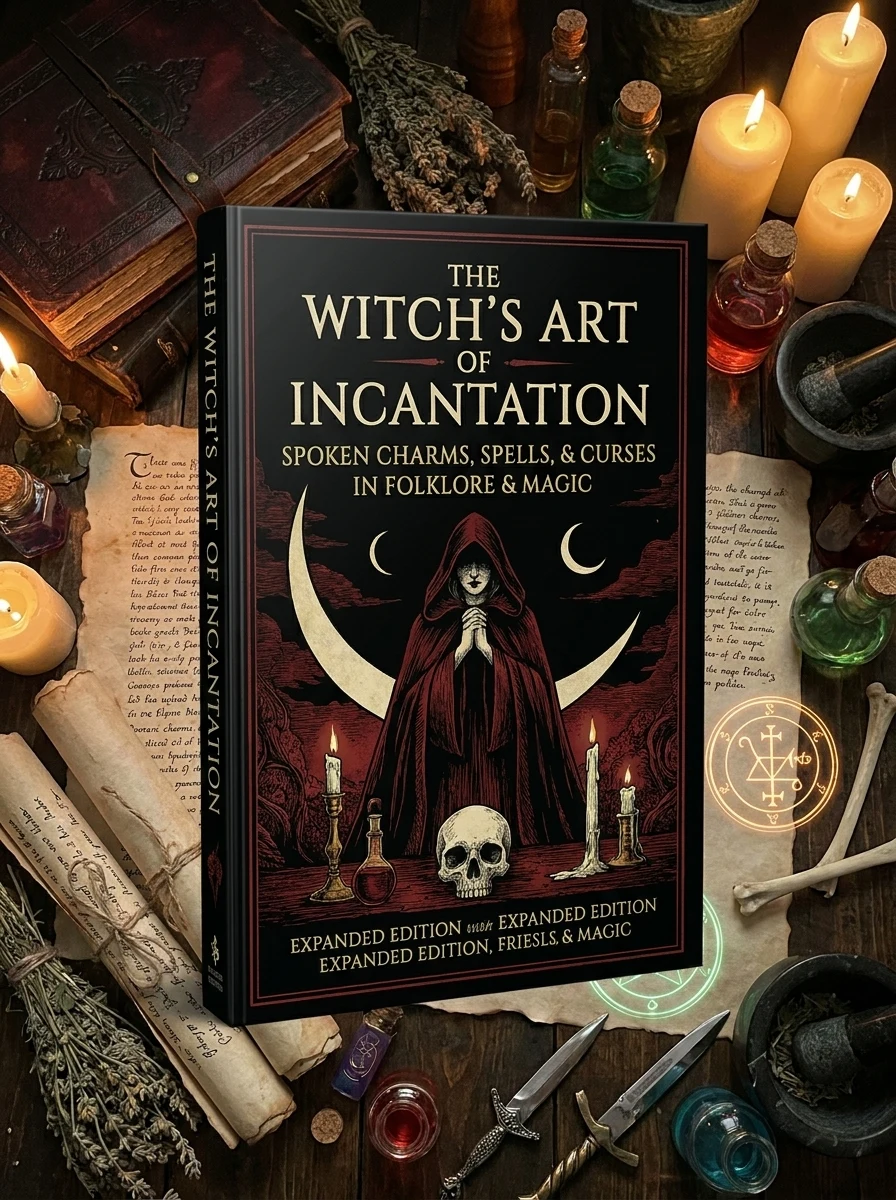

The Witch's Art of Incantation: Spoken Charms, Spells, & Curses in Folk Witchcraft
Horne, Roger JStock reported in the catalog; fulfillment is confirmed with your request.
Unearth the ancient power of spoken word magic, from blessing to curse.
This comprehensive new edition delves into the intricate world of incantation, presenting over 180 ancient charms sourced from historical lore. Explore the vast spectrum of spoken magic, encompassing blessings, curses, healing invocations, and commanding spells. Author Roger J. Horne unveils practical, often overlooked techniques like constructing a "magical listener" and integrating sympathetic rituals. A significant addition is a chapter on heretical psalmistry, revealing its place within the witch's incantatory tradition. Each charm is contextualized with its origin, era, and source, enriching the reader's understanding of folkloric texts and empowering their practice.
This volume sits firmly within the tradition of folk witchcraft and historical occultism, bridging ancient lore with contemporary practice through the lens of spoken word magic.


📝 Description: The Witch's Art of Incantation: Spoken Charms, Spells, & Curses in Folk Witchcraft
💎 Expert review
📖 Why choose it
Why this book is worth reading
Readers deeply invested in the practical application of folk magic will find this text indispensable for its rigorous approach to incantatory power. It serves practitioners who seek more than superficial charms, offering a structured path through over one hundred and eighty ancient spells. Those interested in the historical evolution of curses, blessings, and healing invocations will appreciate the detailed contextualization provided for each entry. The book empowers the serious student by revealing overlooked techniques like the 'magical listener' and explaining the role of heretical psalmistry within witchcraft traditions. It is ideal for those who value scholarly depth alongside practical utility, ensuring that every spell is understood not just as a tool, but as a piece of living folklore with specific origins and eras attached.
⭐ Reader reviews
Reader rating
Horne provides a comprehensive survey of spoken magic that will delight historians of religion and dedicated practitioners alike. The inclusion of heretical psalmistry and the 'magical listener' technique offers fresh insights into folk traditions. However, this is not a beginner’s guide to casual witchcraft; it demands patience for historical analysis and may frustrate readers seeking quick, simple results without context. Those looking for purely aesthetic or theatrical grimoires will likely find the dense focus on etymology and source verification tedious. It is best suited for those willing to engage with the academic weight behind the spells. The lack of modern adaptation might alienate practitioners preferring contemporary interpretations over strict historical fidelity.
❓ Frequently asked questions
📖 Who should read this
If you're a practitioner seeking to deepen your understanding of folk magic's linguistic roots, or a curious student eager to explore historical charm work and unconventional magical techniques, this book offers invaluable insights. It's for those ready to wield the ancient power of the spoken word.
🎯 Key themes and symbolism
The Power of Spoken Word
This work meticulously dissects the profound impact of vocalized intent. It showcases how words, when imbued with focus and purpose, transform into potent magical tools capable of manifesting diverse outcomes, from protection and healing to binding and dissolution, emphasizing the sonic and linguistic aspects of spellcraft.
Historical Incantation Practices
The book grounds its extensive collection of charms in authentic historical and folkloric traditions. By providing contextual details like origin and era for each incantation, it offers readers a tangible link to the practices of past generations of folk witches, enriching their understanding of magical lineage.
Unconventional Magical Methods
Beyond simple recitation, Horne introduces advanced, often esoteric techniques. Readers will learn about cultivating a "magical listener" to amplify their intentions and integrating physical actions with spoken charms. The inclusion of heretical psalmistry broadens the scope of traditional incantatory arts.
💬 Quotes from the book
“The voice is not merely a vessel for words, but a conduit for primal will, shaping reality with each carefully uttered syllable.”
“To truly master the incantatory art, one must not only speak the charm but also cultivate the unseen ear of the magical listener, guiding the ethereal currents.”
📜 Historical context
📚 Glossary
- Incantation
- Heretical Psalmistry
- Sympathetic Ritual
📔 Questions to reflect on
- Reflect on a time you felt the power of your own words, positively or negatively. How might this personal experience inform your magical practice?
- Consider the concept of a "magical listener." How might you conceptually or practically construct such an entity in your own ritual work?
- Research a historical charm or folk practice from your own ancestral background. How does it align with or diverge from the incantatory methods presented here?
✍️ More books by this author Horne, Roger J
All books by this author →
🏛 Books from this publisher Moon Over the Mountain Press
All books from this publisher →You might also like
See more →
 91
91