The Torah in the Tarot


Stock reported in the catalog; fulfillment is confirmed with your request.
Uncover the lost Jewish secrets intricately woven into the very fabric of ancient Tarot imagery.
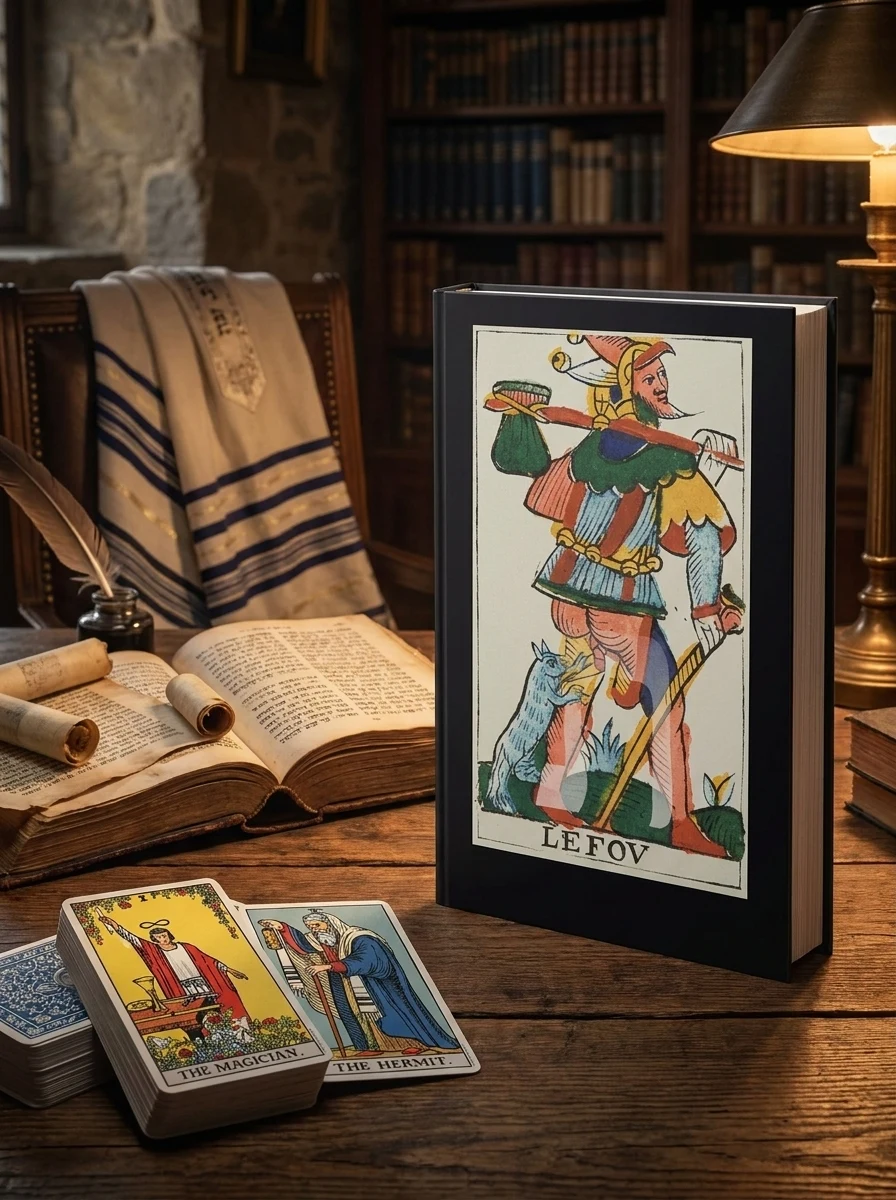
Stav Appel's groundbreaking work reinterprets the iconic Tarot de Marseille, specifically the Jean Noblet deck, revealing its surprisingly deep Jewish roots. For centuries, the true origins of these enigmatic cards have been debated, but Appel, a dedicated Torah student, meticulously deciphers hidden symbols—like the Hebrew letter Aleph in the Magician's stance or matzah beneath the Moon. He compellingly argues that this 17th-century deck served as a covert educational tool, safeguarding Jewish tradition during a period of intense religious persecution. This book offers a profound new lens through which to understand Tarot's historical and spiritual lineage.
This work sits at the intersection of Kabbalistic study and Tarot history, challenging conventional Western esoteric narratives by proposing deep Jewish origins for the Tarot de Marseille. It addresses historical periods of religious persecution where sacred traditions were safeguarded through covert symbolism.


📝 Description: The Torah in the Tarot
💎 Expert review
📖 Why choose it
Why this book is worth reading
Readers fascinated by the hidden genealogy of esoteric symbols will find this book revelatory. If you have ever sensed a dissonance between standard Tarot interpretations and their deeper spiritual roots, Stav Appel offers a compelling alternative lineage. This text is essential for those interested in how Jewish mysticism influenced broader occult traditions during times of censorship. It provides a unique lens for scholars and practitioners alike who seek to understand the Tarot not just as a divination tool, but as a vessel for preserving ancient Torah secrets. By decoding specific imagery like the Magician’s stance, you gain a fresh perspective on the interconnectedness of Jewish and Western esoteric thought, enriching your study of both Kabbalah and Tarot history.
⭐ Reader reviews
Reader rating
Stav Appel presents a bold thesis linking the Jean Noblet deck to covert Jewish educational tools. While the exploration of symbols like Aleph and matzah is intellectually stimulating for those open to unconventional historical links, the argument may feel tenuous to strict historians or traditionalists who prefer established Western occult lineages. Readers seeking straightforward divination guides or dry academic historiography might find the speculative nature of these connections frustrating. However, for those willing to entertain the possibility of suppressed Jewish origins in Tarot, this is a provocative and necessary contribution. It demands an open mind regarding religious persecution’s impact on esoteric art, making it less suitable for skeptics resistant to reinterpreting iconic imagery through a strictly Kabbalistic framework.
❓ Frequently asked questions
📖 Who should read this
If you're a serious student of Tarot history, Jewish mysticism, or the fascinating interplay between culture and hidden knowledge, this book is essential. Prepare to have your understanding of one of the world's most iconic decks completely transformed.
🎯 Key themes and symbolism
Hidden Jewish Symbolism
Appel meticulously deciphers the visual language of the Jean Noblet Tarot, exposing specific Jewish symbols ingeniously integrated into its imagery. From the Magician's arm position forming the Hebrew letter Aleph to the Hermit's prayer shawl and the matzah under the Moon, the book reveals a rich, previously unrecognized layer of meaning that connects the Tarot directly to Jewish mystical traditions.
Clandestine Education
The book posits a compelling historical theory: that the Tarot de Marseille, particularly the Noblet deck, was designed as a discrete means of Jewish instruction. Appearing around 1650 amidst intense Catholic Church efforts to suppress Jewish culture, these cards likely served as a veiled curriculum, allowing essential teachings to be passed down through generations under the guise of a game.
Reinterpreting Tarot History
By unveiling its Jewish foundations, Appel significantly challenges conventional understandings of Tarot's origins and development. This work reshapes the narrative surrounding the Tarot de Marseille, repositioning it not merely as a divinatory tool or artistic curiosity, but as a profound repository of sacred knowledge deliberately encoded for preservation and transmission in a hostile environment.
💬 Quotes from the book
“Consider the Magician, arms poised, seemingly in mid-gesture. Yet, is this not the very form of Aleph, the silent progenitor of all utterance, subtly inscribed upon the canvas of the card, a whisper to the knowing eye?”
“Beneath the Moon's pale, deceptive light, one discerns not merely lunar phases, but three unassuming discs. Could these humble circles be the matzah, the unleavened bread of exodus, a symbol of freedom's bitter haste, deliberately placed for those who truly see?”
📜 Historical context
📚 Glossary
- Tarot de Marseille
- Jean Noblet Tarot
- Torah
📔 Questions to reflect on
- How does the idea of sacred knowledge being encoded in plain sight resonate with your own spiritual or historical interests?
- If the Tarot was indeed a tool for clandestine education, what implications does this have for how we understand its power and purpose today?
- Reflect on how historical periods of persecution might inspire the creation of such elaborate, symbolic systems for cultural preservation.
You might also like
See more →