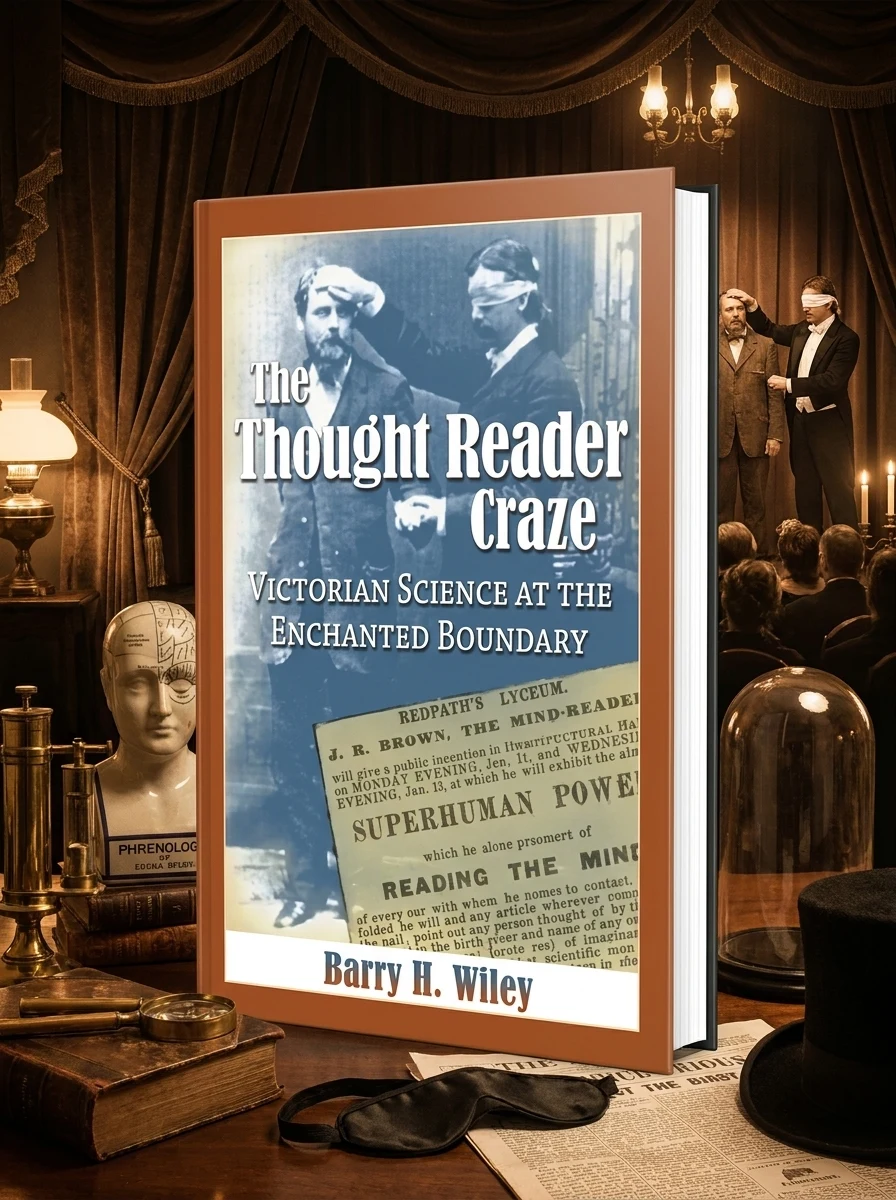

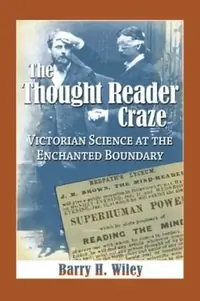
The Thought Reader Craze: Victorian Science at the Enchanted Boundary
Stock reported in the catalog; fulfillment is confirmed with your request.
Victorian Britain's feverish obsession with telepathy blurs the line between laboratory science and stage trickery.
This work chronicles the late nineteenth-century British mania for mentalism, where the quest for empirical proof of telepathy collided with the allure of theatrical deception. It details how esteemed researchers and dubious performers alike capitalized on the era's industrial anxiety and spiritual hunger. From the legitimate efforts to validate psychic phenomena to the lucrative routines of masters like Bishop and Cumberland, the text reveals a society grappling with the limits of the mind. It is a fascinating excavation of a fleeting moment when science and sorcery danced together in the public eye.
This work situates itself within the late nineteenth-century British fascination with spiritualism and the emerging field of parapsychology, exploring the historical moment when scientific inquiry intersected with theatrical entertainment.


📝 Description: The Thought Reader Craze: Victorian Science at the Enchanted Boundary
💎 Expert review
📖 Why choose it
Why this book is worth reading
Readers fascinated by the intersection of history, psychology, and performance will find this text deeply rewarding. It offers a unique window into a period where societal anxieties about industrialization fueled a desperate hunger for spiritual proof. By examining both legitimate research and theatrical deception, the book reveals how Victorian Britain grappled with the limits of the human mind. Those interested in the sociology of belief or the history of science will appreciate the nuanced look at how esteemed researchers and dubious performers alike capitalized on this cultural fever. It is essential for understanding how the line between empirical evidence and stage trickery was drawn, and often blurred, during a time of profound intellectual and spiritual transition.
⭐ Reader reviews
Reader rating
This book provides a compelling excavation of a specific cultural moment, detailing the collision between the quest for empirical proof and the allure of theatrical deception. However, readers seeking rigorous scientific methodology or definitive answers regarding the existence of telepathy will be disappointed. It is not a manual for practitioners but a historical analysis of public obsession. The narrative focuses on the societal context rather than providing practical instruction or supernatural validation. Those looking for dry academic detachment may find the exploration of 'industrial anxiety' too interpretive, while skeptics might find the sympathetic treatment of 'dubious performers' frustrating. It is best suited for those interested in cultural history rather than metaphysical truth.
❓ Frequently asked questions
📖 Who should read this
Readers fascinated by the intersection of early parapsychology and performance history, as well as those interested in how industrial society shaped beliefs about the human mind and consciousness during the late Victorian era.
🎯 Key themes and symbolism
Victorian Spiritualism
Scientific Skepticism
Theatrical Illusion
💬 Quotes from the book
“The hunger for scientific discovery drove prominent figures to promote the legitimacy of telepathy.”
“Entertainers made fortunes while scientists made and lost reputations.”
📜 Historical context
📚 Glossary
- Thought Reader Craze
- Psychic Phenomena
- Industrial Society
📔 Questions to reflect on
- How does the modern quest for scientific validation of consciousness mirror Victorian attempts to prove telepathy?
- In what ways does entertainment still blur the lines between truth and illusion in the realm of the paranormal?
- How did the rapid industrialization of Britain create a psychological space for both skepticism and spiritualism?
🏛 Books from this publisher McFarland & Company
All books from this publisher →

 88
88
You might also like
See more →
 88
88