

US shipping Secure card payment Occult and esoteric books

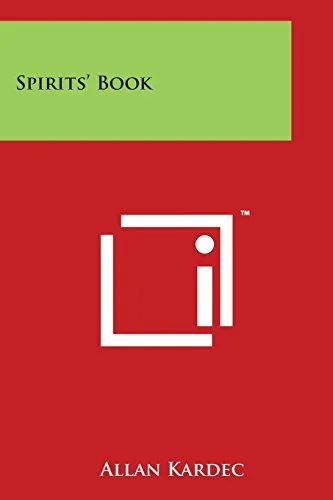
The Spirits Book

Kardec, Allan
Reader rating
4.6
(1 reviews) 18 sold
In stock

Stock reported in the catalog; fulfillment is confirmed with your request.

📚 ABOUT THE BOOK

Unveil the foundational dialogues that shaped an entire spiritual philosophy.

This pivotal work, penned by Allan Kardec, establishes the core tenets of Spiritism, a philosophy distinct from traditional Spiritualism. It documents profound exchanges Kardec conducted with a collective entity known as "The Spirit of Truth." Through these séances, fundamental questions about existence, morality, the cosmos, and the soul's journey were explored and systematically codified. This inaugural text, the cornerstone of the five-volume Spiritist Codification, offers a comprehensive framework for understanding spiritual progression, particularly emphasizing the concept of reincarnation as a central truth.

Key themes
Codifying Spiritual Truths Rebirth and Spiritual Evolution Direct Spiritual Communication
Historical context

This text serves as the cornerstone of Spiritist Codification, establishing Spiritism as a distinct philosophy separate from traditional Spiritualism through systematic codification of spiritual dialogues.


Difficulty
●● Moderate
Fans will love it
Edgar Cayce · C.W. Leadbeater · Parzival
🕊️ Spiritualism
🏛 White Crow Books 📅 2010 📖 548 pages 📔 Hardcover 📐 Hardcover ISBN: 9781907661310
Fun fact
"The Spirits Book" stands as an indispensable cornerstone for anyone serious about Spiritist philosophy. Its systematic, question-and-answer format masterfully unpacks complex spiritual concepts, offering a logical framework for understanding the afterlife and moral evolution. While its density might deter readers seeking light spiritual reading, those dedicated to a rigorous exploration of existence, guided by profound spiritual dialogues, will find it uniquely rewarding and endlessly thought-provoking. It's a foundational text, not a quick read, but deeply impactful.

📝 Description: The Spirits Book

'The Spirits Book' (1857), written by Allan Kardec, is widely regarded as the most important piece of writing in the 'Spiritist' canon. It is the first in a series of five books that Kardec wrote that are collectively known as the 'Spiritist Codification'. Although the other four books; 'The Medium's Book', 'The Gospel According to Spiritism', 'Heaven and Hell' and 'The Genesis According to Spiritism' are of great importance to the Spiritist movement it is 'The Spirits Book' that lays out the doctrine of the belief system. The Spiritist movement was founded by Allen Kardec and although its roots lay in Spiritualism there are differences in belief. The most important of these differences is the Spiritist belief in reincarnation. Although some Spiritualists believe in reincarnation and some do not, all Spiritists consider it as a basic truth of their ideology. In the 1850's, whilst investigating the afterlife, Kardec communicated in séances with a collection of spirits named 'The Spirit of Truth' who discussed many important topics such as life after death, good and evil, the universe and the origin of spirits, amongst others. 'The Spirit of Truth' counted many of history's great thinkers amongst its number such as Thomas of Aquino, Voltaire and Augustine of Hippo. Over time and after several sessions with the group Kardec had gathered enough information to convince him of life after death and he was compelled to spread the teachings of 'The Spirit of Truth'. He 'codified' their comments and listed them as answers to questions and this is the content of 'The Spirits Book'. The subjects that Kardec discusses, via 'The Spirit of Truth', laid down the foundations for the Spiritist philosophy and all of the concepts that would become, and still are, key to the movement's thinking have their genesis in the book. The belief that there is one Supreme Being, God, who created everything in the universe, is postulated. According to the text the Devil does not exist and Jesus is a messenger of God. Although the book does not refer to Jesus as the son of God and no mention is made of the 'immaculate conception' he is considered God's perfect messenger and his teachings are to be adhered to. Reincarnation and the survival of the soul after death are vital beliefs and it is stated that it is through reincarnation that lessons are learnt that can be taken into the next life and that every life moves the soul closer to perfection. According to the book man is made up of three separate elements; the body, the spirit and the spiritual body. One's spirit also predates the matter of the universe and will outlast it. After the publication of 'The Spirits Book' Kardec's Spiritist doctrine began to take root, firstly in France from where it spread throughout Europe and found its way to North America. Most significant, however, was the reaction to Spiritism in South America. In Brazil the Spiritist movement swept across the nation and it is still one of the country's main religions to this day with millions of Kardec's followers from Brazil visiting his tombstone in Paris every year.

💎 Expert review

💎
Esoterica Books editorial team
Occult literature desk
This pivotal work establishes the core tenets of Spiritism through documented exchanges with 'The Spirit of Truth,' creating a systematic codification of spiritual progress. While it offers a rigorous framework for understanding reincarnation and morality, it is not suited for readers seeking immediate ecstatic experiences or those who reject rational analysis in favor of emotional intuition. The text demands patience with its philosophical density rather than narrative flair. It will disappoint those looking for traditional religious dogma, as it presents Spiritism as a distinct philosophy. However, for the intellectually curious occultist, it remains an indispensable reference for understanding how foundational dialogues shaped modern spiritual thought.
✓ EDITOR'S REVIEW

📖 Why choose it

📖

Why this book is worth reading

Readers deeply interested in the metaphysical architecture of existence will find profound value in this foundational dialogue. It offers a comprehensive framework for understanding spiritual progression, making it essential for those seeking to grasp the concept of reincarnation as a central truth. The systematic exploration of morality, the cosmos, and the soul's journey provides clarity for seekers who prefer structured philosophical inquiry over vague mysticism. By documenting exchanges with 'The Spirit of Truth,' Kardec presents a logical approach to spiritual development that appeals to intellectual minds yearning for evidence-based esoteric wisdom. This book is ideal for individuals ready to engage with the core tenets that shaped an entire spiritual philosophy, offering both instruction and inspiration for navigating the complexities of the soul's eternal journey.

⭐ Reader reviews

The starting rating comes from the team Esoterica Books —
⭐ Esoterica editorial review Editorial rating 4.6/5
★★★★
If you are drawn to exploring the mechanics of the afterlife, the purpose of existence, and the intricate relationship between the material and spiritual worlds, this book is essential. It offers a structured philosophical approach for those seeking deeper understanding beyond conventional…

Reader rating

4.6
Based on 1 reviews
5
0
4
1
3
0
2
0
1
0
E
Esoterica Books editorial team

This pivotal work establishes the core tenets of Spiritism through documented exchanges with 'The Spirit of Truth,' creating a systematic codification of spiritual progress. While it offers a rigorous framework for understanding reincarnation and morality, it is not suited for readers seeking immediate ecstatic experiences or those who reject rational analysis in favor of emotional intuition. The text demands patience with its philosophical density rather than narrative flair. It will disappoint those looking for traditional religious dogma, as it presents Spiritism as a distinct philosophy. However, for the intellectually curious occultist, it remains an indispensable reference for understanding how foundational dialogues shaped modern spiritual thought.

❓ Frequently asked questions

While sharing common ground, Spiritism, as established in this text, fundamentally incorporates reincarnation as a non-negotiable truth. Unlike the broader Spiritualist movement, where belief in reincarnation varies, Spiritism considers it essential for spiritual evolution and justice.
"The Spirit of Truth" refers to a collective of enlightened spiritual entities with whom Allan Kardec communicated through mediums. They served as the primary source of the wisdom and doctrines meticulously recorded and organized throughout this foundational work.

📖 Who should read this

If you are drawn to exploring the mechanics of the afterlife, the purpose of existence, and the intricate relationship between the material and spiritual worlds, this book is essential. It offers a structured philosophical approach for those seeking deeper understanding beyond conventional spiritual inquiry.

🎯 Key themes and symbolism

Codifying Spiritual Truths

This volume serves as the seminal text for Spiritism, meticulously outlining its philosophical framework. It presents a systematic understanding of the spiritual realm, the nature of the soul, and humanity's place within the cosmic order, distinguishing Spiritism from other contemporary spiritual movements through its comprehensive approach to doctrine.

Rebirth and Spiritual Evolution

A central tenet explored here is the principle of reincarnation, presented not as an optional belief but as a fundamental mechanism for spiritual growth. The book delves into how successive earthly lives contribute to the soul's advancement, addressing questions of karmic progression and the continuous journey toward perfection.

Direct Spiritual Communication

At the heart of this work are the documented communications Allan Kardec had with advanced entities known as "The Spirit of Truth." These dialogues form the bedrock of the book's teachings, offering direct insights into profound subjects like morality, the purpose of suffering, the structure of the universe, and the ultimate destiny of spirits.

💬 Quotes from the book

“The purpose of life is the purification and advancement of the spirit through trials and experience, preparing it for higher states of being.”

“True morality stems from understanding our interconnectedness and the universal law of cause and effect, where every action echoes through eternity.”

📜 Historical context

Published in 1857, this work emerged from the vibrant 19th-century spiritualist milieu, yet decisively charted its own course. Allan Kardec codified a new, distinct spiritual philosophy, Spiritism, moving beyond the diverse beliefs of general Spiritualism. Its unique emphasis on reincarnation as a core doctrine set it apart, establishing a foundational text for a movement that continues to influence millions worldwide.

📚 Glossary

Spiritism
Spiritist Codification
Reincarnation

📔 Questions to reflect on

  1. How might the concept of reincarnation influence your perspective on current life challenges and personal growth?
  2. If direct communication with advanced spirits were possible and verifiable, what fundamental questions would you seek to answer about existence or morality?
  3. Consider the idea of "The Spirit of Truth" as a collective intelligence. How does this differ from or align with other spiritual guidance concepts you may know?

✍️ More books by this author Kardec, Allan

All books by this author →


🏛 Books from this publisher White Crow Books

All books from this publisher →