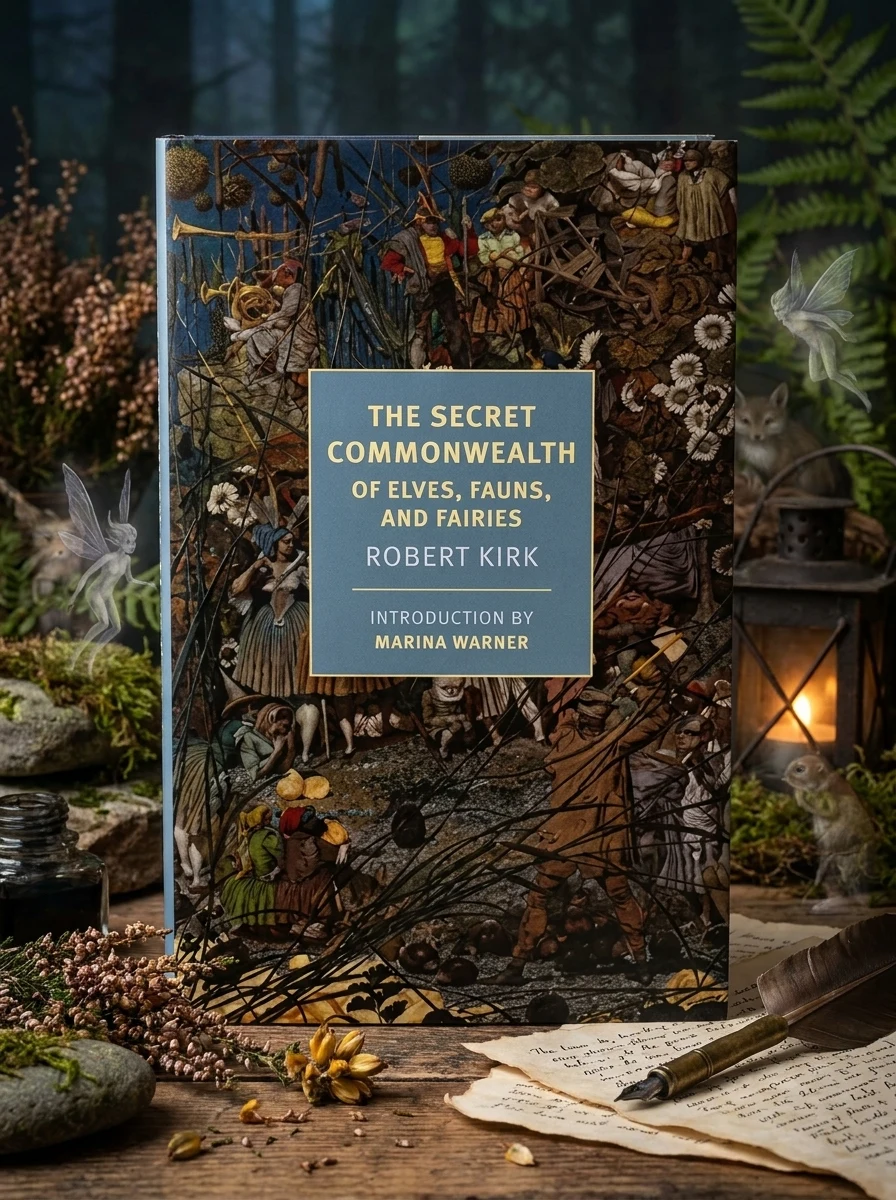
The Secret Commonwealth: Of Elves, Fauns, and Fairies


Stock reported in the catalog; fulfillment is confirmed with your request.
Unveil a hidden realm where fae folk walk among us, just beyond the veil.
Late 17th-century Scottish minister Robert Kirk meticulously gathered vivid local accounts of ethereal beings—elves, fauns, and other denizens of what he termed 'a middle nature.' This compelling manuscript, left unadorned at his passing, argues passionately for the tangible existence of a parallel supernatural dimension, demanding the same rigorous exploration as any uncharted territory. Kirk’s work stands as a unique blend of spiritual inquiry, folk wisdom, and early scientific curiosity, a testament to a world where enchantment was considered palpable reality.
This text represents a pivotal moment in late 17th-century Scottish folkloric inquiry, bridging the gap between ministerial theology and early empirical observation of the supernatural. It stands as a foundational document in the study of European fairy lore, offering a rare glimpse into how spiritual and natural worlds were perceived as intertwined during that era.


📝 Description: The Secret Commonwealth: Of Elves, Fauns, and Fairies
💎 Expert review
📖 Why choose it
Why this book is worth reading
Readers fascinated by the intersection of folklore, history, and theology will find profound value in this unique manuscript. It appeals to those who appreciate rigorous, early scientific curiosity applied to spiritual phenomena, offering a respectful and detailed exploration of a parallel supernatural dimension. Those interested in the tangible existence of elves, fauns, and fairies as described by a contemporary minister will gain insight into how enchantment was once considered palpable reality. This book is ideal for anyone seeking to understand the cultural mindset where such beings were not mere myths but subjects of serious inquiry and local accounts.
⭐ Reader reviews
Reader rating
This work offers a compelling, albeit niche, perspective on late 17th-century Scottish beliefs regarding ethereal beings. Kirk’s meticulous gathering of local accounts provides valuable historical context for those studying the evolution of fairy lore. However, it may not suit readers seeking modern fantasy entertainment or straightforward scientific debunking. Those expecting dry academic prose without narrative flair might find it dense, while skeptists uninterested in spiritual inquiry may dismiss its premises entirely. It is best appreciated as a historical artifact of belief rather than a contemporary guide to the occult.
❓ Frequently asked questions
📖 Who should read this
If you're drawn to the enigmatic world of fae lore, historical theological perspectives on the unseen, or wish to explore the roots of Scottish supernatural beliefs, this foundational text offers a profound journey into a minister's earnest conviction.
🎯 Key themes and symbolism
The Invisible Commonwealth
Kirk meticulously documented his parishioners' experiences with various ethereal beings, from elves to fauns, convinced they inhabited a parallel, unseen world. He posited these entities existed in a "middle nature," bridging human and angelic realms, a concept he believed warranted serious investigation, much like geographical discoveries across the seas.
Folklore as Veracity
Far from mere tales, Kirk saw these shared narratives as irrefutable evidence of a potent supernatural reality. His essay is less a collection of stories and more a theological and philosophical defense of their literal truth, urging readers to recognize the tangible presence of these entities and their impact on the human world.
Pioneering Ethnography
Written with an active curiosity akin to contemporary scholars like Robert Burton, Kirk's manuscript represents an early, fervent attempt to systematize and explore an aspect of human experience. He approached the fae as subjects for serious study, advocating for their realm's exploration with the zeal of a New World cartographer.
💬 Quotes from the book
“There exists a middle nature, betwixt man and angel, a Commonwealth unseen, yet palpably real, whose inhabitants traverse our world with unseen footfalls.”
“To deny the palpable existence of these subterranean folk, whose strange actions are attested by countless witnesses, is to blind ourselves to a significant portion of Creation.”
📜 Historical context
📚 Glossary
- Faun
- Doppelgänger
- Wraith
📔 Questions to reflect on
- If Kirk were alive today, what modern phenomena or unexplained occurrences might he attribute to his 'Secret Commonwealth'?
- How does the concept of a 'middle nature' between human and angel resonate or conflict with your own spiritual or philosophical understanding of existence?
- Consider a local legend or folktale from your own culture. How might Kirk's approach encourage a deeper, perhaps more literal, examination of its claims?
You might also like
See more →