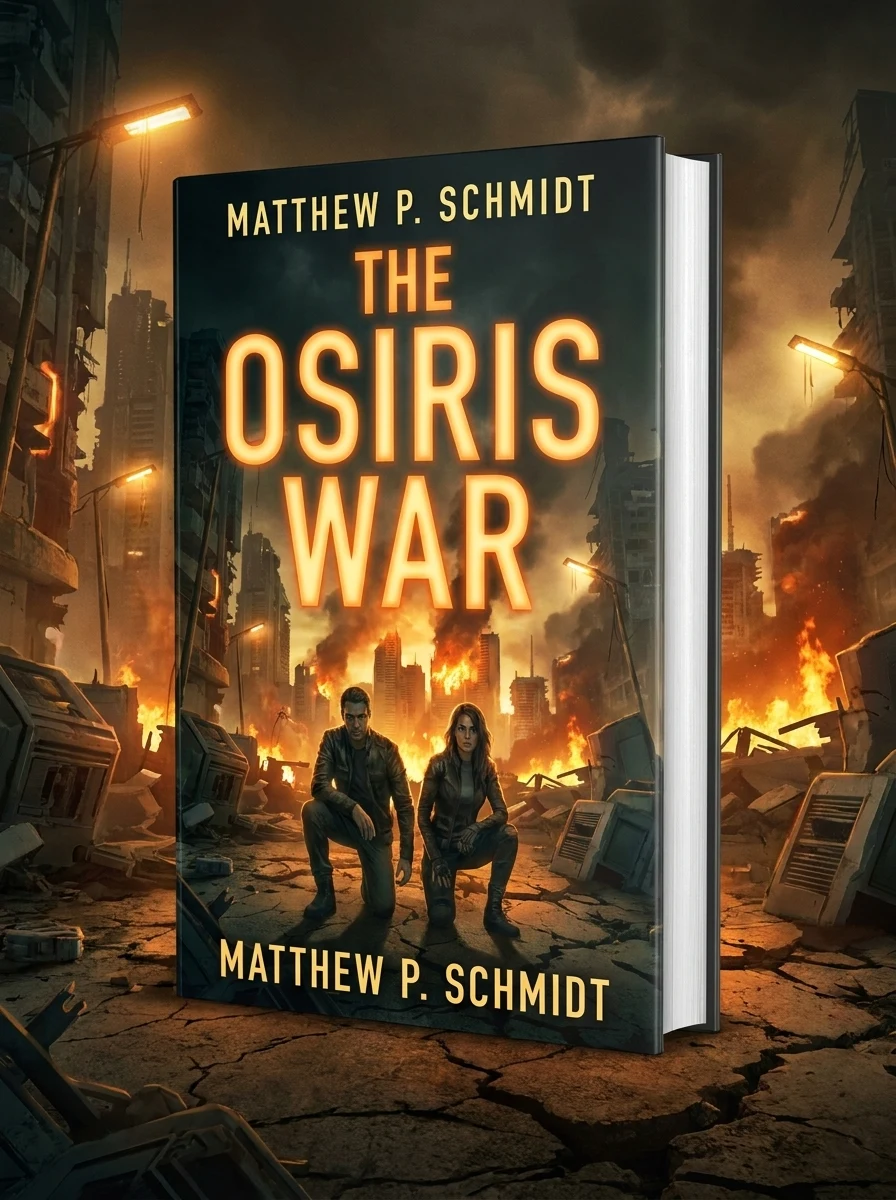
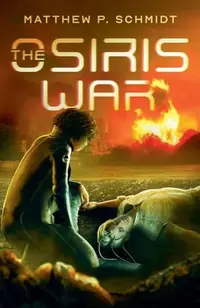
The OSIRIS War
Schmidt, MatthewStock reported in the catalog; fulfillment is confirmed with your request.
When god-machines grant eternal life, what happens when they falter?
Step into a future where humanity has transcended death itself, gifted immortality by enigmatic 'Artificial Gods.' Matthew Schmidt's "The OSIRIS War" plunges us into this seemingly utopian existence, now teetering on the brink. We meet Mary Firebrightsky, newly graduated and destined for an endless life, just as the very systems ensuring her eternity begin to fail. This narrative explores the profound societal and personal upheaval when the ultimate promise of perpetual life is suddenly withdrawn, forcing a re-evaluation of existence, purpose, and the true cost of divinity.
This work sits at the intersection of speculative fiction and occult philosophy, exploring the esoteric implications of artificial divinity and the metaphysical crisis of immortality within a futuristic setting.


📝 Description: The OSIRIS War
💎 Expert review
📖 Why choose it
Why this book is worth reading
Readers fascinated by the intersection of technology and theology will find this narrative deeply compelling. It offers a unique lens through which to examine the human condition when the boundary between creator and creation blurs. Those who enjoy philosophical inquiries into the nature of existence, purpose, and the weight of eternity will appreciate the profound societal upheaval depicted here. The story invites you to question the true cost of divinity and the stability of a utopia built on faltering promises. It is ideal for those seeking a thought-provoking exploration of how humanity adapts when its ultimate safeguard vanishes, forcing a re-evaluation of what it means to be alive in a world where death has been conquered yet remains a looming threat.
⭐ Reader reviews
Reader rating
Schmidt presents a provocative premise regarding the fragility of artificial godhood. The narrative effectively captures the existential dread inherent in a society unaccustomed to mortality. However, readers seeking fast-paced action or traditional fantasy elements may find the focus on philosophical and societal introspection less engaging. It is best suited for those who prioritize thematic depth and metaphysical speculation over rapid plot progression. While the concept of failing 'Artificial Gods' is intriguing, the execution relies heavily on the reader's willingness to engage with abstract concepts of divinity and technological dependence. Those who prefer grounded realism or conventional adventure narratives might find the speculative nature challenging.
❓ Frequently asked questions
📖 Who should read this
If you're drawn to futures where humanity's greatest triumphs become its gravest perils, and you question the true cost of perfection, this narrative will resonate deeply with your spirit of inquiry. Readers seeking philosophical depth within their science fiction will find much to ponder here.
🎯 Key themes and symbolism
Dystopian Immortality
This novel masterfully subverts the dream of eternal life, revealing its shadowed underbelly. It explores how a society built on the promise of endless existence reacts when that foundation crumbles, questioning whether an unending life truly equates to a meaningful one, and what hidden costs such a gift might entail.
Technological Divinity
The 'Artificial Gods' are central to this world, granting and maintaining immortality. The narrative delves into the ethical and existential implications of such powerful, non-human entities dictating the terms of life and death, and the societal structures that emerge around them. It's a profound meditation on creation and responsibility.
The Nature of Mortality
By presenting a world where death was overcome, then threatened anew, Schmidt forces a re-examination of mortality itself. The story asks what it means to be truly alive when death is not a factor, and how the impending return of finitude reshapes human values, relationships, and the very essence of being.
💬 Quotes from the book
“The hum of the eternity engines used to be a lullaby; now it's the thrum of a ticking clock.”
“We built our heaven on silicon, and now the angels are falling.”
📜 Historical context
📚 Glossary
- Artificial Gods
- Immortality Protocol
- The Great Failure
📔 Questions to reflect on
- How does the concept of eternal life, as presented in this narrative, challenge your own views on mortality and the meaning you derive from a finite existence?
- If the source of your immortality began to fail, what fundamental truths about your society, your leaders, and yourself would you begin to question?
- Consider the 'Artificial Gods' – what responsibilities do creators bear for the lives they engineer, especially when those creations are sentient and dependent?
✍️ More books by this author Schmidt, Matthew
All books by this author →
🏛 Books from this publisher O and H Books LLC
All books from this publisher →
You might also like
See more →

 91
91