US shipping Secure card payment Occult and esoteric books

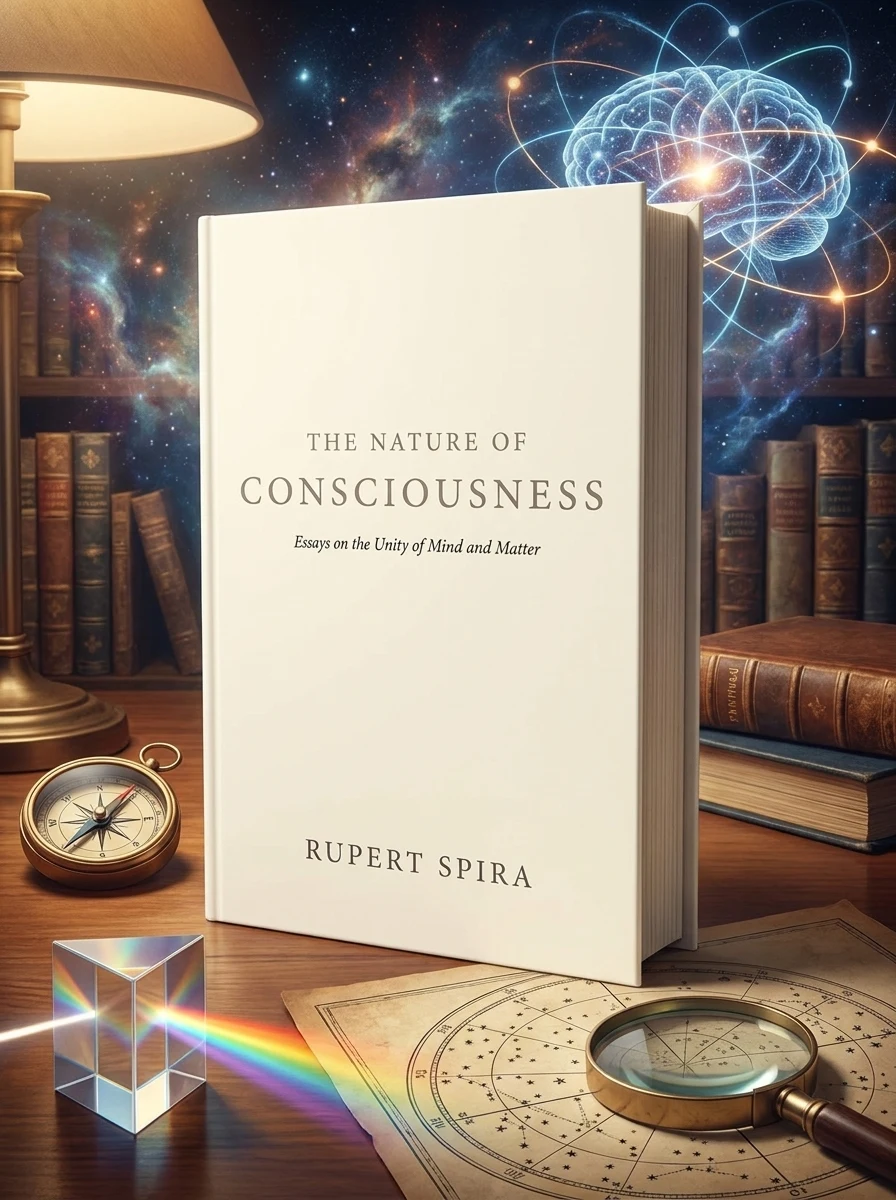
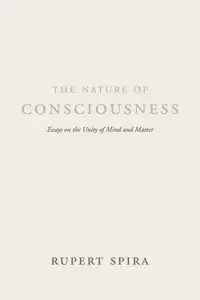
The Nature of Consciousness: Essays on the Unity of Mind and Matter

Spira, Rupert
Reader rating
4.6
(1 reviews) 34 sold
In stock

Stock reported in the catalog; fulfillment is confirmed with your request.

📚 ABOUT THE BOOK

Unravel the illusion: consciousness isn't a byproduct of the brain, but the very fabric of existence itself.

Rupert Spira's profound essays dismantle the prevailing materialist view that consciousness arises from physical matter. He contends that the widespread belief in a universe where the brain generates awareness is a foundational misconception, shaping our perception of self and reality. This collection suggests that this "matter-first" paradigm, while historically influential, now limits our understanding and fosters a sense of existential detachment. Spira invites readers to explore an alternative framework, one where consciousness isn't an emergent property but the fundamental essence underpinning all experience, offering a path beyond despair.

Key themes
Consciousness as Fundamental Reality Reimagining Mind-Body Unity
Historical context

This work sits firmly within the modern non-dual and Advaita Vedanta traditions, echoing the perennial philosophy that challenges dualistic worldviews. It aligns with contemporary metaphysical literature that seeks to reconcile ancient spiritual insights with modern philosophical discourse on the nature of reality.


Difficulty
●●● Demanding
Fans will love it
Rupert Spira · Adi Shankara · Eckhart Tolle · The Upanishads
🌌 Mysticism
🏛 Sahaja 📅 2017 📖 296 pages 🌐 en 📐 Paperback ISBN: 9781684030002
Fun fact
Spira's collection profoundly challenges the pervasive materialist worldview, offering a crystal-clear articulation of non-dual reality. It excels at guiding readers toward a direct recognition of consciousness as fundamental. Not for those seeking quick fixes or purely empirical evidence, it's essential for serious students of Advaita Vedanta and anyone yearning for liberation from conceptual limitations. A vital contribution to contemporary spiritual philosophy.

📝 Description: The Nature of Consciousness: Essays on the Unity of Mind and Matter

Our world culture is founded on the assumption that the Big Bang gave rise to matter, which in time evolved into the world, into which the body was born, inside which a brain appeared, out of which consciousness at some late stage developed. As a result of this "matter model," most of us believe that consciousness is a property of the body. We feel that it is "I," this body, that knows or is aware of the world. We believe and feel that the knowing with which we are aware of our experience is located in and shares the limits and destiny of the body. This is the fundamental presumption of mind and matter that underpins almost all our thoughts and feelings and is expressed in our activities and relationships. The Nature of Consciousness suggests that the matter model has outlived its function and is now destroying the very values it once sought to promote. For many people, the debate as to the ultimate reality of the universe is an academic one, far removed from the concerns and demands of everyday life. After all, life happens independently of our models of it. However, The Nature of Consciousness will clearly show that the materialist paradigm is a philosophy of despair and, as such, the root cause of unhappiness in individuals. It is a philosophy of conflict and, as such, the root cause of hostilities between families, communities, and nations. Far from being abstract and philosophical, its implications touch each one of us directly and intimately. An exploration of the nature of consciousness has the power to reveal the peace and happiness that truly lie at the heart of experience. Our experience never ceases to change, but the knowing element in all experience--consciousness, or what we call "I"--itself never changes. The knowing with which all experience is known is always the same knowing. Being the common, unchanging element in all experience, consciousness does not share the qualities of any particular experience: it is not qualified, conditioned, or limited by experience. The knowing with which a feeling of loneliness or sorrow is known is the same knowing with which the thought of a friend, the sight of a sunset, or the taste of ice cream is known. Just as a screen is never disturbed by the action in a movie, so consciousness is never disturbed by experience; thus it is inherently peaceful. The peace that is inherent in us--indeed that is us--is not dependent on the situations or conditions we find ourselves in. In a series of essays that draw you, through your own direct experience, into an exploration of the nature of this knowing element that each of us calls "I," The Nature of Consciousness posits that consciousness is the fundamental reality of the apparent duality of mind and matter. It shows that the overlooking or ignoring of this reality is the root cause of the existential unhappiness that pervades and motivates most people's lives, as well as the wider conflicts that exist between communities and nations. Conversely, the book suggests that the recognition of the fundamental reality of consciousness is the first step in the quest for lasting happiness and the foundation for world peace.

💎 Expert review

💎
Esoterica Books editorial team
Occult literature desk
Spira’s essays provide a rigorous intellectual dismantling of the 'matter-first' paradigm, offering a compelling case for consciousness as the primary reality. However, this text is not suited for readers who prefer empirical, scientific explanations or those attached to dualistic frameworks. It may frustrate individuals seeking practical spiritual techniques rather than philosophical inquiry. The dense metaphysical arguments require patience and a willingness to accept counter-intuitive premises. While intellectually stimulating for those open to non-dual thought, it lacks the accessibility of popular self-help works. Readers expecting straightforward dogma or religious instruction will likely find the abstract nature of the content dry and unengaging. It is a niche philosophical exploration rather than a broad spiritual guide.
✓ EDITOR'S REVIEW

📖 Why choose it

📖

Why this book is worth reading

Readers seeking to transcend the existential detachment fostered by materialist paradigms will find profound comfort and clarity in this collection. If you feel that the conventional view of consciousness as a mere byproduct of brain activity leaves life feeling hollow or mechanistic, Spira offers a liberating alternative. This book is ideal for those ready to dismantle deep-seated misconceptions about self and reality. By exploring the framework where consciousness is the fundamental essence underpinning all experience, readers can move beyond despair toward a more integrated understanding of existence. It serves as a vital guide for anyone willing to question the foundational assumptions of their perception and embrace a unity of mind and matter that restores meaning to the human experience.

⭐ Reader reviews

The starting rating comes from the team Esoterica Books —
⭐ Esoterica editorial review Editorial rating 4.6/5
★★★★
If you question prevailing materialist views or seek a more unified understanding of mind and reality, this book offers a profound intellectual and spiritual journey. Ideal for those ready to challenge their deepest assumptions about consciousness and existence itself.

Reader rating

4.6
Based on 1 reviews
5
0
4
1
3
0
2
0
1
0
E
Esoterica Books editorial team

Spira’s essays provide a rigorous intellectual dismantling of the 'matter-first' paradigm, offering a compelling case for consciousness as the primary reality. However, this text is not suited for readers who prefer empirical, scientific explanations or those attached to dualistic frameworks. It may frustrate individuals seeking practical spiritual techniques rather than philosophical inquiry. The dense metaphysical arguments require patience and a willingness to accept counter-intuitive premises. While intellectually stimulating for those open to non-dual thought, it lacks the accessibility of popular self-help works. Readers expecting straightforward dogma or religious instruction will likely find the abstract nature of the content dry and unengaging. It is a niche philosophical exploration rather than a broad spiritual guide.

❓ Frequently asked questions

While it critically examines scientific paradigms, Spira's work is primarily philosophical and spiritual, drawing from non-dual traditions. It's not a scientific treatise but a profound inquiry into the nature of reality that challenges prevailing scientific materialism.
While Spira's concepts are profound, his language is clear and direct. Those new to non-duality might find it demanding, but for readers open to deep introspection and challenging established beliefs, it offers immense clarity and insight.

📖 Who should read this

If you question prevailing materialist views or seek a more unified understanding of mind and reality, this book offers a profound intellectual and spiritual journey. Ideal for those ready to challenge their deepest assumptions about consciousness and existence itself.

🎯 Key themes and symbolism

Consciousness as Fundamental Reality

This collection reorients our understanding, proposing that consciousness isn't a late-stage evolutionary development but the foundational ground of all existence. Instead of the body producing awareness, Spira argues that awareness itself is the ultimate reality, encompassing and enabling all phenomena, including the physical universe and our individual experiences within it.

Reimagining Mind-Body Unity

Spira delves into the intricate relationship between our inner subjective experience and the external objective world. He refutes the notion of consciousness being confined within the physical body, advocating for a profound interconnectedness where mind and matter are not separate entities but different aspects or expressions of a singular, underlying awareness, dissolving traditional dualisms.

💬 Quotes from the book

“The illusion that consciousness is born from matter is the most pervasive and subtle prison we inhabit, dictating our understanding of self and world.”

“To recognize consciousness as the primary reality is not to deny the world, but to perceive it in its true, luminous nature, free from the constraints of imagined separation.”

📜 Historical context

Spira's work stands firmly within the ancient non-dual traditions, particularly Advaita Vedanta, which posits consciousness as the ultimate reality. It offers a contemporary articulation of these timeless insights, directly confronting the scientific reductionism prevalent since the Enlightenment. He bridges Eastern spiritual wisdom with Western philosophical inquiry, providing a counter-narrative to the prevailing mechanistic worldview of the modern era.

📚 Glossary

Matter Model
Non-Dualism
Consciousness (Spira's view)

📔 Questions to reflect on

  1. Reflect on how the prevailing 'matter model' of consciousness might unconsciously shape your daily perceptions, emotional responses, and sense of purpose.
  2. If consciousness were indeed the fundamental reality, how might this radically alter your understanding of your own identity, your connection to others, and the nature of the universe?
  3. Consider a moment of pure, unmediated awareness. Can you discern any physical origin for that experience, or does it feel like a knowing that simply IS, prior to thought or sensation?

You might also like

See more →