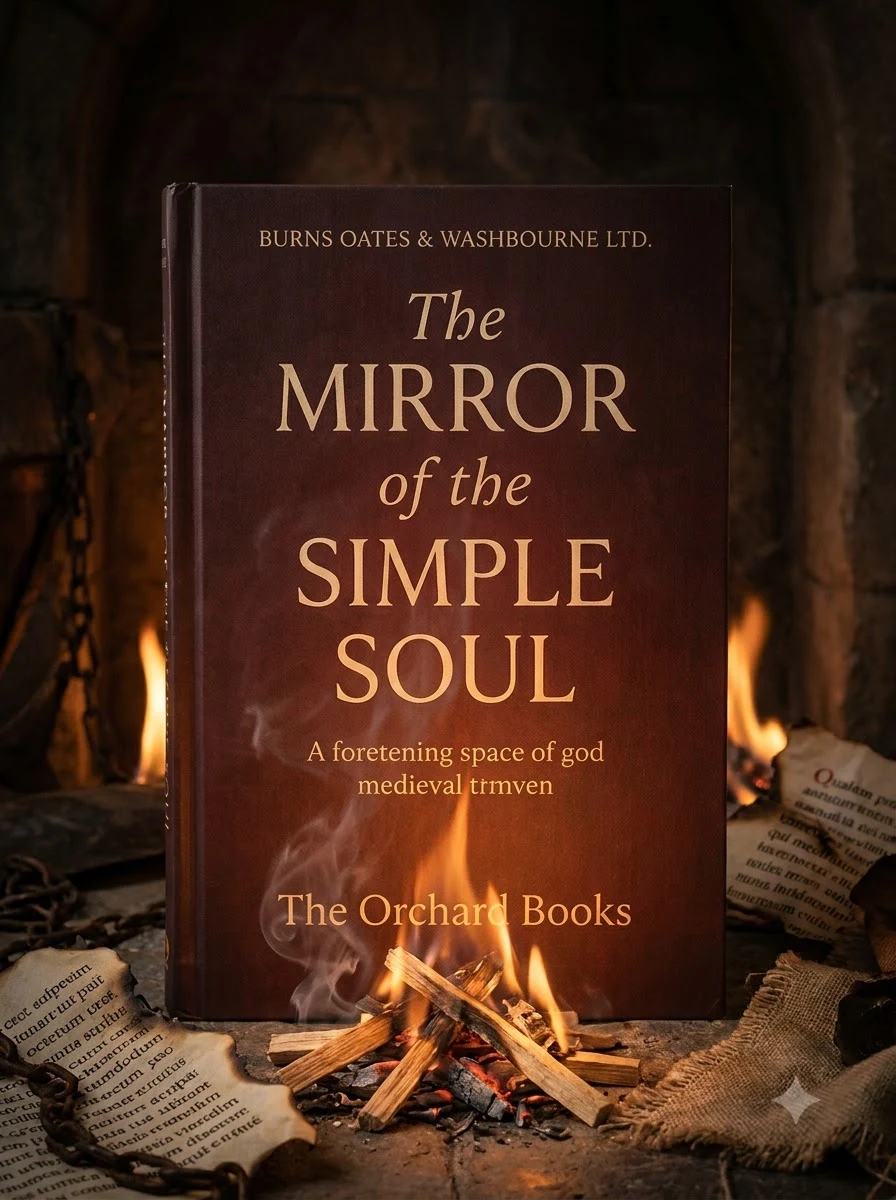

The Mirror of Simple Souls


Stock reported in the catalog; fulfillment is confirmed with your request.
Unite with the Divine, transcend earthly virtue, and risk everything for ecstatic truth.
Marguerite Porete's radical 14th-century text, "The Mirror of Simple Souls," invites readers into a profound spiritual journey towards complete unity with God. This rediscovered masterpiece articulates a controversial vision: a soul so deeply immersed in divine love that it operates beyond conventional virtue, its every action an automatic expression of God's will. Porete's unwavering conviction, rooted in her Beguine association, led to her tragic execution for heresy, yet her work endures as a testament to ultimate spiritual freedom and ecstatic devotion, challenging established religious norms.
This text emerges from the radical Beguine tradition of the 14th century, representing a peak of Christian mystical literature that challenged institutional religious authority through its assertion of immediate divine union.


📝 Description: The Mirror of Simple Souls
💎 Expert review
📖 Why choose it
Why this book is worth reading
Readers drawn to the most intense edges of Christian mysticism will find a profound companion in this radical masterpiece. It offers an unparalleled glimpse into the Beguine experience, exploring the terrifying yet liberating concept of annihilation where the soul transcends earthly virtue for pure ecstatic truth. Those seeking spiritual freedom beyond conventional norms will appreciate Porete’s unwavering conviction and her testament to ultimate divine unity. This book is essential for anyone willing to risk their comfort zone for a deeper, more dangerous connection with the Divine, offering a raw look at devotion that defies traditional religious structures while promising profound inner peace.
⭐ Reader reviews
Reader rating
Marguerite Porete’s work is a fierce, uncompromising exploration of ecstatic union that demands patience and an open mind. It is not for readers seeking gentle, conventional piety or those attached to rigid moral frameworks; the text explicitly dismisses earthly virtue in favor of divine will. While some may find her Beguine theology unsettling or her tone too radical, her courage in facing execution for these ideas adds immense weight to the narrative. Readers who enjoy challenging spiritual paradigms and historical accounts of religious dissent will find this a compelling, albeit difficult, journey into the heart of mystical extremism and ultimate freedom.
❓ Frequently asked questions
📖 Who should read this
For seekers drawn to radical mysticism, unconventional spiritual paths, or the history of religious dissent, this book offers a potent and challenging vision. If you question traditional boundaries of faith and are ready to explore profound spiritual autonomy, Porete’s voice awaits you.
🎯 Key themes and symbolism
Mystical Divine Union
Porete describes an ecstatic state where the human soul merges entirely with the Divine. This union is not merely intellectual or emotional, but a complete dissolution of individual will into God's, leading to profound peace and perpetual joy that transcends earthly understanding.
Transcendence of Virtue
A core tenet is that a soul fully united with God no longer needs to consciously strive for virtue. In this sublime state, righteous actions flow naturally and automatically from its divine connection, rendering ordinary moral demands and ecclesiastical laws obsolete.
Spiritual Autonomy
This text champions a direct, unmediated relationship with the Divine, challenging ecclesiastical authority. Porete's insistence on the soul's freedom from external rules, once merged with God, and its capacity for self-governance in divine love, ultimately led to her condemnation for heresy.
💬 Quotes from the book
“The Soul, having drowned itself in the sea of divine love, finds no shore of its own will, but is carried endlessly upon the currents of God's pleasure.”
“Why speak of virtue to one who has become Virtue itself? For the Fire of Love consumes all lesser strivings, leaving only the perfect act of God.”
📜 Historical context
📚 Glossary
- Free Spirit Heresy
- Beguine
- Simple Soul
📔 Questions to reflect on
- Consider a time when you felt completely aligned with a higher purpose or inner truth. How did this experience compare to traditional notions of right and wrong?
- Porete argued for a soul beyond conventional virtue. What implications does this hold for personal ethics and societal morality today?
- Reflect on the concept of "surrendering one's will." What are the potential joys and dangers of such a profound spiritual dissolution?
You might also like
See more →