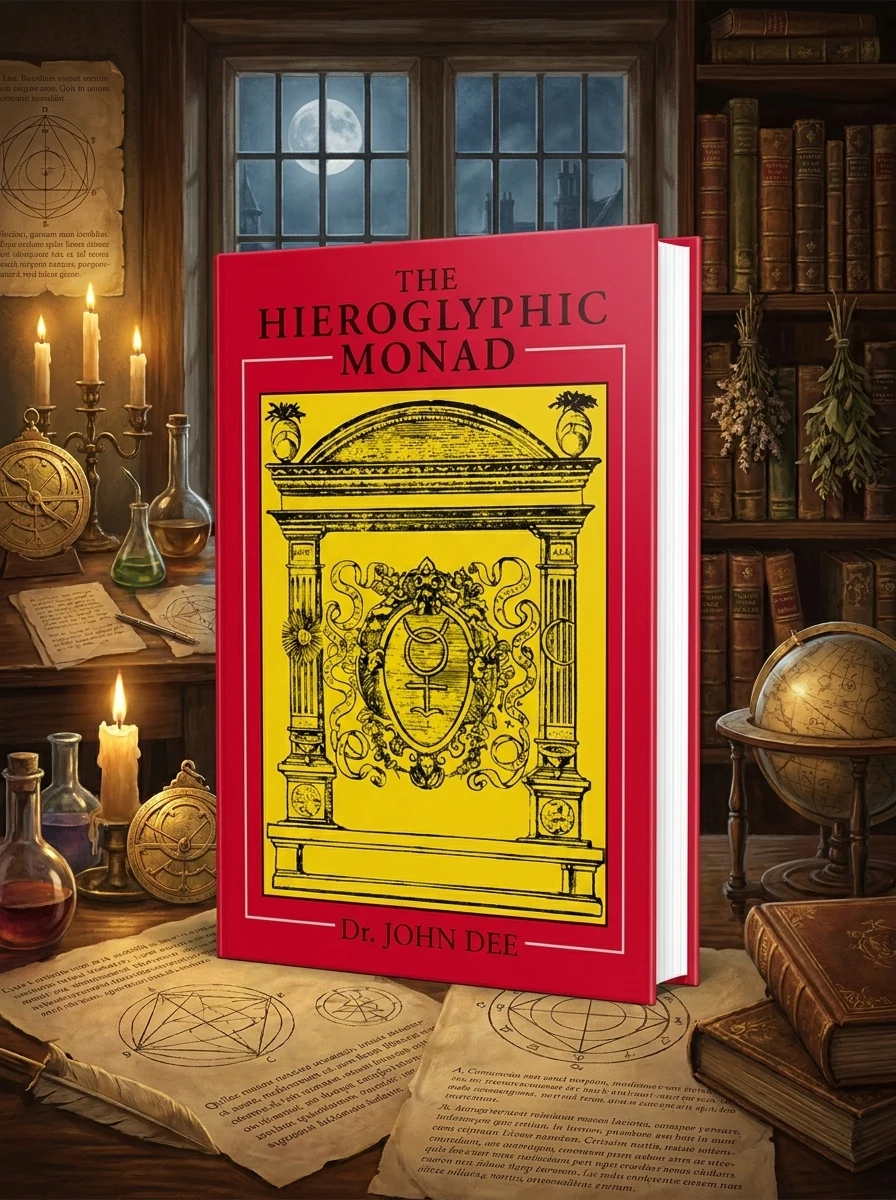
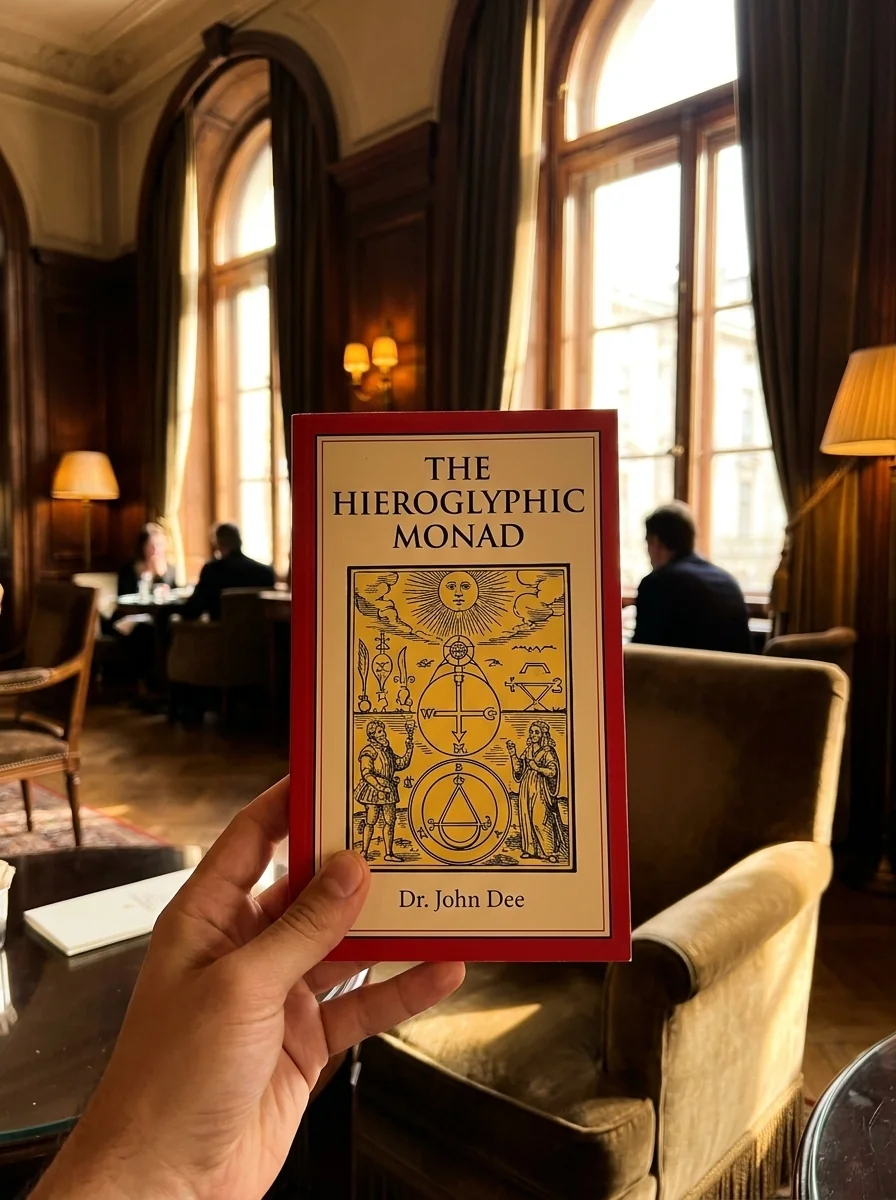
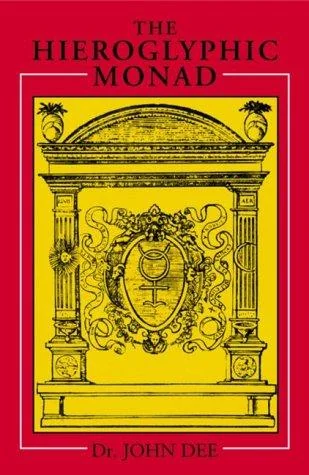
The Hieroglyphic Monad (Revised)
✍️ Dee, JohnJohn Dee's 1564 treatise on cosmic unity through a single hieroglyphic symbol.
This volume offers a focused examination of John Dee's symbolic system from the mid-sixteenth century. It details how he derived the monas to represent universal unity during a specific thirteen-day period in 1564. The text connects Elizabethan magick with later Hermetic and Rosicrucian developments. It provides a structural analysis of the hieroglyph rather than practical instruction. The revised edition maintains the original theoretical integrity while presenting it for modern readers. The work stands as a primary source for understanding how Renaissance thinkers viewed cosmic order through symbolic geometry.
Dee wrote this text in 1564 during the Elizabethan era. It reflects the intellectual climate of Renaissance England where Hermetism and Rosicrucianism were emerging. The work bridges early modern magick studies with mystical philosophy, showing how sixteenth-century scholars interpreted cosmic unity through symbolic systems.


📝 Description: The Hieroglyphic Monad (Revised)
💎 Expert review
📖 Why choose it
Why this book is worth reading
Readers drawn to the intersection of mystical philosophy and mathematical symbolism will find profound value in this revised edition. It offers a unique window into the Renaissance mind, where spiritual insight was not separate from structural precision but intricately woven with it. This book is ideal for those seeking a universal key to unlock deeper existential mysteries through a singular, unified symbol. By bridging the gap between abstract divine concepts and tangible geometric forms, it provides a practical guide for understanding the interconnectedness of all creation. It serves as an essential resource for scholars and practitioners interested in how early modern thinkers attempted to decode the fundamental unity of the cosmos, offering both philosophical depth and esoteric utility.
⭐ Reader reviews
Reader rating
This work is a dense, intellectual exercise that demands patience from its audience. While it offers a fascinating glimpse into Dee’s attempt to create a universal key for cosmic understanding, it is decidedly not for casual readers or those seeking straightforward spiritual advice. The text requires a willingness to engage with complex symbolic logic and historical esotericism without modern simplification. It may frustrate readers looking for clear, step-by-step magical rituals or easy-to-digest summaries of occult history. However, for the dedicated student of hermetic philosophy who appreciates rigorous intellectual structure in their mystical studies, it remains an invaluable, albeit demanding, primary source that challenges the mind as much as it seeks to elevate the spirit.
❓ Frequently asked questions
📖 Who should read this
For seekers fascinated by the profound intersections of magic, mathematics, and philosophy. If you yearn to decipher ancient symbols, unravel cosmic unity, or explore Renaissance esotericism, Dee's unique vision offers an unparalleled journey.
🎯 Key themes and symbolism
Universal Cosmic Unity
This text centers on Dee's revolutionary concept of the Monad, a unique symbol he believed embodied the foundational unity of the cosmos. It explores how this single glyph integrates diverse philosophical and mathematical principles, serving as a master key to unlock the interconnectedness inherent in all aspects of reality, from the divine to the terrestrial.
Hermetic Symbolism & Lore
Dee's work is a quintessential example of Renaissance Hermeticism, utilizing complex symbolism to convey esoteric truths. The book delves into the layers of meaning embedded within the Monad, drawing upon alchemical, astrological, and Cabalistic traditions to create a multi-faceted representation of universal laws. It's a deep dive into the language of symbols.
Renaissance Esoteric Science
Written by one of Elizabethan England's foremost scholars and mystics, this treatise exemplifies the era's blend of nascent science and magical philosophy. Dee's Monad represents an attempt to synthesize astronomical, mathematical, and theological knowledge into a coherent, overarching system, showcasing the period's search for a unified understanding of the natural and supernatural worlds.
📜 Historical context
📚 Glossary
- Monad
- Hieroglyph
- Magus
📔 Questions to reflect on
- If you were to design a single symbol representing the unity of your personal universe, what elements would it incorporate and why?
- How might the pursuit of a "universal key" to knowledge, like Dee's Monad, influence one's understanding of both science and spirituality today?
- Reflect on the idea that profound truths can be conveyed through non-verbal, symbolic forms. Where else do you encounter such communication in your life?
📖 Read on the blog
🏛 Books from this publisher Weiser Books
All books from this publisher →








You might also like
See more →





Have a question about this item?
Ask about the edition, condition, delivery or anything else — we reply by email or phone, usually within a day.
