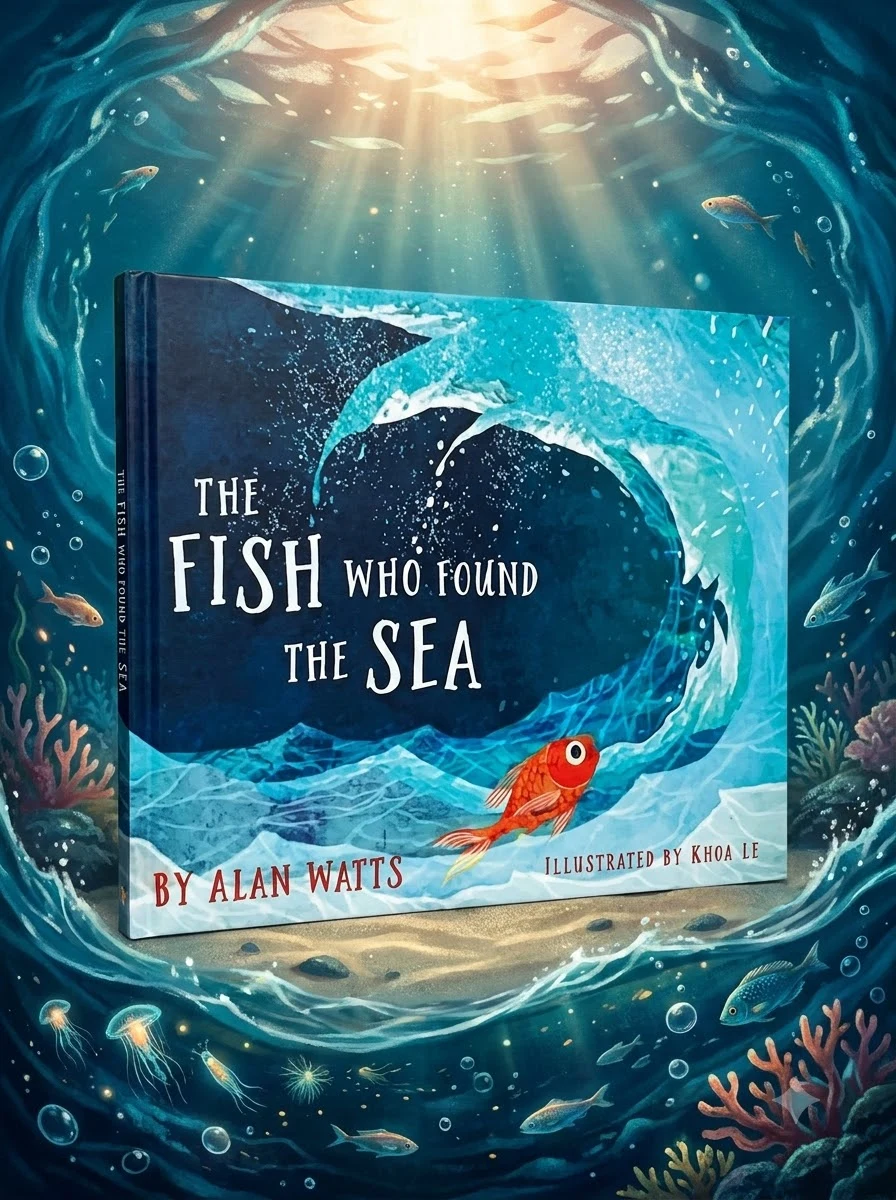
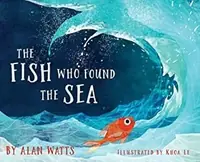
The Fish Who Found the Sea
Watts, Alan

Stock reported in the catalog; fulfillment is confirmed with your request.
Discover Alan Watts's sole children's tale, a profound journey into the art of simply being.
A small fish, caught in a loop of its own frantic thoughts, finds itself endlessly chasing its tail, utterly bewildered by its existence. This delightful parable, Watts's only work penned specifically for younger audiences, traces the fish's journey toward understanding. With gentle guidance from the vast ocean itself, our finned protagonist learns the profound simplicity of letting go and harmonizing with life's natural rhythm, revealing the timeless wisdom of presence over relentless pursuit. It's a charming exploration of self-acceptance and finding peace amidst inner turmoil.
This work sits at the intersection of Zen Buddhism and Western esoteric philosophy, translating complex Eastern concepts of non-duality into accessible allegorical form for a broad audience. It reflects Alan Watts's lifelong mission to bridge the gap between traditional contemplative practices and modern psychological understanding.


📝 Description: The Fish Who Found the Sea
💎 Expert review
📖 Why choose it
Why this book is worth reading
This book is ideal for readers who have ever felt overwhelmed by the relentless noise of their own minds or the pressure to constantly achieve. It serves as a gentle, restorative reminder that peace is not something to be hunted down but rather discovered through surrender. Those struggling with anxiety, perfectionism, or existential confusion will find profound comfort in this simple parable. It offers a practical, albeit subtle, guide to letting go of mental loops and embracing the present moment. By following the fish’s journey, readers can learn to harmonize with life’s natural rhythms rather than fighting against them, making it a perfect companion for anyone seeking inner calm and self-acceptance in a chaotic world.
⭐ Reader reviews
Reader rating
Exactly what I was looking for. The language takes some getting used to, but it becomes part of the charm.
Not my usual area but wanted to branch out. The print is clean and easy on the eyes for long sessions.
Long-time student of the esoteric here. The historical context alone makes it worth the price. There's real depth here that reveals itself on a second reading. My only regret is not ordering it sooner.
While charming and philosophically sound, this title is not suited for those seeking rigorous academic analysis or dense textual criticism. Readers expecting complex plot twists or extensive historical documentation will likely find the narrative too sparse and abstract. It requires a willingness to engage with metaphorical simplicity rather than literal detail. However, for those open to contemplative reading, it succeeds beautifully in conveying deep truths through accessible imagery. It is best approached as a meditative tool rather than a traditional story.
❓ Frequently asked questions
📖 Who should read this
For young readers grappling with big feelings, or adults seeking a gentle reminder of life's fundamental truths, this narrative offers a soothing perspective on self-acceptance and the wisdom of surrender. It's a perfect shared read for contemplative families.
🎯 Key themes and symbolism
Self-Acceptance
The narrative explores the common human tendency to feel incomplete or to constantly strive for something external. Through the fish's struggle, readers are gently guided to understand that true contentment often comes from recognizing and embracing one's inherent nature, rather than ceaseless searching or self-criticism.
Embracing Life's Flow
This story beautifully illustrates the concept of 'wu wei,' or effortless action, central to Taoist philosophy. The fish's frantic pursuit gives way to a deeper understanding that life is not a problem to be solved but a process to be experienced, encouraging readers to surrender to the natural rhythms of existence.
Mindfulness & Overthinking
Watts addresses the predicament of a mind caught in its own circular patterns of thought. The fish's dilemma serves as a metaphor for the anxieties born from excessive rumination, offering a gentle lesson on the liberation found in present moment awareness and observing thoughts without being consumed by them.
💬 Quotes from the book
“Why must I always chase something? Is there no end to this circling, to this feeling of always needing to find what is already here?”
“The Great Sea whispered, 'Little one, you are not chasing life; you are life itself, flowing. All the seeking in the world will not bring you closer to what you already are.'”
📜 Historical context
📚 Glossary
- Parable
- Flow State
- Self-Inquiry
📔 Questions to reflect on
- Reflect on a time when you felt caught in a 'circle' of your own thoughts. What was the feeling, and what eventually helped you break free?
- Consider the idea of 'being life itself, flowing.' How might this perspective change your approach to daily challenges or aspirations?
- What does 'finding the sea' mean to you personally? Is it an external discovery, or an internal realization?
✍️ More books by this author Watts, Alan
All books by this author →



🏛 Books from this publisher St. Martin's Essentials / Sounds True
All books from this publisher →





You might also like
See more →