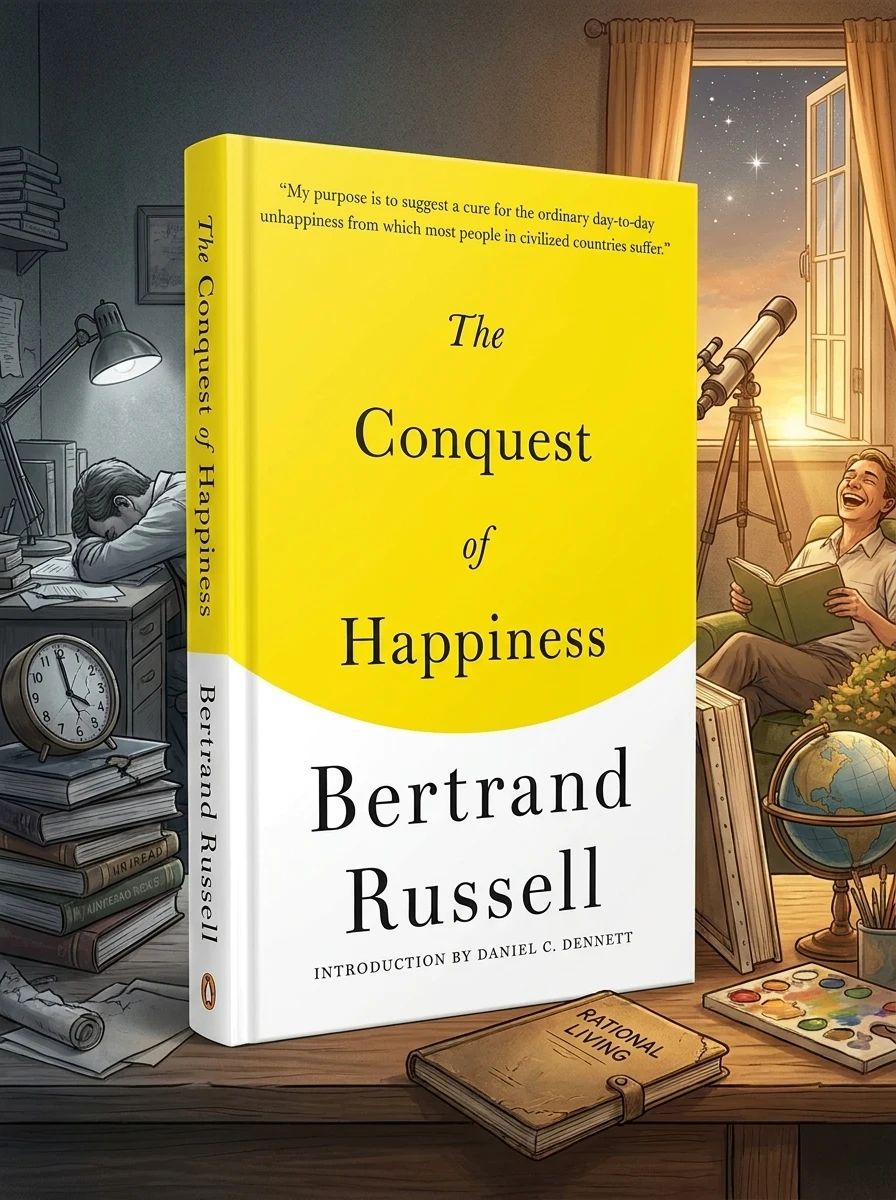
The Conquest of Happiness
Stock reported in the catalog; fulfillment is confirmed with your request.
Dispel modern gloom with Russell's timeless insights into authentic happiness.
Bertrand Russell, in his 1930 work, astutely diagnoses the pervasive discontent afflicting even prosperous Western societies. He offers a pragmatic, secular framework for cultivating genuine joy, rejecting traditional guilt-ridden ethics. Russell champions a clear-headed approach, emphasizing the crucial role of external interests and warning against the pitfalls of superficial gratification. His remarkably resonant insights present a timeless blueprint for an engaged and fulfilled existence, predating contemporary self-help yet far surpassing most in its intellectual depth and enduring wisdom.
This work emerges from the early twentieth century as a pragmatic counterpoint to traditional guilt-ridden ethics, offering a secular framework for living. It stands as a precursor to modern self-help literature while maintaining significant intellectual depth.


📝 Description: The Conquest of Happiness
💎 Expert review
📖 Why choose it
Why this book is worth reading
Readers seeking to dispel modern gloom and cultivate authentic joy will find profound value in this timeless blueprint. It is ideal for those weary of superficial gratification who desire a clear-headed approach to fulfillment. The book offers a pragmatic path for the prosperous yet discontented, guiding them toward engaged existence through external interests. Its enduring wisdom surpasses many contemporary guides, providing intellectual depth where others offer only shallow advice. Those ready to reject traditional guilt in favor of genuine happiness will discover a resonant and practical companion for life.
⭐ Reader reviews
Reader rating
Russell delivers an astute diagnosis of discontent in prosperous Western societies, offering a secular framework for genuine joy. While intellectually robust and predating modern self-help trends, this book may not suit readers seeking spiritual comfort or traditional ethical structures. It is best for those willing to engage with pragmatic, clear-headed advice rather than emotional reassurance. The text warns against superficial gratification, demanding active engagement with external interests. Readers expecting quick fixes or religious solace might find its secular nature too stark. However, for the intellectually curious seeking a timeless blueprint for fulfilled existence, it remains a superior choice.
❓ Frequently asked questions
📖 Who should read this
If you feel a persistent unease despite outward success, or seek a robust, non-dogmatic philosophy for living well, this book offers profound and actionable wisdom. It’s for those ready to actively construct their own contentment, rather than passively awaiting it.
🎯 Key themes and symbolism
Rational Pursuit of Happiness
Russell eschews emotional or spiritual dogma, instead advocating for a logical, evidence-based approach to well-being. He proposes that by understanding the psychological mechanisms of discontent and actively choosing constructive engagements, individuals can systematically construct a more joyful life, free from the shackles of irrational anxieties or societal pressures.
Engagement Beyond Self
A central tenet is the importance of cultivating diverse interests and connecting with the world outside one's immediate ego. Russell argues that excessive introspection and self-absorption are primary sources of misery, while genuine engagement with hobbies, community, and intellectual pursuits fosters a robust sense of purpose and lasting contentment.
Critique of Passive Pleasure
The work cautions against the seductive but ultimately unfulfilling nature of passive consumption and superficial gratification. Russell distinguishes between fleeting excitements and profound satisfaction, suggesting that true happiness stems from active participation, creative endeavor, and overcoming challenges, rather than merely receiving external stimuli.
💬 Quotes from the book
“True joy is not found in endless introspection, but in turning one's attention outward, engaging deeply with the world and its myriad wonders.”
“Happiness is not a gift passively received, but a conquest achieved through rational effort and a deliberate shift from self-concern to constructive engagement.”
📜 Historical context
📚 Glossary
- Rationalist Prescription
- Guilt-Based Morality
- Malaise
📔 Questions to reflect on
- What external interests could you cultivate or deepen to shift focus away from internal anxieties, as Russell suggests?
- Reflect on a time when a "passive pleasure" left you feeling unfulfilled. How might a more active engagement have altered that experience?
- In what ways do societal expectations or "guilt-based morality" subtly hinder your pursuit of genuine contentment?
🏛 Books from this publisher Liveright Publishing Corporation
All books from this publisher →

You might also like
See more →




 91
91