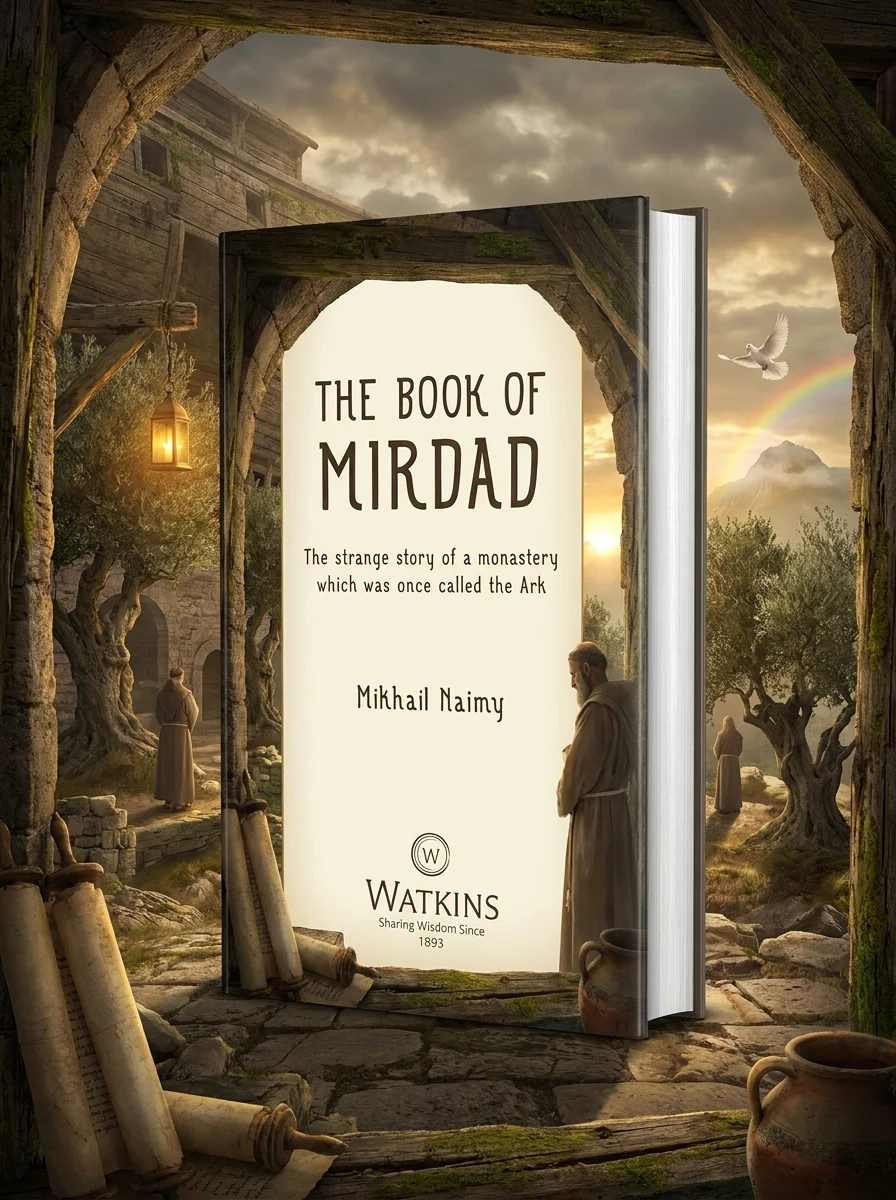
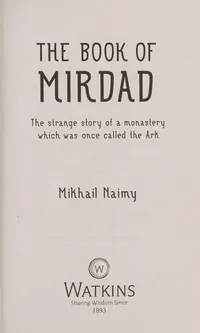
The Book of Mirdad: The Strange Story of a Monastery Which Was Once Called the Ark
Stock reported in the catalog; fulfillment is confirmed with your request.
Uncover profound truths where Noah's Ark once rested, within a timeless spiritual allegory.
Journey to a unique monastery, said to be the resting place of Noah's Ark, in Mikhail Naimy's profound allegorical masterpiece. This spiritual classic invites readers to delve into the depths of human consciousness and universal wisdom through its compelling narrative. Much like the works of Gibran, Naimy weaves a tapestry of parables and philosophical dialogues, guiding seekers on a path of self-discovery and enlightenment. It's a contemplative voyage for those drawn to timeless truths veiled in rich symbolism and evocative storytelling.
This work belongs to the early twentieth-century mystical literature tradition, sharing spiritual kinship with Kahlil Gibran’s philosophical dialogues and allegorical tales of inner awakening. It emerges from a period where esoteric thinkers sought to bridge Eastern wisdom with Western existential inquiry through symbolic narrative.


📝 Description: The Book of Mirdad: The Strange Story of a Monastery Which Was Once Called the Ark
💎 Expert review
📖 Why choose it
Why this book is worth reading
Readers drawn to contemplative voyages and timeless truths veiled in rich symbolism will find profound nourishment here. This book is ideal for seekers interested in delving into the depths of human consciousness through compelling narrative rather than dry doctrine. Those who appreciate philosophical dialogues guiding them toward self-discovery and enlightenment will cherish its evocative storytelling. It offers a unique opportunity to explore universal wisdom within a spiritual allegory, making it perfect for those who enjoy uncovering hidden meanings in literary masterpieces that prioritize inner peace and intellectual curiosity over fast-paced action.
⭐ Reader reviews
Reader rating
While this spiritual classic succeeds as a profound allegorical masterpiece, it is not suited for readers seeking plot-driven narratives or historical realism. Those expecting concrete answers or straightforward theological instruction may find its parables too abstract or elusive. The dense philosophical dialogues require patience and a willingness to engage with symbolic imagery rather than literal events. It may frustrate fans of conventional fiction who prioritize character development over metaphysical exploration. However, for those attuned to the rhythm of contemplative prose, it remains an exceptional, albeit niche, contribution to esoteric literature that rewards slow, reflective reading with deep spiritual insight.
❓ Frequently asked questions
📖 Who should read this
If you're drawn to works that blend spiritual philosophy with captivating narrative, much like "The Little Prince" or "The Alchemist," this book offers a similar journey. Seekers of profound allegories and timeless wisdom will find a resonant companion within its pages.
🎯 Key themes and symbolism
Mystical Enlightenment Path
This narrative explores the esoteric journey towards higher consciousness, revealing universal truths through a series of profound lessons and allegorical encounters. It emphasizes inner awakening and the transcendence of mundane perceptions, guiding the reader toward a deeper understanding of existence beyond the superficial.
Allegorical Wisdom Transmission
The book masterfully employs rich symbolism and parables to convey complex spiritual and philosophical ideas. Its stories are not merely tales but serve as conduits for ancient wisdom, inviting contemplation and personal interpretation, much like sacred texts or fables designed to impart timeless moral and spiritual lessons.
Self-Discovery's Spiritual Core
At its heart, the work is a guide to introspection and personal transformation. It prompts readers to question their own beliefs and perceptions, encouraging a journey inward to uncover their true spiritual nature and purpose, ultimately leading to a more integrated and enlightened self.
💬 Quotes from the book
“The Ark of salvation is not built of wood, but of a spirit purified and made whole.”
“To see the world in a grain of sand is not enough; one must also see the universe in the heart's quiet chamber.”
📜 Historical context
📚 Glossary
- Allegory
- Mysticism
- Spiritual Classic
📔 Questions to reflect on
- How do you perceive your own 'ark' of salvation? What internal sanctuary or principle guides you through life's challenges?
- Consider a recent experience that challenged your understanding of reality. How might an allegorical interpretation deepen your insight into it?
- What 'monastery' or sacred space, physical or metaphorical, do you turn to for spiritual growth and self-reflection?
🏛 Books from this publisher Watkins Publishing
All books from this publisher →




![Pregnancy Health Yoga: Your Essential Guide for Bump, Birth and Beyond [With DVD]](/img/pregnancy-health-yoga-your-essential-guide-for-bump-birth-and-beyond-with-dvd.webp)
You might also like
See more →



 91
91