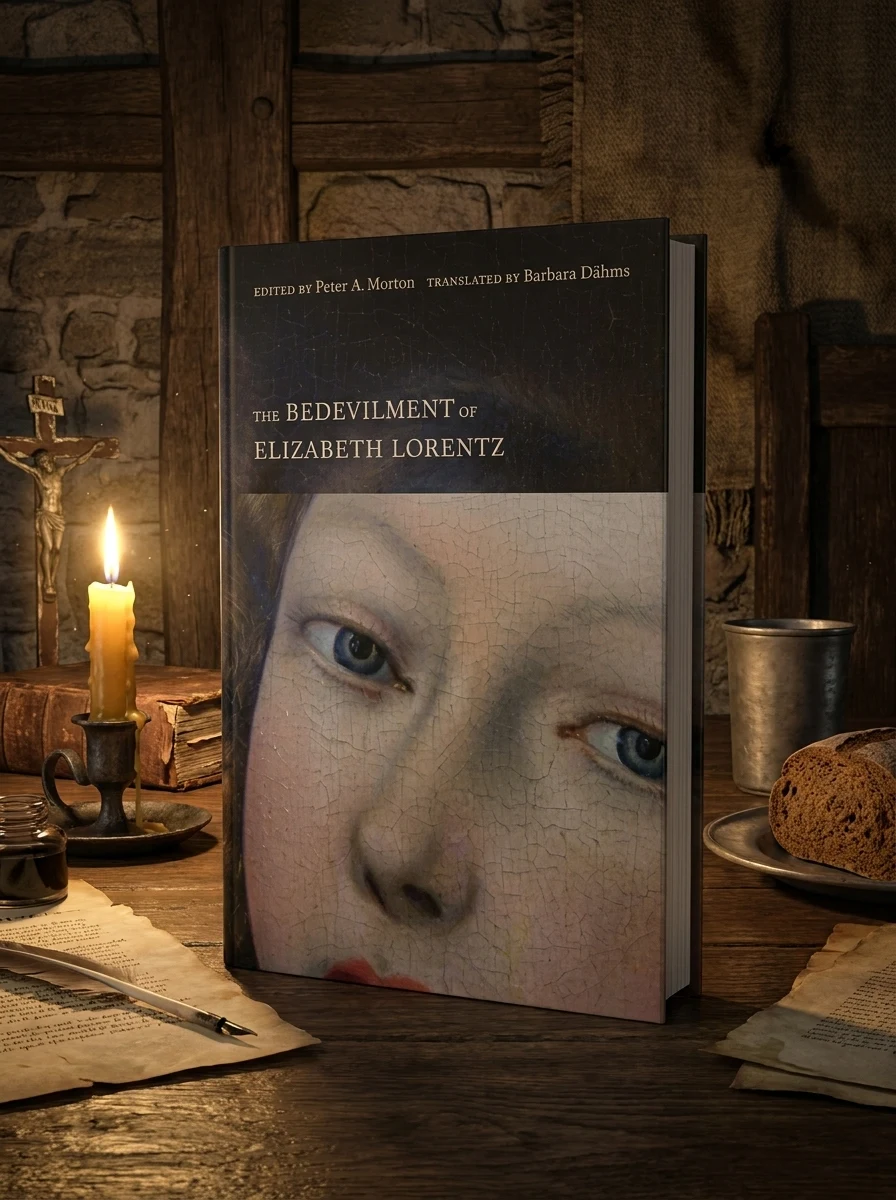

The Bedevilment of Elizabeth Lorentz


Stock reported in the catalog; fulfillment is confirmed with your request.
Uncover the chilling 17th-century trial of a young woman accused of devilish complicity.
Journey into the unsettling world of 17th-century Germany with this profound examination of Elizabeth Lorentz, a humble maidservant whose claims of demonic torment led to a pivotal 1667 trial. This meticulously researched work delves into the contentious question of her culpability: was she a willing participant in infernal schemes, or a victim of spiritual melancholy stemming from past transgressions? Authors Morton and Dahms expertly weave Lorentz’s personal ordeal into the broader tapestry of early modern beliefs, offering crucial context on demonic pacts and the societal pressures faced by young women in a tumultuous era.
This work situates itself within the rigorous historical and theological studies of early modern Europe, specifically addressing the complex intersection of gender, spirituality, and demonic belief systems in 17th-century Germany. It contributes to the scholarly discourse on how societal pressures and religious frameworks shaped the adjudication of alleged witchcraft during this tumultuous era.


📝 Description: The Bedevilment of Elizabeth Lorentz
💎 Expert review
📖 Why choose it
Why this book is worth reading
Scholars and enthusiasts of early modern European history will find this volume indispensable for its meticulous reconstruction of the Elizabeth Lorentz case. By examining the nuanced debate between demonic complicity and spiritual melancholy, readers gain a deeper understanding of how young women navigated the perilous landscape of faith and accusation in 1667. This text offers crucial context on the societal mechanisms that labeled such individuals as participants in infernal schemes, making it essential for anyone seeking to comprehend the human cost of theological disputes. It provides a profound, empathetic look at a pivotal trial that reveals much about the era's fears regarding demonic pacts and the vulnerable position of maidservants within the strict hierarchies of the time.
⭐ Reader reviews
Reader rating
Morton and Dahms deliver a dense, academically rigorous examination that demands patience from its audience. While the research is undeniably thorough, this book is not suited for casual readers seeking a gripping supernatural thriller or simple narrative closure. Those looking for sensationalized accounts of witchcraft will likely find the scholarly tone and focus on theological culpability dry and overly analytical. It is best reserved for those specifically interested in the legal and social history of early modern Germany. The text does not offer light entertainment but rather a sobering, detailed analysis of how spiritual melancholy was interpreted as devilish complicity, requiring a serious engagement with historical methodology.
❓ Frequently asked questions
📖 Who should read this
If you’re fascinated by the intersection of history, religion, and the human psyche, this book is for you. Dive deep into the societal anxieties and spiritual battles of the 17th century, and gain a profound understanding of how belief shaped individual destinies.
🎯 Key themes and symbolism
Demonic Accusation & Justice
Explore how the legal and religious systems of early modern Germany grappled with perceived supernatural threats. The book meticulously details the trial of Elizabeth Lorentz, showcasing the complexities of determining guilt when the accuser is the Devil himself, and how societal anxieties shaped justice.
Women's Spiritual Plight
Gain insight into the precarious position of young women in 17th-century Europe, particularly when their mental or spiritual distress was interpreted through a theological lens. This work illuminates how personal suffering could be swiftly re-framed as demonic influence or spiritual failing, impacting their autonomy and fate.
Protestant Melancholy Views
Unpack the intricate Protestant theological perspectives on melancholy, sin, and their potential connection to diabolical involvement. The book provides essential historical context, revealing how the prevailing religious doctrines influenced interpretations of mental states and physical ailments, especially in cases of suspected possession.
💬 Quotes from the book
“The records of Lorentz's examination betray a pervasive societal unease, where the line between malady of the spirit and malice of the infernal was perpetually blurred, yet desperately sought.”
“She confessed not to malice, but to a profound sense of 'inner darkness,' a phrase which, in the lexicon of 1667, carried the weight of both personal sin and diabolical whisperings.”
📜 Historical context
📚 Glossary
- Melancholy
- Demonic Pact
- Spiritual Possession
📔 Questions to reflect on
- How might Elizabeth Lorentz's experience have been interpreted differently if she lived in our modern era, free from the theological constraints of the 17th century?
- Consider the role of societal anxiety in shaping accusations of demonic influence. What parallels, if any, can you draw to contemporary fears or moral panics?
- Reflect on how religious beliefs, particularly those concerning sin and the devil, can profoundly impact an individual's self-perception and the justice they receive.
🏛 Books from this publisher University of Toronto Press
All books from this publisher →




You might also like
See more →