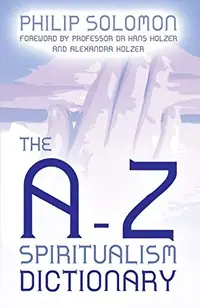
The A-Z Spiritualism Dictionary
Solomon, PhilipStock reported in the catalog; fulfillment is confirmed with your request.
Navigate the ethereal realms with linguistic precision.
In an age where public interest in the unseen and the esoteric surges, a clear guide to its often-confusing language is essential. Philip Solomon's "The A-Z Spiritualism Dictionary" offers a meticulously compiled lexicon for anyone delving into spiritualism, psychic phenomena, and the broader paranormal landscape. This volume meticulously defines the core concepts, historical figures, and methodologies that underpin these mysterious fields, providing an accessible yet authoritative resource. It serves as an indispensable tool for both novice explorers and seasoned practitioners seeking to solidify their understanding of this complex domain.
This volume emerges within the contemporary surge of public interest in the unseen and esoteric, serving as a linguistic anchor for those navigating the complex landscape of spiritualism and psychic phenomena. It reflects a modern desire for clarity and precision in fields often shrouded in ambiguity.


📝 Description: The A-Z Spiritualism Dictionary
💎 Expert review
📖 Why choose it
Why this book is worth reading
This dictionary is an indispensable tool for both novice explorers and seasoned practitioners seeking to solidify their understanding of this complex domain. Readers who find the language of spiritualism confusing will appreciate Philip Solomon's meticulously compiled lexicon, which offers a clear guide to core concepts, historical figures, and methodologies. It provides the linguistic precision necessary to navigate ethereal realms effectively. Whether you are delving into psychic phenomena for the first time or refining your expertise in the broader paranormal landscape, this accessible yet authoritative resource ensures you speak the language of the unseen with confidence and accuracy.
⭐ Reader reviews
Reader rating
Philip Solomon's work stands as a vital reference for anyone serious about understanding the terminology of spiritualism. It succeeds in being both accessible and authoritative, making it ideal for those who need to demystify jargon. However, it does not suit readers seeking narrative immersion or theoretical debate; this is strictly a reference tool, not a story. If you prefer deep philosophical analysis over clear definitions, look elsewhere. But for those needing a reliable, no-nonsense guide to the words that define their practice, it is an excellent, focused addition to any library dedicated to the esoteric.
❓ Frequently asked questions
📖 Who should read this
If you've ever felt lost amidst the jargon of spirit communication, psychic readings, or paranormal investigation, this compendium is your compass. It's perfect for curious seekers, budding practitioners, or anyone eager to build a solid foundational understanding of these enigmatic subjects.
🎯 Key themes and symbolism
Clarity in Esoteric Language
This dictionary demystifies the specialized vocabulary encountered within spiritualist circles, psychic investigations, and paranormal research. It provides succinct yet thorough definitions, cutting through ambiguity to offer a reliable understanding of terms that are often misused or misunderstood in popular discourse, fostering informed exploration.
Spiritualist Traditions Explored
Beyond mere definitions, the book delves into the historical and philosophical underpinnings of spiritualism as a movement. It clarifies key figures, practices like mediumship and automatic writing, and the varying beliefs about the afterlife and spirit communication that define this profound tradition, offering a structured overview.
Paranormal & Psychic Unveiled
Expanding its scope, the work meticulously catalogs terms related to broader psychic abilities and paranormal occurrences. From telepathy to apparitions, it offers a structured framework for comprehending the diverse manifestations of phenomena that transcend conventional scientific explanation, promoting a deeper understanding of the unseen.
💬 Quotes from the book
“Apport: The sudden, inexplicable appearance of an object, often from another location, during a séance or paranormal event, attributed by spiritualists to spirit agency.”
“Trance Mediumship: A state where a medium's consciousness recedes, allowing a spirit entity to purportedly communicate through their physical form, speaking or writing directly.”
📜 Historical context
📚 Glossary
- Ectoplasm
- Clairaudience
- Séance
📔 Questions to reflect on
- Reflect on a time you encountered a spiritual or psychic term you didn't fully understand. How might a clearer definition have altered your perception or experience?
- Consider the ethical implications of communicating with spirits. What responsibilities might a medium or seeker have, and how does terminology shape these considerations?
- How do societal views on 'the paranormal' influence the language we use to describe such phenomena? Does a dictionary help legitimize or merely categorize these experiences?
✍️ More books by this author Solomon, Philip
All books by this author →

You might also like
See more →
 89
89
 79
79


 91
91