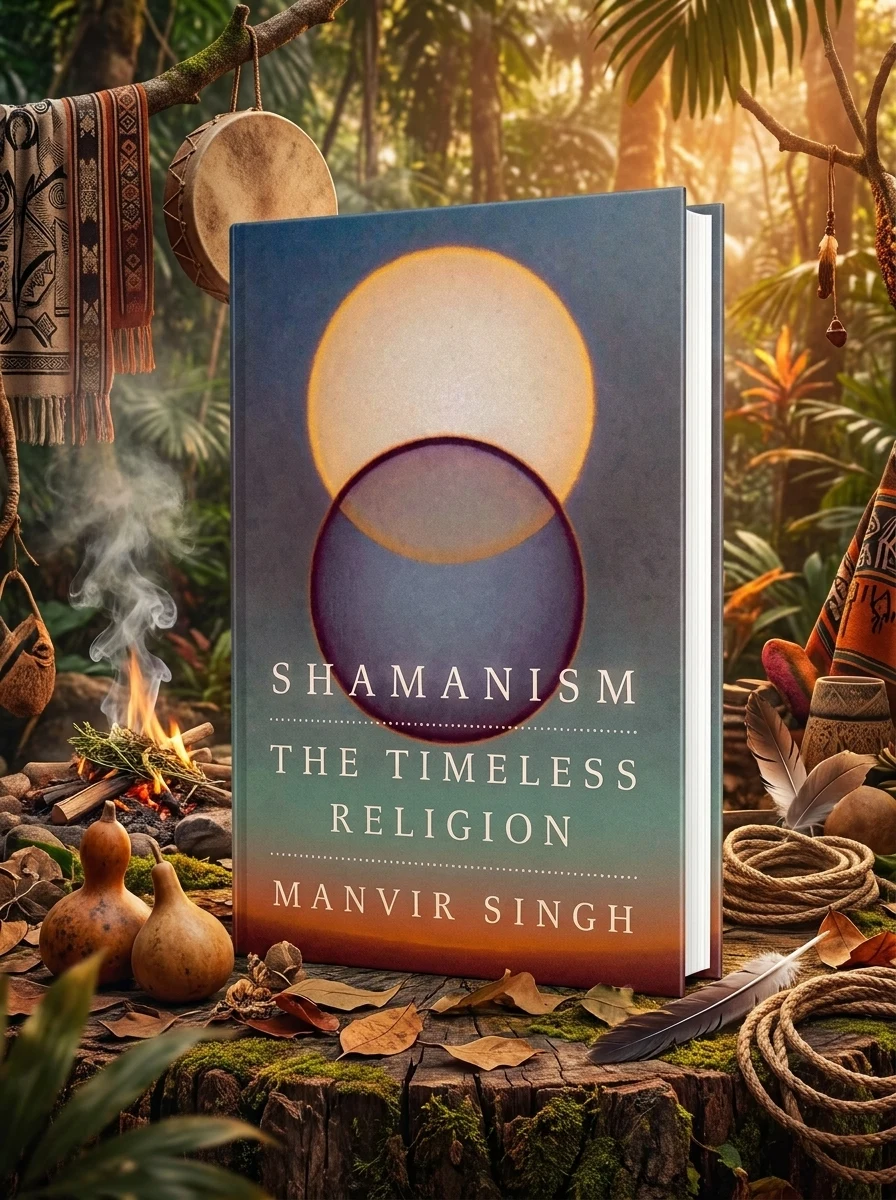
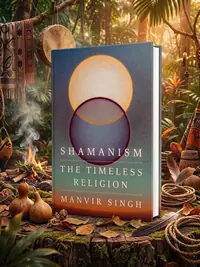
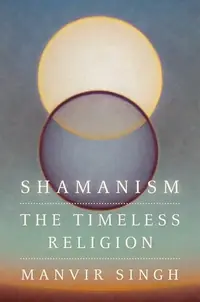
Shamanism: The Timeless Religion


Stock reported in the catalog; fulfillment is confirmed with your request.
Journey into the heart of ancient wisdom, where altered states unlock profound spiritual power.
Manvir Singh, a Harvard-trained anthropologist, offers a captivating exploration of shamanic practices across diverse cultures. From its historical roots to its modern manifestations, Singh delves into the profound spiritual systems where practitioners intentionally enter altered states to commune with unseen realms. He investigates the personal appeal of these traditions for those seeking authentic spiritual pathways beyond conventional religion, showcasing how shamans harness unique states of consciousness for healing, prophecy, and navigating life's mysteries. This journey reveals the enduring psychological resonance of shamanism's transformative power.
This work situates itself within the broader esoteric and anthropological study of shamanism, bridging ancient spiritual traditions with modern psychological insights. It explores the timeless nature of these practices as a perennial religion that transcends specific historical periods.


📝 Description: Shamanism: The Timeless Religion
💎 Expert review
📖 Why choose it
Why this book is worth reading
Readers seeking authentic spiritual pathways beyond conventional religion will find profound resonance in Singh’s exploration of shamanic practices. This book is ideal for those drawn to the psychological appeal of altered states and their role in healing, prophecy, and navigating life's mysteries. It offers a captivating journey into ancient wisdom, revealing how practitioners commune with unseen realms to harness spiritual power. If you are interested in the enduring transformative power of consciousness and the historical roots of these diverse cultural systems, this text provides a scholarly yet accessible window into the heart of shamanism’s timeless relevance for modern seekers.
⭐ Reader reviews
Reader rating
Manvir Singh delivers a rigorous anthropological examination of shamanism, highlighting its psychological depth and cross-cultural consistency. The book is particularly suited for readers with an academic interest in consciousness studies or those seeking intellectual validation for alternative spiritual experiences. However, it may not suit casual readers expecting practical ritual guides or mystical anecdotes devoid of scientific context. Those looking for immediate, actionable esoteric techniques rather than analytical observation might find the tone too detached. It is a thoughtful, evidence-based inquiry into why shamanism endures, appealing to minds that value structural understanding over emotional immersion in the occult phenomena it describes.
❓ Frequently asked questions
📖 Who should read this
If you're seeking a deeper understanding of human spirituality beyond dogma, or feel a call towards more personal, experiential paths, this book is for you. Readers curious about anthropology, indigenous wisdom, and the enduring power of the human mind will find Singh's insights profoundly enriching.
🎯 Key themes and symbolism
Altered States & Realms
Singh meticulously examines how shamans across the globe purposefully induce non-ordinary states of consciousness. Through rhythm, plants, or ritual, these altered perceptions are not mere delusion but a gateway to perceived unseen dimensions, allowing practitioners to interact with spirits for practical ends like healing or divination.
Global Shamanic Practices
The book offers a fascinating comparative study, transporting readers from the vibrant ceremonies of the Amazon to ancient Indonesian rites. Singh's fieldwork provides intimate glimpses into diverse indigenous healing traditions, highlighting both universal threads and unique expressions shaped by local beliefs and environments.
Spiritual Transformation's Core
At the heart of shamanism lies a radical process of personal change. Singh elucidates how initiations, periods of isolation, and intense spiritual experiences reshape individuals, enabling them to transcend ordinary human limits. This transformation equips shamans with perceived extraordinary abilities, fulfilling a deep human need for meaning.
💬 Quotes from the book
“The boundary between 'ordinary' and 'non-ordinary' reality is not a fixed wall, but a permeable membrane, often deliberately traversed by those trained to navigate its currents.”
“To understand shamanism is not merely to catalogue its rituals, but to grasp the profound human need for meaning and control in a chaotic world, a need these ancient practices powerfully address.”
📜 Historical context
📚 Glossary
- Altered States of Consciousness
- Divination
- Indigenous Healing Practices
📔 Questions to reflect on
- Consider a moment in your life where you felt a profound connection to something beyond the ordinary. How might a shamanic perspective interpret that experience?
- If you were to design a personal ritual for spiritual transformation, what elements (e.g., music, environment, intention) would you incorporate, and why?
- How do modern societal views on consciousness and reality differ from, or align with, the shamanic understanding of unseen realms?
🏛 Books from this publisher Knopf Publishing Group
All books from this publisher →
You might also like
See more →