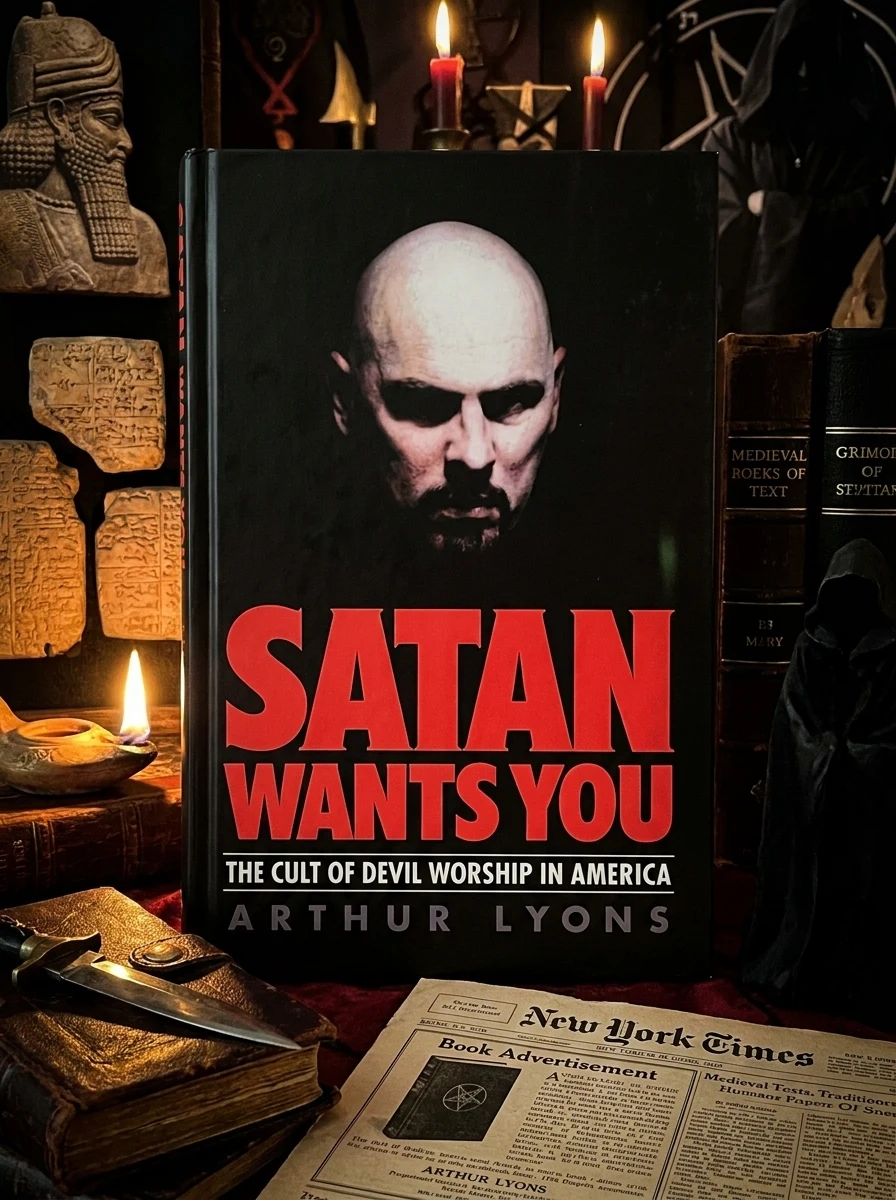


Satan Wants You
Stock reported in the catalog; fulfillment is confirmed with your request.
Trace the ancient serpent’s path from Persian fires to modern occultism.
Arthur Lyons, known for his gripping crime narratives, shifts focus to the shadowed history of satanic belief. This work traces the doctrine’s evolution from its sixth-century Persian origins through the ages, revealing how this ancient counter-current to Western monotheism has persisted and adapted. With rare photographic inserts, the text examines the cultural currents that have shaped these beliefs, offering a comprehensive look at a tradition often misunderstood. It is a scholarly yet accessible journey into the depths of forbidden theology.
This work situates itself within the rich tradition of esoteric history, exploring the shadowed lineage of satanic belief as a persistent counter-current to Western monotheism. It bridges the gap between ancient Persian origins and modern occultism, offering a scholarly yet accessible examination of forbidden theology.


📝 Description: Satan Wants You
💎 Expert review
📖 Why choose it
Why this book is worth reading
Readers with an intellectual appetite for the obscure and the historically marginalized will find this volume deeply rewarding. Arthur Lyons, renowned for his gripping crime narratives, pivots to a scholarly yet accessible exploration of satanic doctrine's evolution. This book is ideal for those seeking to understand the cultural currents that have shaped these beliefs from sixth-century Persia to the present day. It offers a comprehensive look at a tradition often misunderstood, enriched by rare photographic inserts. Those who appreciate a journey into forbidden theology without sacrificing narrative engagement will gain a profound appreciation for this ancient counter-current’s persistence and adaptation.
⭐ Reader reviews
Reader rating
Long-time student of the esoteric here. Some chapters demand a slow, careful read, and that's exactly the point. Some sections stopped me cold in the best way. My only quibble is the cover feels thinner than expected.
Honestly wasn't sure what to expect, but I'm impressed. Some chapters demand a slow, careful read, and that's exactly the point. Delivery took a bit longer than quoted. Happy enough with the purchase.
Been hunting for a decent copy of this text for ages. The symbolism is layered and generous to patient readers.
Exactly what I was looking for. It rewards patience more than any book I've bought this year. The symbolism is layered and generous to patient readers. Glad I finally picked this up.
Finally got around to ordering this. It connects ideas I'd only seen treated separately elsewhere. Well worth it.
Lyons delivers a compelling historical survey that balances academic rigor with accessible prose. The inclusion of rare photographs enhances the reader's connection to the subject matter, grounding abstract theological shifts in tangible history. However, this book does not suit readers seeking practical ritual instructions or those who prefer fictionalized horror over historical analysis. It is also less appropriate for individuals uninterested in the sociological impact of religious counter-currents. The text remains a valuable resource for understanding the intellectual and cultural persistence of these beliefs, provided one approaches it as a study of history and culture rather than a guide to practice.
❓ Frequently asked questions
📖 Who should read this
Readers interested in the historical roots of anti-establishment spirituality, comparative religion scholars, and those fascinated by the intersection of crime writing and occult history.
🎯 Key themes and symbolism
Persian Origins and Evolution
Lyons begins in sixth-century Persia, establishing the foundational myths of early satanic thought. He meticulously tracks how these initial doctrines transformed over millennia, adapting to political and social shifts while retaining core adversarial principles against prevailing religious norms.
Adversarial Theology
The book positions Satanism not merely as evil, but as a structured theological alternative to Western monotheism. It explores how this adversarial stance provided a spiritual framework for dissenters, creating a distinct lineage of belief that challenges the dominant religious narratives of the West.
Cultural Currents and Perception
Beyond theology, Lyons analyzes the societal impact of satanic imagery and practice. He examines how media, law, and public fear have shaped the perception of these groups, revealing the complex interplay between occult practice and the broader cultural anxiety surrounding the demonic.
💬 Quotes from the book
“The doctrine is as old as the monotheism of western man.”
“Currents and directions of a doctrine as old as the monotheism.”
📜 Historical context
📚 Glossary
- Adversarial Doctrine
- Sixth-Century Persia
- Western Monotheism
📔 Questions to reflect on
- How does the concept of 'adversary' challenge your understanding of traditional religious authority?
- What parallels do you see between the historical persecution of satanic groups and modern moral panics?
- In what ways might the Persian origins of these beliefs influence their modern Western interpretations?
You might also like
See more →
 91
91
 91
91
 91
91