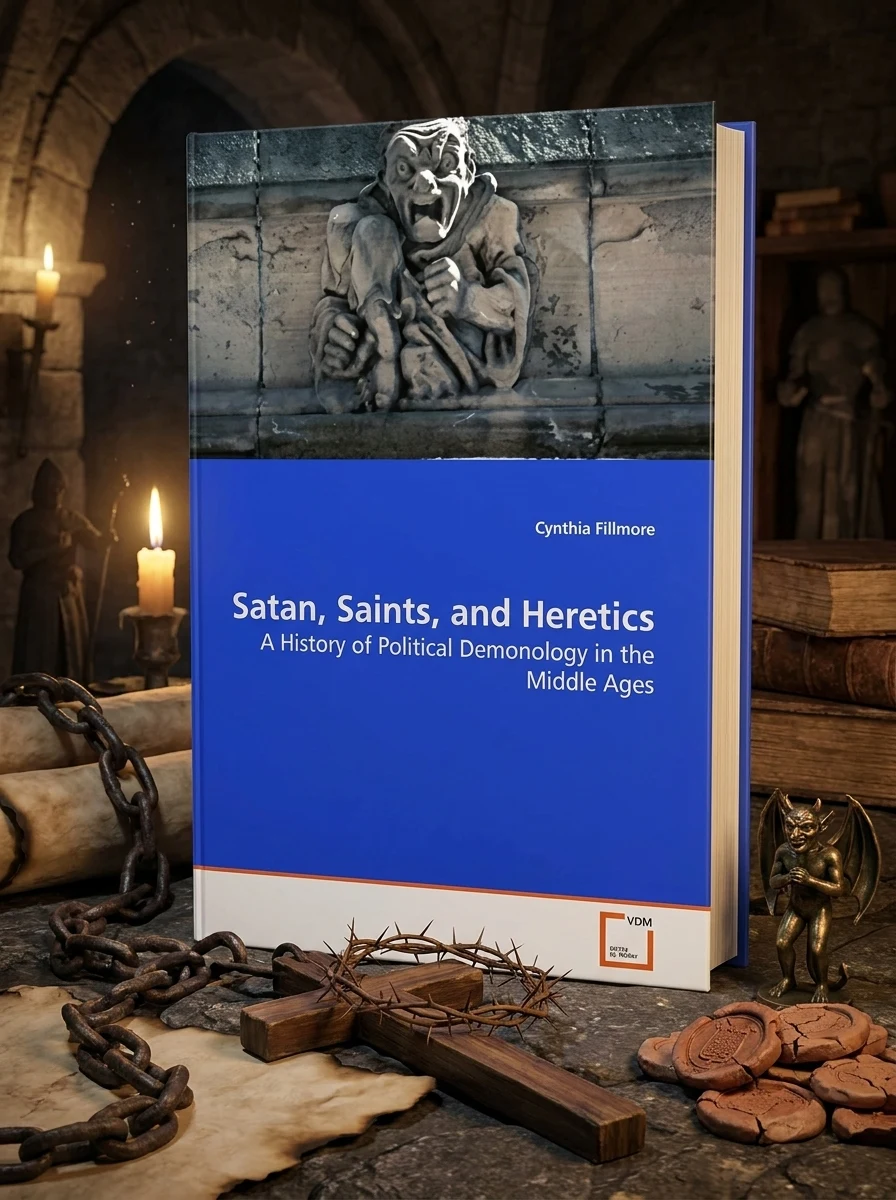
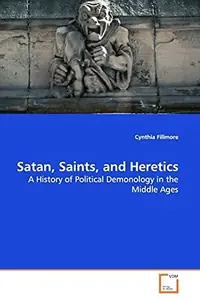
Satan, Saints, and Heretics
Stock reported in the catalog; fulfillment is confirmed with your request.
Unravel the dark tapestry where medieval faith became a weapon of earthly power.
Cynthia Fillmore's incisive work meticulously unpicks the complex entanglement of spiritual conviction and worldly ambition that permeated medieval European society. This profound study illuminates how religious precepts were consistently deployed as formidable tools for political gain, influencing everything from dynastic succession to international conflicts. The book demonstrates that in this era, the sacred and the secular were not merely adjacent but deeply interwoven, creating a landscape where power dynamics often masqueraded as divine decree or righteous indignation.
This work situates itself within the rigorous academic study of medieval European history, specifically examining the intersection of religious doctrine and secular governance during an era where spiritual conviction was inextricably linked to worldly ambition.


📝 Description: Satan, Saints, and Heretics
💎 Expert review
📖 Why choose it
Why this book is worth reading
Scholars and history enthusiasts will find immense value in this incisive analysis of how medieval society functioned beneath the surface of piety. Fillmore offers a compelling lens through which to view the past, revealing that sacred texts were often wielded as potent instruments for dynastic succession and international conflict. Readers interested in the mechanics of power will appreciate the detailed unraveling of how divine decree was masqueraded as righteous indignation to serve earthly agendas. It is essential for those seeking to understand the true nature of authority in medieval Europe, moving beyond simplistic notions of faith to expose the complex web of political gain that permeated every level of society.
⭐ Reader reviews
Reader rating
This text provides a meticulous deconstruction of the entanglement between spiritual conviction and political ambition in medieval Europe. It is a robust study for those willing to engage with dense historical analysis regarding the weaponization of religious precepts. However, it does not suit casual readers seeking narrative-driven storytelling or quick historical overviews without academic depth. Those expecting a straightforward biography or a purely theological treatise will likely find the focus on power dynamics and secular influence too narrow. The book demands patience and an interest in the structural underpinnings of medieval conflict rather than personal devotional experiences.
❓ Frequently asked questions
📖 Who should read this
If you're fascinated by the intricate dance between power and belief, or curious about the true forces shaping medieval history beyond simple narratives, this book offers profound insights. It’s essential reading for anyone seeking to understand the enduring legacy of religious-political manipulation.
🎯 Key themes and symbolism
Faith as Political Leverage
Fillmore explores the myriad ways religious belief systems, institutions, and figures were strategically instrumentalized to achieve secular ends. From papal bulls influencing royal decrees to local clerics rallying support, the book illustrates how piety was often a calculated move in the grand game of medieval power.
Medieval Power's Sacred Veil
This theme delves into how secular rulers and burgeoning states expertly harnessed ecclesiastical authority to legitimize their claims, suppress dissent, and expand their dominion. It examines the mechanisms through which divine sanction became an indispensable component of temporal governance, blurring the lines between king and prophet.
Heresy: A Political Weapon
The work examines how accusations of heterodoxy were frequently deployed not just to enforce religious dogma, but as a potent means to neutralize political rivals, seize assets, and quell social unrest. It uncovers the socio-political undercurrents beneath ostensibly theological disputes, revealing heresy as a tool of control.
💬 Quotes from the book
“To dissect medieval power is to inevitably confront its spiritual garments; the two were rarely distinguishable save by the most astute observers, and often not even then.”
“The accusation of 'heretic' frequently served as a far more potent instrument for social control and property confiscation than any purely secular legal decree.”
📜 Historical context
📚 Glossary
- Heresy
- Medieval
- Political Theology
📔 Questions to reflect on
- Reflect on contemporary examples where religious rhetoric is employed to justify political agendas. How do these echo or diverge from medieval practices?
- Consider a historical event where the boundary between spiritual belief and political motivation seemed particularly blurred. What were the outcomes of this entanglement?
- How might a modern society, priding itself on separation of church and state, still inadvertently allow religious concepts to shape its power structures or public discourse?
You might also like
See more →

 91
91

 91
91