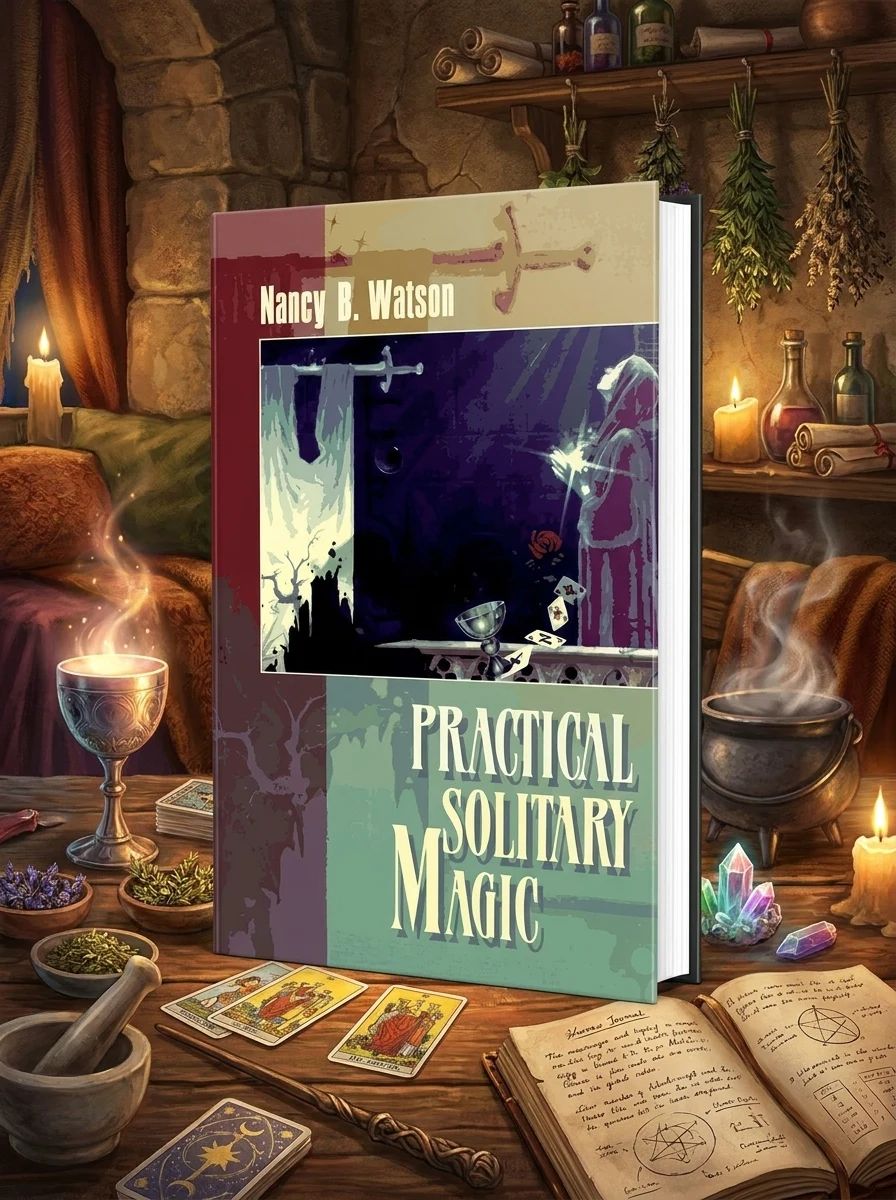
Practical Solitary Magic
This edition can be ordered. No arrival date is confirmed.
Demystify solitary ritual with Nancy Watson's sane, structural approach to independent magical practice.
Nancy Watson dismantles the mystique surrounding independent magical work by offering a clear, logical framework for the solitary practitioner. Rejecting dogmatic tradition, this guide treats magic as a structured discipline, akin to architecture, where every component serves a specific function. Readers are walked through the four planes of magical operation, learning not just the mechanics of rituals, but the psychological and ethical foundations necessary for safe practice. With an accessible tone and practical examples, it strips away esoteric jargon to reveal the underlying mechanisms of visualization, divination, and incantation, making it an essential primer for those seeking autonomy in their spiritual path.
This text belongs to the modern practical witchcraft and Wiccan tradition, specifically addressing the growing demographic of solitary practitioners seeking structured guidance outside of covens or established ecclesiastical hierarchies.


📝 Description: Practical Solitary Magic
💎 Expert review
📖 Why choose it
Why this book is worth reading
Readers who feel isolated in their spiritual journeys or overwhelmed by the dense, dogmatic traditions of organized coven-based witchcraft will find immense relief in this volume. It is ideal for those who approach spirituality with a logical mind, craving a clear architectural framework rather than mystical vagueness. By treating magic as a disciplined practice akin to architecture, it empowers independent workers to build their own rituals with confidence and safety. The accessible tone strips away intimidating esoteric jargon, making complex concepts like visualization and divination understandable for beginners while remaining robust enough for seasoned practitioners seeking autonomy in their magical development.
⭐ Reader reviews
Reader rating
This guide stands out for its rational dismantling of mystical mystique, offering a sane, structural approach to independent magical work. It succeeds by treating magic as a discipline with specific functions, rather than a chaotic art form, providing necessary psychological and ethical foundations. However, it does NOT suit readers seeking deep historical lore, traditional Wiccan liturgy, or those who prefer intuitive, unstructured spiritual experiences over logical frameworks. The author's rejection of dogmatic tradition may alienate purists, but for the pragmatic solitary witch, this clarity is a refreshing and essential tool for safe, autonomous practice in the modern occult landscape.
❓ Frequently asked questions
📖 Who should read this
If you seek spiritual autonomy and wish to build a personal magical system without joining a coven or adhering to strict traditions, this book provides the safe, rational foundation you need to begin your journey.
🎯 Key themes and symbolism
Solitary Practice
Structural Framework
Psychological Ethics
💬 Quotes from the book
“She initiates novices into the rudiments of ritual and guides them in their first steps down the magical path.”
“Sweeping away layers of accumulated cobwebs from topics shrouded in esoteric jargon.”
📜 Historical context
📚 Glossary
- Architectural Analogy
- Four Planes of Operation
- Solitary Magician
📔 Questions to reflect on
- What does 'structure' mean to you in the context of spiritual practice, and how can it provide safety rather than limitation?
- Identify one area of your current beliefs where 'esoteric jargon' creates confusion. How would you explain that concept to a layperson?
- If you view your magical practice as a building, what is the foundation you are currently laying, and what room are you currently furnishing?
🏛 Books from this publisher Weiser Books
All books from this publisher →





 87
87


You might also like
See more →