
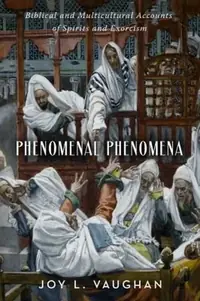
Phenomenal Phenomena: Biblical and Multicultural Accounts of Spirits and Exorcism
Stock reported in the catalog; fulfillment is confirmed with your request.
Reclaiming ancient exorcism narratives from Western skepticism through global anthropological insight.
This volume dismantles the Western tendency to dismiss spirit possession as mere superstition or psychological pathology. Vaughan bridges the gap between modern secular skepticism and ancient biblical accounts by integrating anthropological data from diverse cultures. She argues that true understanding requires comparing contemporary global experiences with the Synoptic Gospels and Acts. By examining possession through illness, violence, and vocal phenomena, the text offers a robust hermeneutical framework. It restores dignity to these accounts, proving they are not isolated legends but part of a widespread, cross-cultural human experience that challenges reductive scholarly interpretations.
This work sits at the intersection of biblical studies and contemporary anthropology, challenging Western secular assumptions by integrating global cultural insights with ancient scriptural narratives. It belongs to a growing scholarly tradition that seeks to reclaim spiritual experiences from reductionist psychological or skeptical interpretations.


📝 Description: Phenomenal Phenomena: Biblical and Multicultural Accounts of Spirits and Exorcism
💎 Expert review
📖 Why choose it
Why this book is worth reading
Readers seeking a deeper, more respectful understanding of spiritual phenomena will find profound value in this text. It is ideal for those weary of dismissive secular explanations who desire a framework that honors the dignity of both ancient biblical accounts and modern global experiences. By bridging anthropology and theology, it offers clarity to scholars and laypersons alike who wish to explore spirit possession without prejudice. The book empowers readers to see these events not as isolated superstitions but as widespread human experiences. It challenges reductive views, providing a robust hermeneutical tool that restores seriousness to exorcism narratives. Those interested in the cross-cultural reality of the supernatural will gain significant insight into how illness, violence, and vocal phenomena intersect with spiritual life across diverse societies.
⭐ Reader reviews
Reader rating
Finally got around to ordering this. It pairs well with more modern commentaries on the same tradition.
Vaughan presents a compelling argument against Western skepticism, effectively using anthropological data to contextualize biblical exorcism accounts. The integration of global perspectives creates a rich, multidimensional view of spirit possession that feels both scholarly and accessible. However, this is not a book for those seeking simple devotional comfort or purely theological dogma without critical engagement. Readers expecting a straightforward apologetic may find the anthropological focus too academic or detached from personal faith practices. It requires an open mind to accept the comparative method as valid for interpreting scripture. Those rigidly attached to reductive psychological explanations of possession will likely find its conclusions challenging and potentially unconvincing. Yet, for those willing to engage with complex cross-cultural evidence, it offers a necessary corrective to narrow scholarly interpretations.
❓ Frequently asked questions
📖 Who should read this
Readers weary of secularized theology will find this refreshing. It suits biblical scholars, anthropologists, and anyone seeking a serious, cross-cultural defense of spirit reality against modern dismissiveness.
🎯 Key themes and symbolism
Global Possession Paradigms
Vaughan contrasts Western reductionism with worldwide ethnographic data. She demonstrates that spirit interaction is a universal human phenomenon, not a relic of the past. This comparative approach validates biblical narratives as contemporary sociological realities rather than mythical fables.
Biblical Hermeneutics Revised
The work reinterprets Gospel exorcisms through an intercultural lens. It urges readers to abandon modernist biases and engage with the texts as records of genuine spiritual conflict, aligning ancient ministry accounts with current global spiritual practices.
Vocal and Physical Manifestations
Three specific categories of possession are analyzed: illness, violent strength, and altered speech. This taxonomy provides a concrete framework for understanding the physiological and auditory signs of spirit activity described in both scripture and modern ethnographic reports.
💬 Quotes from the book
“The Western world has essentially cast out stories of exorcisms that persist throughout much of the world today.”
“She surveys interreligious and global perspectives through three relationships: spirit possession and illness, violence, and vocalic activity.”
📜 Historical context
📚 Glossary
- Hermeneutical Problem
- Synoptic Gospels
- Reductionist Reading
📔 Questions to reflect on
- How does your cultural background shape your perception of spirit possession?
- In what ways might modern psychology overlook the spiritual dimensions of affliction?
- How can comparing global traditions deepen your understanding of biblical texts?
You might also like
See more →

 91
91
 91
91

 91
91
 91
91