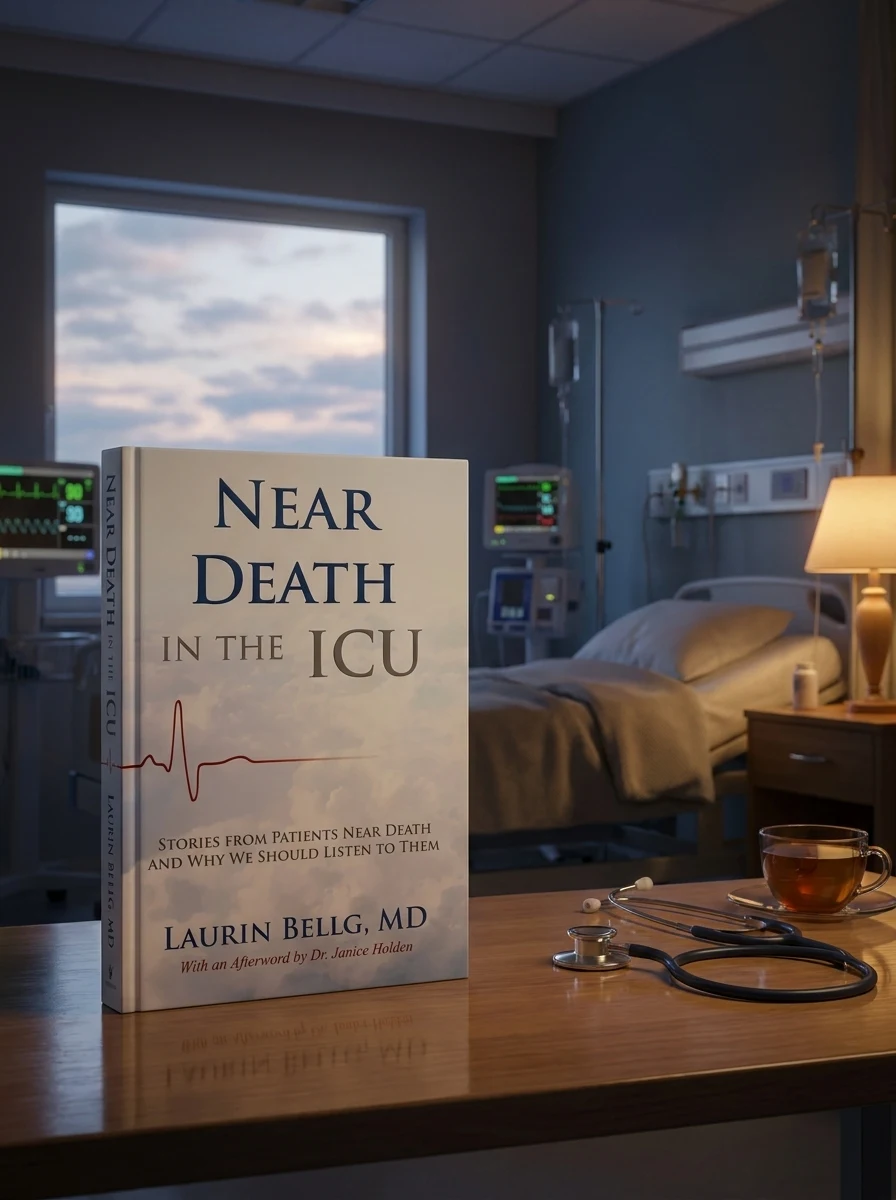
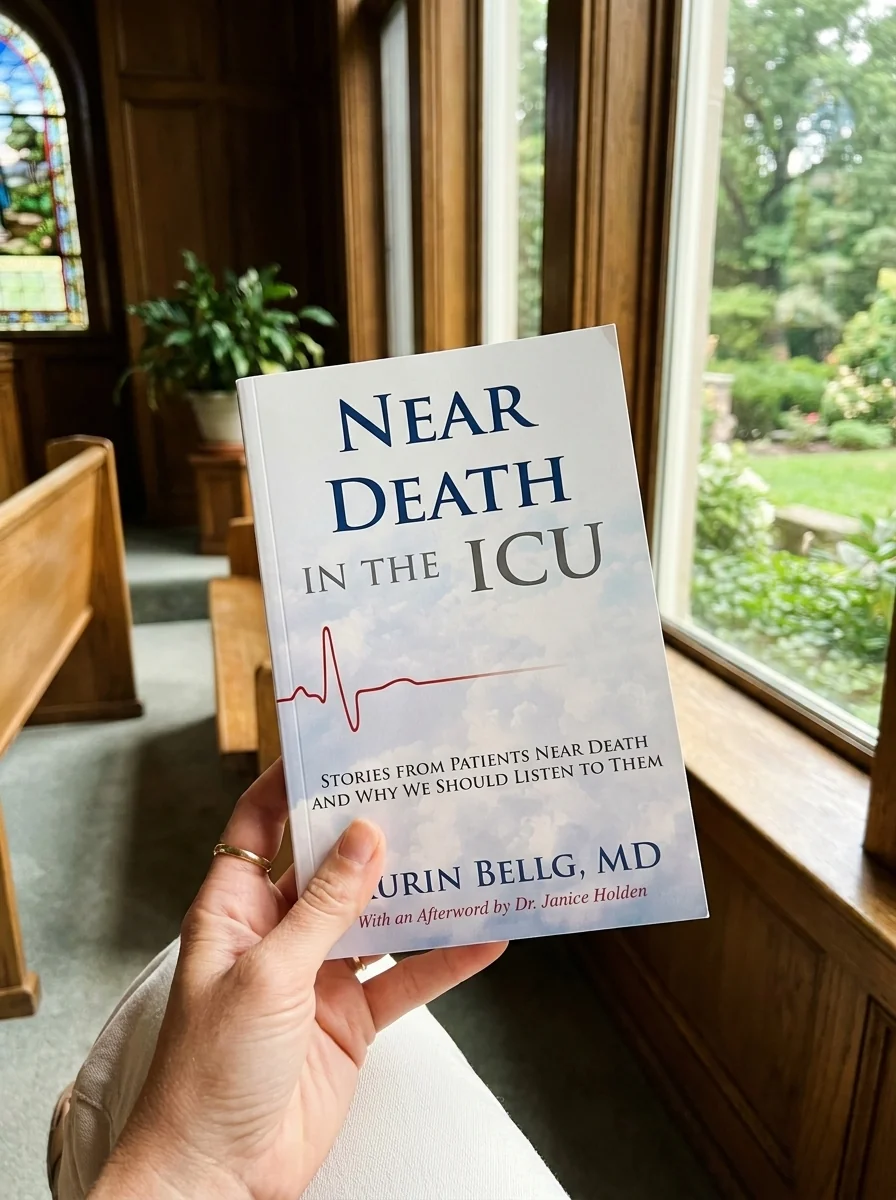

Near Death in the ICU
A critical care physician examines near-death reports to help patients integrate them into medical recovery.
Laurin Bellg uses her background as an intensive care doctor to address the dismissal patients face after reporting near-death consciousness events. By focusing on direct patient stories collected during critical illness, she shifts the focus away from proving what causes the phenomenon. Instead, she outlines how medical professionals can actively listen to these accounts and use them to support meaningful personal growth during recovery.
Sloan Press published this paperback in December 2015. It sits within modern American medical commentary and Mind, Body, Spirit literature, addressing how Western clinical settings handle patient accounts of psychic phenomena and altered consciousness during life-threatening illness.


📝 Description: Near Death in the ICU
💎 Expert review
📖 Why choose it
Why this book is worth reading
Readers seeking a compassionate bridge between scientific rigor and spiritual depth will find profound value in this text. It is particularly suited for healthcare professionals who feel constrained by reductionist paradigms, as well as patients and families navigating the trauma of critical illness who seek validation for their transformative experiences. Bellg offers a vital perspective that honors the mystery of consciousness without abandoning medical expertise. By reframing near-death phenomena as tools for healing rather than biological errors, the book provides a framework for holistic recovery. It empowers readers to approach the threshold of death with curiosity and empathy, fostering a deeper understanding of the mind-body connection in the most fragile moments of life.
⭐ Reader reviews
Reader rating
I keep coming back to this one. It connects ideas I'd only seen treated separately elsewhere. My only regret is not ordering it sooner.
Needed this for my research. It connects ideas I'd only seen treated separately elsewhere. If you're drawn to this subject, don't hesitate.
Finally got around to ordering this. It reads better in small doses — a chapter at a time with notes. I appreciated how the argument builds steadily from first principles. My only quibble is the cover feels thinner than expected. Recommended with reservations.
Arrived faster than expected and well packaged. It rewards patience more than any book I've bought this year. Every rereading turns up something I missed. Glad I finally picked this up.
This exceeded my expectations. The text itself is dense but rewarding — you get out what you put in. Already eyeing my next order.
This edition finally does the material justice. Challenging in places, but never needlessly obscure. One of my better finds this year.
Bellg’s advocacy is refreshing, yet this text demands an open mind from its audience. It will not suit strict materialists or those who view consciousness solely as a byproduct of neural activity, as it explicitly challenges biological reductionism. Readers expecting hard empirical data over philosophical reflection may find the tone too anecdotal or speculative. However, for those willing to entertain the possibility that clinical skepticism can obscure vital healing pathways, this book offers a compelling counter-narrative. It is less a medical textbook and more a manifesto for integrating the spiritual into the sterile environment of the ICU, requiring readers to suspend certain scientific dogmas to appreciate its emotional and transformative insights.
❓ Frequently asked questions
📖 Who should read this
Readers seeking validation for spiritual experiences, medical professionals open to integrative care, and anyone navigating the intersection of scientific rigor and mystical wonder.
🎯 Key themes and symbolism
Consciousness beyond biology
Clinical empathy and integration
Transformative trauma care
📜 Historical context
📚 Glossary
- Integration
- Reductionism
- Critical Care
📔 Questions to reflect on
- How might your understanding of consciousness change if you prioritized meaning over mechanism?
- Recall a moment where logic failed to explain your experience. How did you make sense of it?
- In what ways could acknowledging the 'unknown' improve your approach to healing others?
You might also like
See more →









Have a question about this item?
Ask about the edition, condition, delivery or anything else — we reply by email or phone, usually within a day.
