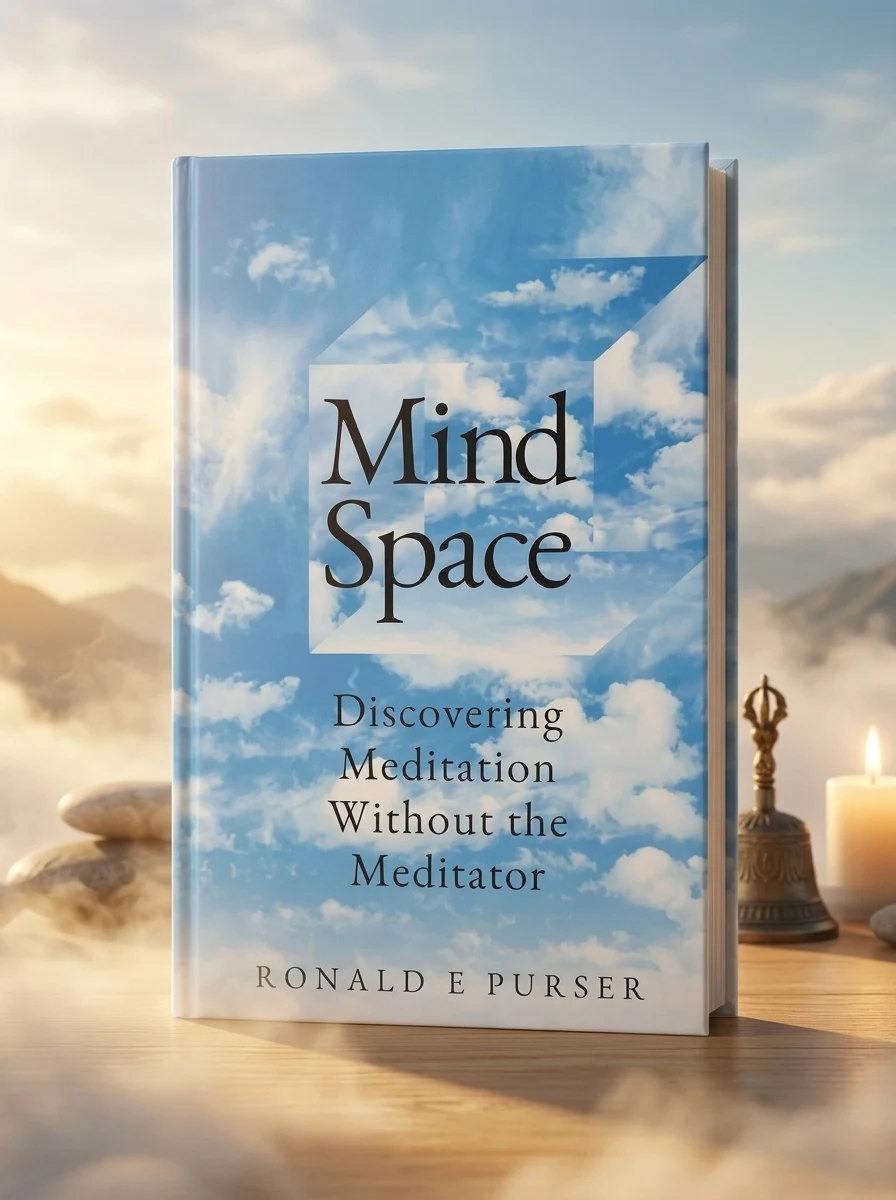

Mind Space: Discovering Meditation Without the Meditator


Stock reported in the catalog; fulfillment is confirmed with your request.
Is your quest for inner peace actually binding you to a deeper struggle?
Ronald E. Purser, known for his incisive critique of "McMindfulness," now challenges the very foundation of modern meditation practices. This profound work argues that our fervent pursuit of mindfulness, often guided by an internal "manager" obsessed with spiritual progress, paradoxically obstructs true inner freedom. Drawing from the visionary teachings of Tibetan master Tarthang Tulku, Purser unveils a revolutionary path. He invites readers to look beyond conventional stress reduction and attention-focused exercises, offering a radical alternative that promises unconditioned liberation, transcending the ego's endless striving for enlightenment.
This text sits at the intersection of contemporary critical mindfulness discourse and traditional Tibetan Buddhist philosophy, specifically reflecting the lineage of Tarthang Tulku. It challenges the secularized, therapeutic adaptations of meditation that have dominated recent Western spiritual trends.


📝 Description: Mind Space: Discovering Meditation Without the Meditator
💎 Expert review
📖 Why choose it
Why this book is worth reading
Readers who feel exhausted by the performative aspects of modern mindfulness will find profound relief in this radical perspective. If you have ever felt that your diligent attempts to achieve inner peace were actually creating more tension, this book offers a liberating alternative. It is ideal for those ready to abandon the ego's relentless striving for spiritual progress. By letting go of the internal 'manager' obsessed with results, you can discover unconditioned liberation. This guide invites you to transcend conventional stress reduction techniques and embrace a path of true freedom, freeing you from the subtle bondage of seeking enlightenment.
⭐ Reader reviews
Reader rating
Purser delivers a sharp critique that may alienate casual practitioners comfortable with McMindfulness frameworks. Those seeking simple, actionable stress-reduction exercises or secular relaxation techniques will find this text overly philosophical and unsatisfying. It demands a willingness to deconstruct one's entire approach to self-improvement. However, for those weary of the ego-driven pursuit of enlightenment, it provides a necessary corrective. The work is intellectually rigorous and spiritually demanding, requiring readers to confront their own attachment to spiritual achievement. It is not for the faint-hearted or the casually curious.
❓ Frequently asked questions
📖 Who should read this
If you've found traditional meditation frustrating, or suspect that your spiritual practice has become another form of self-improvement, this book is for you. It's for those ready to question deeply ingrained assumptions about mindfulness and embrace a more radical, unconditioned path to freedom.
🎯 Key themes and symbolism
Mindfulness Deconstructed
This book provocatively challenges the prevailing commercialized and goal-oriented approach to mindfulness. Purser posits that the common directives to 'sit still' and 'watch thoughts' can inadvertently reinforce the ego's desire for control and achievement, rather than leading to genuine transcendence or inner peace, thus creating a spiritual trap.
The Inner Monitor
Purser introduces the concept of an 'inner manager'—a relentless internal voice that constantly scrutinizes our spiritual journey. This self-monitoring, which questions whether we are 'mindful enough' or have 'tamed our thoughts,' is revealed as a primary obstacle, deferring fulfillment and blocking access to an authentic, unconditioned inner freedom.
Unconditioned Liberation
Moving beyond the confines of formal meditation and mere stress reduction, the book presents a radical vision for liberation. Inspired by Tarthang Tulku's 'Time, Space and Knowledge' teachings, it advocates for a path that dissolves the very idea of a 'meditator,' offering an unmediated experience of inner spaciousness and freedom that is not dependent on striving or technique.
💬 Quotes from the book
“Perhaps the greatest obstacle to true presence is our endless striving to *be* present.”
“Authentic freedom emerges not from strict discipline, but from dissolving the 'meditator' entirely.”
📜 Historical context
📚 Glossary
- McMindfulness
- Inner Manager
- Unconditioned Freedom
📔 Questions to reflect on
- Reflect on a time when your efforts to be 'mindful' felt more like a chore or a judgment. What internal voice was guiding that experience?
- Consider the idea of 'unconditioned freedom.' What might it mean to you to experience inner peace without any specific technique or goal in mind?
- How might a focus on 'spiritual progress' inadvertently create more obstacles on your path, rather than clearing them?
You might also like
See more →