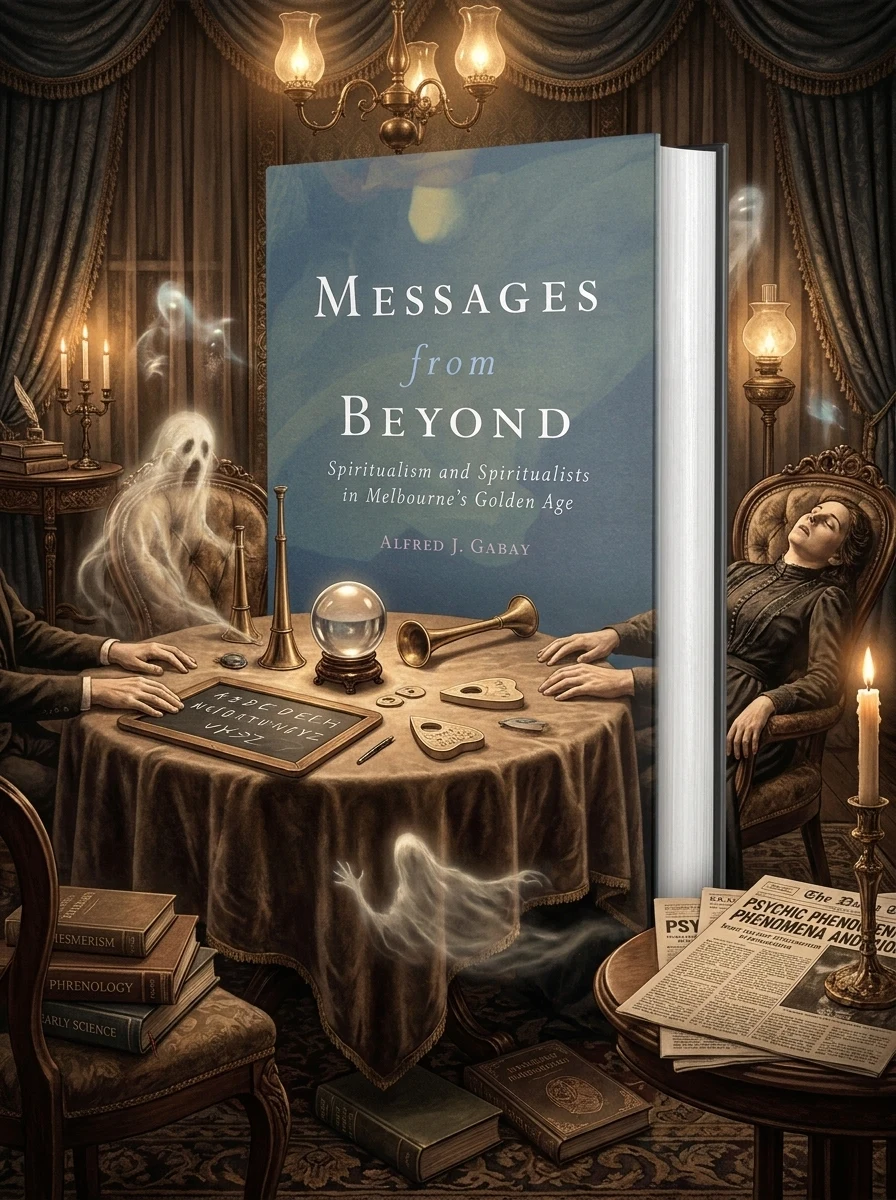
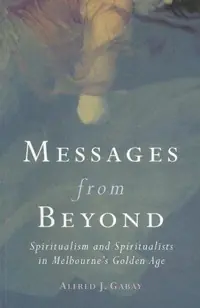
Messages From Beyond: Spiritualism and Spiritualists in Melbourne's Golden Age
This edition can be ordered. No arrival date is confirmed.
Unearth the paradox of Spiritualism, where science met spirits in colonial Melbourne's golden age.
This compelling historical account by Alfred J. Gabay delves into the fascinating rise and eventual decline of Spiritualism within colonial Australian society, specifically focusing on Melbourne. It traces the movement's journey from its American roots in the 1840s to its profound impact Down Under. Gabay illuminates how its blend of séances, mediumship, and table-tilting phenomena drew both intense scrutiny and a dedicated following of intelligent individuals seeking empirical answers to life's great mysteries, often while rejecting traditional religion. The work meticulously explores the tension between its scientific claims and its deeply religious, ritualistic practice.
This work sits at the intersection of colonial Australian history and the esoteric study of Spiritualism, documenting how the movement adapted its American origins to the specific social fabric of Melbourne. It serves as a historical record of the tension between empirical scientific inquiry and religious ritualism during a period of intense societal transformation.


📝 Description: Messages From Beyond: Spiritualism and Spiritualists in Melbourne's Golden Age
💎 Expert review
📖 Why choose it
Why this book is worth reading
Readers fascinated by the complex intersection of science, spirituality, and colonial history will find this book essential. It offers a rare glimpse into how intelligent individuals in Melbourne sought empirical answers to life's mysteries through séances and mediumship, often while rejecting traditional religious structures. Gabay’s meticulous exploration reveals the paradox of a movement that claimed scientific validity while embracing deeply ritualistic practices. This narrative is ideal for those who appreciate nuanced historical accounts that challenge binary views of faith versus reason. By uncovering the tension between scrutiny and dedication, the book provides a rich context for understanding the human desire to connect with the unknown through structured, albeit controversial, means.
⭐ Reader reviews
Reader rating
Gabay delivers a compelling historical account that illuminates the rise and decline of Spiritualism in colonial Melbourne. The text is valuable for its detailed tracing of the movement from American roots to its profound local impact, highlighting the unique blend of table-tilting phenomena and intellectual pursuit. However, readers seeking sensational ghost stories or supernatural validation will be disappointed. This is a scholarly examination of social history, not a guide to paranormal practice. It may also feel dry to those uninterested in colonial Australian sociology or the specific historical tensions between scientific claims and religious ritual. It suits historians of religion more than casual occultists.
❓ Frequently asked questions
📖 Who should read this
Are you fascinated by the intersections of belief, science, and societal change? Do you wonder how Victorian-era spiritual movements shaped modern thought? This book offers a compelling narrative for anyone interested in Australian history, the evolution of religious practice, or the enduring human quest for answers about the afterlife.
🎯 Key themes and symbolism
Colonial Spiritualism's Genesis
Gabay meticulously chronicles the transatlantic leap of Spiritualism from its American origins in the 1840s to its rapid establishment in Australia. The book details how this movement quickly captivated Melbourne, becoming a significant cultural and intellectual force during the city's prosperous "Golden Age," shaping its spiritual landscape.
Science and Faith Paradox
The author explores the curious dichotomy at the heart of Spiritualism: its adherents often sought rational, demonstrable proof of an afterlife, aligning with scientific inquiry, yet simultaneously embraced it as a profound religion. Gabay reveals how this inherent tension defined the movement, particularly in its ritualistic séance practices, which were more devotional than empirical.
Social and Intellectual Impact
Gabay highlights Spiritualism's broad appeal, attracting intelligent, often prominent figures who were disillusioned with conventional religion but still grappled with moral and existential questions. The book examines how these "messages from beyond" sparked intense public debate, media sensationalism, and significantly influenced the intellectual and social currents of the era.
💬 Quotes from the book
“The Victorian séance, far from being a mere parlor trick, represented a profound struggle to reconcile an age of scientific discovery with the timeless human yearning for spiritual assurance.”
“Melbourne's 'Golden Age' provided fertile ground for Spiritualism, where a burgeoning, intellectually curious populace sought new frameworks for meaning beyond the constraints of established dogma.”
📜 Historical context
📚 Glossary
- Séance
- Medium
- Magnetiser
📔 Questions to reflect on
- Considering the allure of Spiritualism in the 19th century, what contemporary movements or beliefs do you see fulfilling a similar role for people seeking answers beyond conventional wisdom?
- How might the desire for "scientific" proof of the afterlife, as seen in Spiritualism, both strengthen and undermine a belief system?
- If you were alive in colonial Melbourne, would you have been drawn to the séances and discussions of Spiritualism? Why or why not?
You might also like
See more →

 91
91
 91
91
 91
91

 91
91